Cathedrals in England
E-L
A B C D E F G H I J K L M N O P Q R S T U V W X Y Z
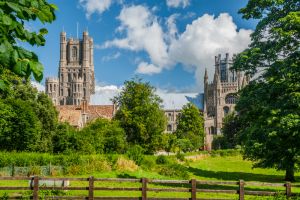
Ely is best known, and rightly so, for its extraordinary octagonal lantern tower. When the Norman tower fell in 1322 a new tower was erected, using oak beams to support 400 tons of stone and lead in a structure at once massive and airy. The first church here was erected in 673 by St. Aetheldreda, and rebuilt in 870 following Danish raids. In 1109, in the midst of another rebuilding, Ely was raised to cathedral status. At that time the country around Ely was marsh, and the cathedral rose like a beacon on the only spot of dry land for miles around.
Minster Place,
Ely,
Cambridgeshire,
England, CB7 4DL
Heritage Rating:  ?
?
Heritage Highlight: 14th century lantern tower is an engineering tour de force
Nearest Self Catering Cottages
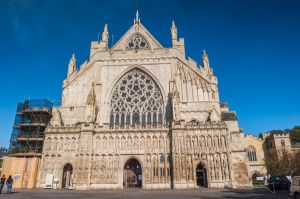
The church here was begun in the 11th century, but most of what remains is the result of rebuilding between 1275-1375. The Lady chapel and retrochoir were added at this time, to be followed by the presbytery and the choir. The nave was built in the mid 14th century, under the direction of Richard Farleigh, who also designed the spire of Salisbury Cathedral. Exeter boasts the longest stretch of uninterrupted vaulting in England, stretching for 300 feet. The carving detail throughout the cathedral is stunning, but the highlight is the Minstrel's gallery, replete with angels carrying musical instruments.
Exeter,
Devon,
England, EX1 1HS
Heritage Rating:  ?
?
Heritage Highlight: Carvings in the minstrel's gallery
Nearest Self Catering Cottages
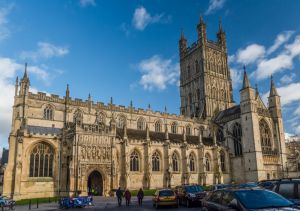
The magnificence of Gloucester, which only became a cathedral under Henry VIII, owes much to the courage of one man, Abbot Thoky. When Edward II was murdered at nearby Berkeley Castle in 1327, three other abbots refused to accept the king's remains, possibly because they disapproved of his reported "unnatural" lifestyle. Thoky accepted the body, risking the displeasure of Edward's many enemies.
12 College Green,
Gloucester,
Gloucestershire,
England, GL1 2LX
Heritage Rating: ?
Heritage Highlight: 14th century east window
Nearest Self Catering Cottages
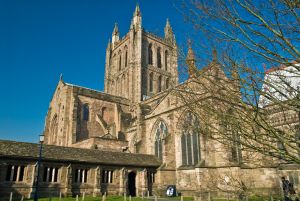
Hereford was founded in Saxon times to house the shrine of Saint Ethelbert, a murdered king of East Anglia. A carefully preserved tooth of the saint was highly venerated in the Middle Ages. The church underwent several stages of rebuilding, most notably in the 13th century, when the north transept was built. Look at the triforium arches; they are triangular, almost straight-sided, an unusual effect known as the Geometric style. Hereford gained its second major shrine when miracles were reported at the tomb of Bishop Thomas de Cantilupe, who died in 1282.
5 College Cloisters, Cathedral Close Hereford,
Herefordshire,
England, HR1 2NG
Heritage Rating: ?
Heritage Highlight: 13th century tomb of Bishop de Cantelupe
Nearest Self Catering Cottages
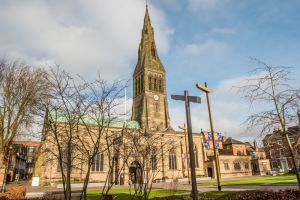
Leicester Cathedral began as the medieval parish church of St Martin and was raised to cathedral status in 1926. The body of King Richard III was buried here after its discovery under a council car park just to the south-east.
Peacock Lane,
Leicester,
Leicestershire,
England, LE1 5DE
Heritage Rating: ?
Heritage Highlight: Richard III's grave
Nearest Self Catering Cottages
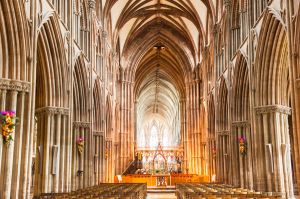
Lichfield Cathedral's three towers, the "Ladies of the Vale", preside over a beautiful, though much restored, exterior. The cathedral suffered badly during the Civil War, being alternately besieged and used to house soldiers and horses. It has also suffered from being built of sandstone, which is wonderful material for carving the statues which festoon its west front, but not so good at preserving the final effects of the mason's art.
19A The Close,
Lichfield,
Staffordshire,
England, WS13 7LD
Heritage Rating: ?
Heritage Highlight: Chapter house and Lady chapel
Nearest Self Catering Cottages
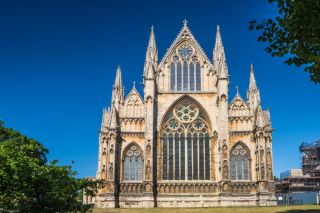
If Lincoln Cathedral were merely an empty shell, it would still deserve a visit for the extraordinary exterior. Here is art in stone. The west front, in particular, is magnificent in its use of sculptural detail and the richness of its design. Lincoln was largely rebuilt beginning in 1186 after a fire destroyed the earlier Norman church. Under the direction of Hugh of Avalon (Great Saint Hugh), the choir and eastern transepts were built, followed (1215-55) by the nave and chapter house. The angel choir is a masterpiece of the Decorated style. Look up at the central tower. It rises to 271 feet. Now imagine a spire extending another 284 feet up! That tower fell down in 1548. In the south east porch is the "Judgement Portal", with its marvellous relief carvings of Christ presiding over the Last Day, and in the choir is the "crazy vault" of intertwining ribs crisscrossing the bay. Everywhere you look are incredible carvings in wood and stone. Plan on spending a long time at Lincoln Cathedral.
4 Priory Gate,
Lincoln,
Lincolnshire,
England, LN2 1PL
Heritage Rating: ?
Heritage Highlight: Look for the Lincoln Imp carving, and the 'crazy vaulting'
Nearest Self Catering Cottages