Lake District Travel Guide - Historic Churches
- Map of Historic Churches in Cumbria
- Map of ALL Historic Churches in England
- Map of all attractions in Cumbria
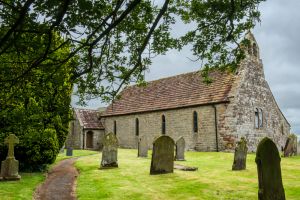
St Andrew's church dates to the 12th century and is made with stones from Hadrian's Wall. Highlights include a Norman chancel arch and 12th-century font. In the porch is a 13th-century grave slab. There are fantastic views of the Lakeland Fells from the churchyard.
Aikton, Cumbria, England, CA7 0HP
Heritage Rating:  ?
?
Heritage Highlight: Made with Roman stones from Hadrian's Wall
Nearest Self Catering Cottages
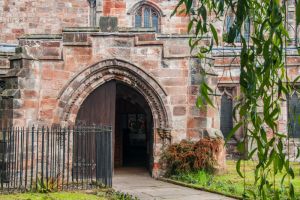
The church of St Lawrence stands at the bottom of Boroughgate in the heart of the old market town of Appleby-in-Westmorland. The church dates in part to the 12th century, though with remodelling from practically every century since then!
Boroughgate, Appleby-in-Westmorland, Eden Valley, Cumbria, England, CA16 6QN
Heritage Rating:  ?
?
Heritage Highlight: The oldest organ in England still in use
Nearest Self Catering Cottages
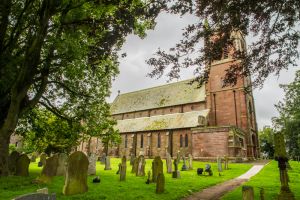
The church of St Kentigern in Aspatria is a Victorian Gothic building, incorporating bits of a much earlier Norman church built between 1130 and 1150. Long before the Norman building, there was a church established on this site by the 6th-century Celtic missionary Kentigern (also known as Mungo).
King Street, Aspatria, Cumbria, England, CA7 3BY
Heritage Rating: ?
Heritage Highlight: Beautifully carved 13th-century font
Nearest Self Catering Cottages
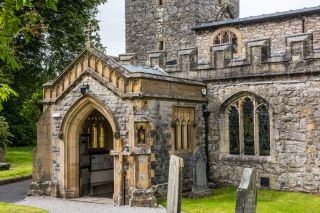
St Michael's Church in the Cumbrian village of Beetham was begun in the Saxon period and retains Saxon stonework in the tower wall. Highlights include 15th-century effigies of Sir Robert and Lady Anne Middleton of Leighton Hall, and several medieval stained-glass windows including a depiction of Henry Bolingbroke, later to become Henry IV.
Church Street, Beetham, Cumbria, England, LA7 7AL
Heritage Rating: ?
Heritage Highlight: Saxon stonework in the tower
Nearest Self Catering Cottages
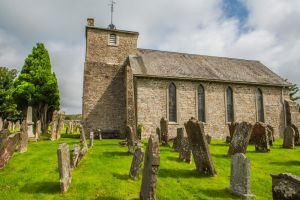
St Cuthbert's Church stands in a remote position beside a medieval castle ruin. The church was built in 1277 using stones from a 2nd-century Roman fort on the site. In the churchyard stands the 7th-century Bewcastle Cross, one of the glories of Celtic art.
Bewcastle, Cumbria, England, CA6 6PS
Heritage Rating: ?
Heritage Highlight: 7th-century Bewcastle Cross in the churchyard
Nearest Self Catering Cottages
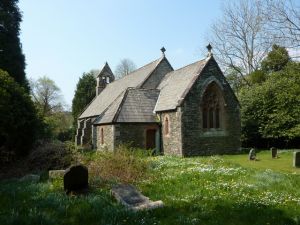
There are two churches dedicated to St John's in the hamlet of Blawith. One is a 16th-century ruin that exists only as overgrown walls. We do not know precisely when it was built, but it is clearly marked on a map of the area dated 1577. By 1861 the old church had become so ruinous that a new church was built across the road.
Blawith, Cumbria, England, LA12 8EQ
Heritage Rating: ?
Nearest Self Catering Cottages
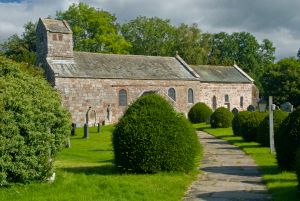
Set on a rise over the River Eden in a lovely village setting, All Saints Church, Bolton, is a gem of a historical building, containing a wealth of intriguing features. The first of these can be seen to the left of the south porch as you approach down the entrance avenue of clipped yew trees.
Bolton, Cumbria, England
Heritage Rating: ?
Nearest Self Catering Cottages
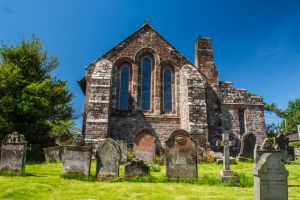
The pretty 12th-century church in Bowness-on-Solway was built with Roman stones from Hadrian's Wall and stands atop the Roman fort of Maia that guarded the wall. Look for two bells stolen by villagers from churches in Scotland.
Bowness-on-Solway, Cumbria, England, CA5 6AW
Heritage Rating: ?
Heritage Highlight: Built with Roman stones from Hadrian's Wall
Nearest Self Catering Cottages
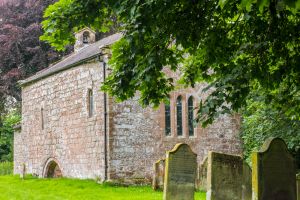
The 12th-century Old Church in Brampton stands within the ramparts of a Roman fort and was built using stones from nearby Hadrian's Wall. The church is said to stand on the site of a 4th-century church and holy well established by St Ninian.
Old Church Lane, Brampton, Cumbria, England
Heritage Rating: ?
Heritage Highlight: Built within a Roman fort
Nearest Self Catering Cottages
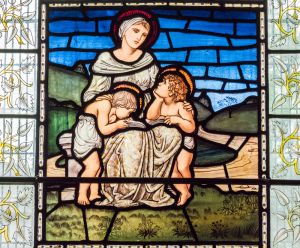
St Martin's church was built in 1878 by Philip Webb for the Howard family, Earls of Carlisle. Webb called on his Pre-Raphaelite friends Edward Burne-Jones and William Morris to create the sumptuous stained glass windows, which together form one of the finest examples of Pre-Raphaelite art in England.
Front Street, Brampton, Cumbria, England, CA8 1NU
Heritage Rating: ?
Heritage Highlight: Superb example of Pre-Raphaelite style
Nearest Self Catering Cottages