Long Compton
There may have been a church here as early as the 5th century. Legends have persisted that St Augustine came to Long Compton in the late 6th century, to visit a church that had stood for 150 years. Since Augustine came to Britain in 597, that would date the earliest church here to the mid 5th century. St Augustine is said to have preached on the site of the church, and while he was here, raised a man from the dead.
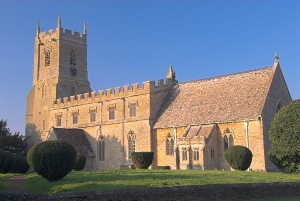
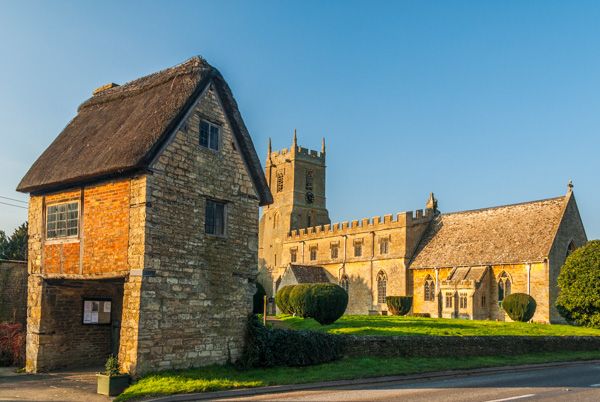
While there is no way to verify the truth of these legends, we are on safer ground when it comes to the current church of St Peter and St Paul. It is largely a 13th-century building, of local stone, composed of a three-stage western tower, south porch, north aisle, nave, chancel, and chantry chapel.
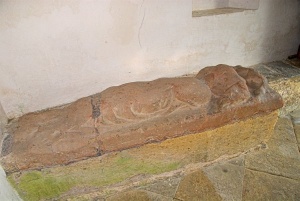
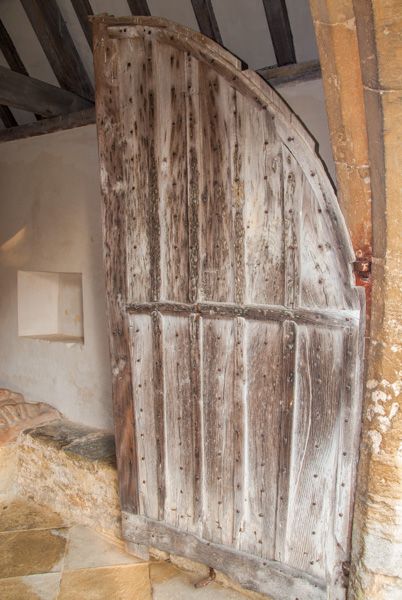
You enter through the south porch, which dates from the 14th century. The worn wooden doors bear the date 1621. Inside the porch, the first thing that meets your eye is a badly worn tomb, with a recumbent effigy of a woman. This effigy is believed to have originally resided inside the church.
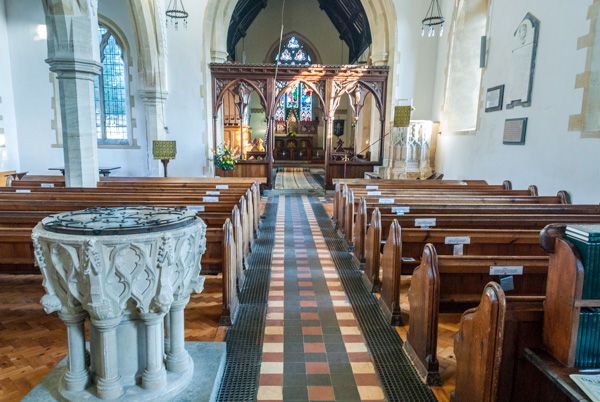
The nave is the oldest part of the church, to which the chancel was added in the late 13th century, and the north aisle around 1300. The nave roof was raised to add a clerestory in the 15th century. A modern gallery has been added, which is no doubt useful for the parishioners, but does strike a rather jarring note, with its gleaming wood and glass looking rather odd in its medieval setting.
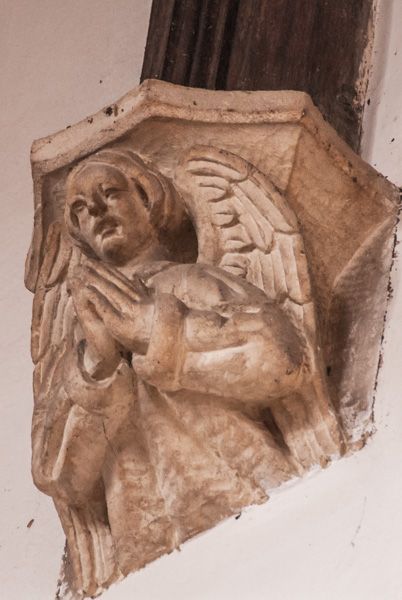
One of the most interesting aspects of St Peter and St Paul is the set of carved stone corbel heads supporting the roof beams. The heads are a mix of foliage, religious figures, and human forms. The most striking figure is a woman wearing a full horned head-dress, of the sort that would have been common in the mid 14th century. There are several figures of men in head-dresses, and a bishop with a hammer, pincers, and horseshoe.
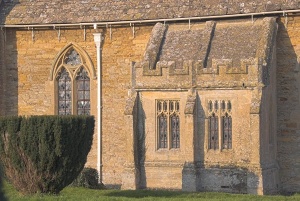
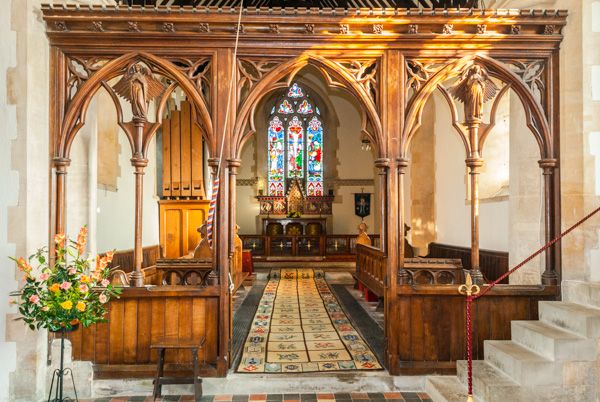
The chancel arch is 13th century, as is the column capital on the south side, while the north side is a modern restoration. The chantry chapel is, unfortunately, closed to visitors. It can be examined from the outside, however (see photo). Its quite a lovely, simple, piece of late Gothic architecture.
The Lych Gate
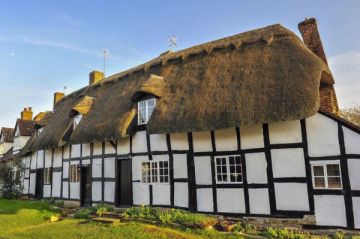
The most easily recognizable aspect of Long Compton is the striking half-timbered brick and thatch lych gate. This 17th-century building was for most of its life the end of a row of terraced cottages. The other cottages were destroyed, but this one survived. It functioned as a shop, and private residence, until in 1964 it was given to the church. The upper room is now used by the local historical society.,/p>
Entry:
Free, but donation requested
More Photos

About Long Compton
Address: Long Compton,
Cotswolds,
Warwickshire,
England
Attraction Type: Historic Church
Location: On the A3400, in the centre of Long Compton
Location map
OS: SP2831
Photo Credit: David Ross and Britain Express
HERITAGE
 We've 'tagged' this attraction information to help you find related historic attractions and learn more about major time periods mentioned.
Historic Time Periods:
Find other attractions tagged with:
13th century (Time Period) - 14th century (Time Period) - 15th century (Time Period) - 17th century (Time Period) - 5th century (Time Period) - 6th century (Time Period) - Medieval (Time Period) - Restoration (Historical Reference) -
NEARBY HISTORIC ATTRACTIONS
Heritage Rated from 1- 5 (low to exceptional) on historic interest
Little Rollright, St Philip - 1 miles (Historic Church) 
Rollright Stones - 1 miles (Prehistoric Site)
Barton-on-the-Heath, St Lawrence Church - 1.7 miles (Historic Church) 
Salford, St Mary's Church - 1.9 miles (Historic Church)
Chastleton House - 2.3 miles (Historic House)
Whichford, St Michael - 2.9 miles (Historic Church)
Great Rollright, St Andrews - 2.9 miles (Historic Church)
Great Wolford, St Michael's Church - 2.9 miles (Historic Church)
Nearest Holiday Cottages to Long Compton:
Barton-on-the-Heath, Gloucestershire
Sleeps: 4
Stay from: £682.00 - 2973.00
Chipping Norton, Oxfordshire
Sleeps: 6
Stay from: £705.00 - 3361.00
Chipping Norton, Oxfordshire
Sleeps: 4
Stay from: £535.00 - 1994.00
More self catering near Long Compton