Public and private building booms ensued, and the townhouses of well-to-do northerners jostled for space with new public buildings, such as the Assembly Rooms and Assize Courts. The most popular areas for townhouses were Blossom Street, Bootham, and Micklegate.
The Assembly Rooms, near York Minster, were built in 1730 for the 3rd Earl of Burlington, the leading patron of Palladian neo-classical architecture. The sumptuous level of decoration and elegant interiors made the Assembly Rooms the place to see and be seen by the leading lights of York society.
The Georgian period was one of social and cultural growth in York, though the city's importance as a trading and administrative centre declined.
The interior of York Castle was filled with new public buildings, including the Debtor's Prison ((1701-05), the Assize Courts (1773-77), and the Female Prison (1780).
It was in one of these cells that Britain's most notorious highwayman, Dick Turpin awaited execution in 1739. Turpin had fled southern England after a spree of robbery and murder, before settling in nearby Brough.
He was captured for an ill-tempered threat to kill a labourer, and while in captivity, his identity was discovered. Turpin was hanged at Knavesmire on April 7, 1739. An effigy of the famous villain can be seen in the original cell in the York Castle Museum which was his final home.
Following London's lead, new coffeehouses sprouted up and became popular social centres. One of the most common activities at coffeehouses was discussing local news and events publicised by York's first newspaper, The York Mercury, which was published from 1719.
To visit:
Assembly Rooms, Blake Street - now a restaurant and tea room.
Assize Courts & Debtor's Prison - both are now part of the York Castle Museum
York Castle Museum, near Clifford's Tower - Dick Turpin's Cell
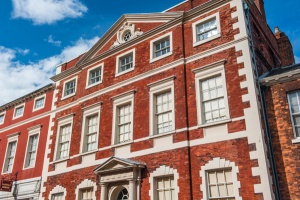
Fairfax House, Castlegate - a preserved Georgian townhouse.
Mansion House - built in 1725 as the official residence of the Lord Mayor
Back: Civil War York
Next: Victorian York