Stone Circles and other prehistoric sites in Cornwall
- Map of Prehistoric Sites in Cornwall
- Map of ALL Prehistoric Sites in England
- Map of all attractions in Cornwall
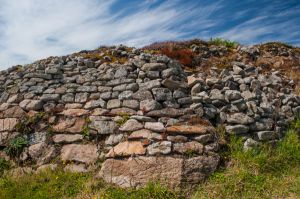
Ballowall Barrow is a prehistoric burial site in a marvellous clifftop location near St Just. Ballowall was used throughout the Neolithic and Middle Bronze Ages. The cairn, which is 67 feet in diameter, was concealed for many years beneath the spoilage of tin mining, but when finally excavated in 1878 revealed that the site was based around a round chambered cairn, entered by a covered gallery about 11 feet long.
St Just, Cornwall, England
Heritage Rating:  ?
?
Nearest Self Catering Cottages
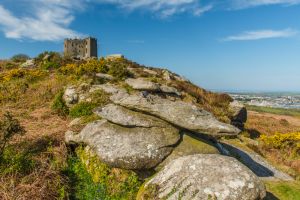
A Neolithic hilltop settlement towering over Redruth, dating from about 3900 BC. The site was used for thousands of years, and excavations have revealed Neolithic remains, Bronze Age axes, golden Celtic coins, Roman coins, and later artefacts.
Carn Brea Village, Redruth, Cornwall, England,
Heritage Rating:  ?
?
Heritage Highlight: The first 'tor enclosure' settlement to be identified
Nearest Self Catering Cottages
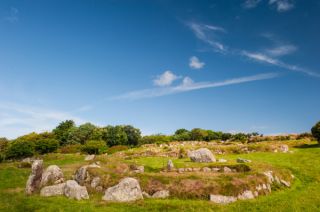
There are a number of so-called 'ancient villages' in the southwest of England. Perhaps the most well known is Chysauster, but just a short distance away from Chysauster is Carn Euny, one of the best-preserved village sites in Cornwall. The village was occupied from the Iron Age to the late Roman period, and the remains include stone foundations of domestic buildings and an underground passage of the type known as a fogou.
Brane, Cornwall, England, TR20 8RB
Heritage Rating: ?
Nearest Self Catering Cottages
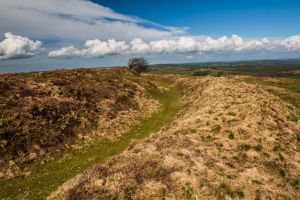
At the summit of Castle Down, near St Columb Major, is a superb Iron Age hillfort, dating to the 3rd-century BC. The hillfort is composed of three concentric rings of earthwork banks and ditches, 850 feet in diameter. Castle an Dinas is linked to the legend of King Arthur, who is said to have had a hunting lodge within the earthworks.
St Columb Major, Cornwall, England
Heritage Rating:  ?
?
Heritage Highlight: One of the best-preserved Iron Age hillforts in south-west England
Nearest Self Catering Cottages
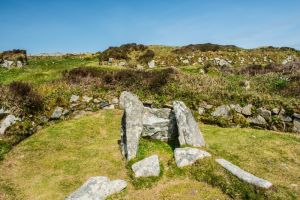
One of the best-preserved Iron Age villages in England, Chysauster was inhabited from 100 BC into the 3rd century AD. The village was probably created by the Cornish Dumnonii tribe. Ten courtyard houses have been found, laid out in two rows along a street. Apart from this main grouping of huts is a further stone house, and there are several outlying buildings in fields surrounding the sloping site.
New Mill, Penzance, Cornwall, England, TR20 8XA
Heritage Rating: ?
Heritage Highlight: An excellent example of a rare form of Iron Age hut village
Nearest Self Catering Cottages
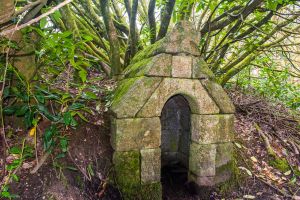
An ancient holy well linked to the 6th century St Cuby is set into a sloping hillside near Duloe. A 15th-century wellhead protects an inner chamber with a square basin, fed by an underground spring. Access is through an outer chamber with a stone bench.
B3254, Duloe, Cornwall, England
Heritage Rating: ?
Heritage Highlight: Possibly established by St Cuby in the 6th century
Nearest Self Catering Cottages
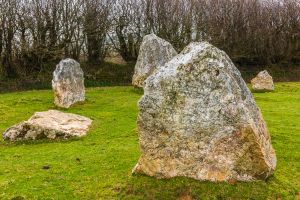
Duloe Stone Circle is made up of eight stones, including one fallen stone, laid out in a north-south oval alignment. The quartz stones are the largest of any stone circle in Cornwall, though the circle itself is the smallest in diameter.
B3254, Duloe, Cornwall, England
Heritage Rating: ?
Heritage Highlight: Has the largest stones of any Cornish stone circle
Nearest Self Catering Cottages
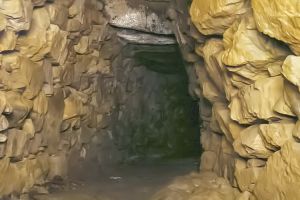
Halliggye Fogou is an underground chamber believed to date from as early as 500 BC. The chamber was in use until at least the 2nd century AD. The fogou is located within an enclosing earthwork, possibly an Iron Age settlement, or fort, defended by two concentric ramparts of earth.
Mawgan, Cornwall, England, TR12 6AQ
Heritage Rating: ?
Nearest Self Catering Cottages
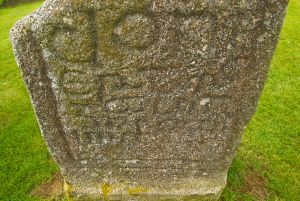
King Doniert's Stone consists of the remains of two richly carved 9th-century Celtic crosses. The crosses commemorate the Celtic king Dumgarth, who ruled the kingdom of Dumnonia until he died by drowning about AD 875.
St Cleer, Cornwall, England, PL14 6EG
Heritage Rating: ?
Nearest Self Catering Cottages
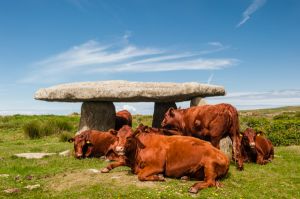
A fascinating prehistoric monument composed of three upright stones supporting a very large capstone weighing 13 tonnes, Lanyon Quoit is probably all that remains of a chambered tomb, or possibly a long barrow. The tomb would originally have been covered with turf. A local name for the Quoit is the Giant's Tomb, as it was reported that the bones of a giant were found within the monument.
Madron, Cornwall, England
Heritage Rating: ?
Nearest Self Catering Cottages