Prehistoric sites in Wiltshire
- Map of Prehistoric Sites in Wiltshire
- Map of ALL Prehistoric Sites in England
- Map of all attractions in Wiltshire
From Stone circles to long barrows, Wiltshire is a treasure trove for those who enjoy exploring England's past.
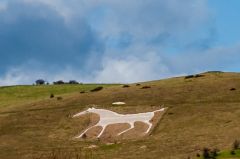
One of eight existing figures of white horses carved into the chalk hills of Wiltshire, the Alton Priors White Horse was created in 1812 by a local landowner. The horse is set on a sloping hill near a pair of Iron Age hillforts.
Alton Priors, Wiltshire, England
Heritage Rating:  ?
?
Heritage Highlight: Located near a pair of Iron age hillforts
Nearest Self Catering Cottages

Traditionally known simply as 'The Sanctuary', this is a complex late Neolithic site, with the major phase of construction in about 2500 BCE. The Sanctuary is comprised of a concentric arrangement of wooden and stone posts. The location of the post holes is marked by concrete marker stones, which, while missing a lot of the atmosphere of well-preserved stone circles, does help you to easily view the layout of the site.
Overton Hill, A4, Avebury, Wiltshire, England, SN8 1EY
Heritage Rating: ?
Heritage Highlight: Though not imposing, the historical significance of this site, joined to the rest of the Avebury complex, is impressive.
Nearest Self Catering Cottages

Avebury Henge and Stone Circles are unique in that the village of Avebury lies partly within the henge and outer circle of stones, and roads split the henge into four parts. The outer stone circle at Avebury is roughly a quarter mile across, enclosing an area of about 30 acres, and it contains two smaller circles within it.
Avebury, Wiltshire, England, SN8 1RF
Heritage Rating:  ?
?
Heritage Highlight: The largest prehistoric monument in England
Nearest Self Catering Cottages

Bratton Camp is an Iron Age hillfort on Bratton Down, with two ditches and banks enclosing an area of 25 acres. At the centre of the site is a Neolithic long barrow, which predates the hillfort by up to 2000 years.
B3098, Bratton Road, Bratton, Wiltshire, England, BA13 3EP
Heritage Rating:  ?
?
Nearest Self Catering Cottages

Chisbury Camp is an Iron Age hillfort which was later occupied during the Roman period. The hillfort is 14 acres in size, with two, or, in some places, three sets of banks and ditch defences. Iron Age beads were found in the centre of the site, near later Roman pottery.
Chisbury, Wiltshire, England
Heritage Rating: ?
Nearest Self Catering Cottages

An Iron Age hillfort crowns the summit of Cley Hill. Within the earthworks is a Bronze Age bowl barrow, and across the Iron Age defences are a series of medieval strip lynchets. The hill is an SSSI (Site of Special Scientific Interest), known for its wild orchids.
Corsley, Warminster, Wiltshire, England, BA12 7QU
Heritage Rating: ?
Heritage Highlight: Bowl barrows inside the Iron Age earthworks
Nearest Self Catering Cottages

Figsbury Ring is an unusual combination of a Neolithic henge contained within the earthworks of a later Iron Age hillfort. The entire monument is a Site of Special Scientific Interest and is home to a carpet of wild orchids in late spring.
A30, Salisbury, Wiltshire, England, SP4 6DT
Heritage Rating: ?
Heritage Highlight: Unusual combined hillfort and henge
Nearest Self Catering Cottages
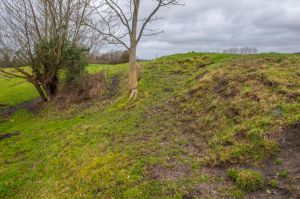
Hatfield Earthworks is a Neolithic henge and mound, located beside the River Avon. The henge is bounded by a bank and internal ditch and encloses an area of about 35 acres. The earthworks are incomplete, especially on the southwest-facing river side of the site, and there are two causewayed entrances.
The Street, Marden, Wiltshire, England, SN10 3RQ
Heritage Rating: ?
Nearest Self Catering Cottages
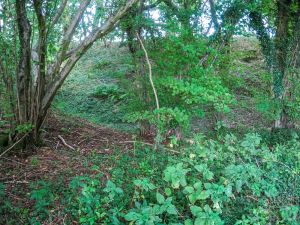
Membury Hillfort has to be among the largest hill forts in the country, being more than 400 metres across. It consists of a treed rampart enclosing a large field and a pond, surrounded by trees, quite a strange feature in a hill fort.
Membury, Wiltshire, England
Heritage Rating: ?
Heritage Highlight: One of the largest hillforts in the country in area
Nearest Self Catering Cottages

The Iron Age hillfort known as Oldbury Castle occupies the summit of Cherhill Down, a National Trust protected area near Calne, Wiltshire. The hillfort covers 22 acres (9ha) and is defended by two earthworks and ditches on three sides. The hillfort stands directly above Cherhill White Horse.
Cherhill Down, Cherhill, Wiltshire, England, SN11 8UY
Heritage Rating: ?
Heritage Highlight: Iron Age earthworks with earlier Bronze Age features
Nearest Self Catering Cottages