Historic Towns and Villages in Norfolk
- Map of Towns and Villages in Norfolk
- Map of ALL Towns and Villages in England
- Map of all attractions in Norfolk
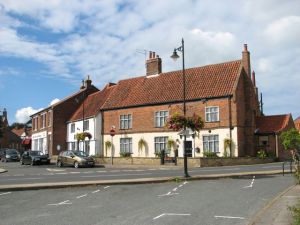
Acle is a small market town on the edge of the Norfolk Broads. The village was a trading port in Roman times, but now Acle is well inland of the sea. The church of St Edmund may date to Saxon times, with the addition of a 13th-century nave. The partial ruins of 13th century Weybridge Priory stand near Acle Bridge.
Acle, Norfolk, England
Heritage Rating:  ?
?
Nearest Self Catering Cottages
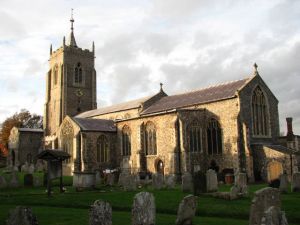
A market town in rural Norfolk, but with easy access to the North Norfolk Coast, Aylsham dates to before the Domesday Book. In the Middle Ages, the town was a centre of the cloth industry. Just two miles away is the superb stately home of Blickling Hall.
Aylsham, Norfolk, England
Heritage Rating: ?
Heritage Highlight: The Jacobean mansion of Blickling Hall
Nearest Self Catering Cottages
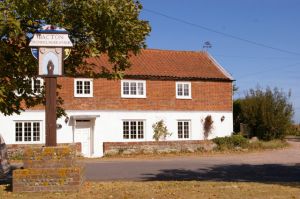
A coastal village in north Norfolk, with excellent clifftop walks and stunning coastal scenery. Bacton is best known today for the large gas pipeline terminal on the edge of the village. The partial remains of Broomholm Priory stand just outside Bacton. Broomholm (or Bronholm as it is sometimes called) was established by William de Glanvill for the Cluniac order in 1113.
Bacton, Norfolk, England
Heritage Rating:  ?
?
Nearest Self Catering Cottages
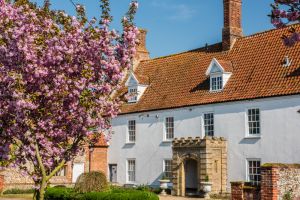
An attractive village notable for the wonderfully situated remains of Binham Priory, on the outskirts of the village. The priory was one of the earliest Norman monasteries in England, and the nave of the old priory now serves as the parish church of Binham. The historic village of Walsingham is only a few miles away.
Binham, Norfolk, England
Heritage Rating: ?
Heritage Highlight: 11th century Binham Priory ruins
Nearest Self Catering Cottages
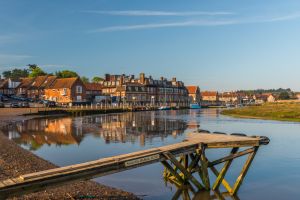
A very popular boating centre on the north Norfolk Coast, Blakeney is famous for the colony of seals which inhabit the sandbank at Blakeney Point. Visitors can take regular boat trips from Blakeney harbour to see the seals. Blakeney is ringed by salt marshes which make it a popular centre for bird-watchers. Over 1100 acres of salt marshes around the town are home to a variety of wading birds.
Blakeney, Norfolk, England
Heritage Rating: ?
Heritage Highlight: 13th century St Nicholas church with its medieval watchtower
Nearest Self Catering Cottages

A village situated on the north bank of the River Yare, in the Norfolk Broads, Brundell is a popular boating destination. The Romans may have used Brundall as a centre for boat building, and the same activity is carried on today. Indeed, it is thought that the village was named by the Romans for Brindisi, in Italy.
Brundall, Norfolk, England
Heritage Rating: ?
Nearest Self Catering Cottages
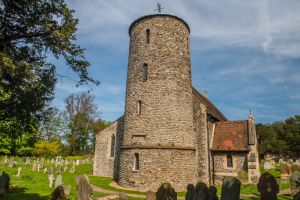
There are no less than seven Burnhams; the Deepdale version is a popular village on Brancaster Staithe, near the north Norfolk coast. The coastal footpath runs through Burnham Deepdale, and there are wide stretches of salt marshes offering excellent bird watching opportunities.
Burnham Deepdale, Norfolk, England
Heritage Rating: ?
Heritage Highlight: Labours of the Months font in St Mary's church
Nearest Self Catering Cottages

Burnham Market is a pretty village near the north Norfolk coast. Many of the attractive houses that line the streets date to the 17th and 18th centuries. The village has associations with Admiral Horatio Nelson, who visited here often. Nelson was a native of nearby Burnham Thorpe, but his father, Edmund, had a house in Burnham Market; the property known today as Church House.
Burnham Market, Norfolk, England
Heritage Rating: ?
Nearest Self Catering Cottages
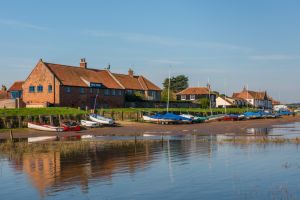
There are two parts to this attractive Norfolk village; the Town, where the 11th-century church of St Clement stands, and the Staithe, a popular pleasure boating centre one mile away. On the coast road is an attractive 19th-century tower mill and a 1737 water mill on the River Burn.
Burnham Overy, Norfolk, England
Heritage Rating: ?
Heritage Highlight: 11th-century St Clement's Church
Nearest Self Catering Cottages
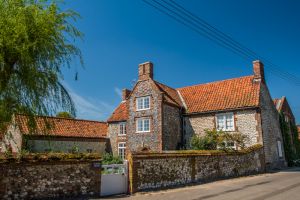
A small village on the north Norfolk coast, Burnham Thorpe is known as the birthplace of Admiral Horatio Nelson, victor of the Battle of Trafalgar. Nelson was born in the old rectory (now demolished), and a plaque commemorates the site.
Burnham Thorpe, Norfolk, England
Heritage Rating: ?
Heritage Highlight: Birthplace of Admiral Horatio Nelson
Nearest Self Catering Cottages