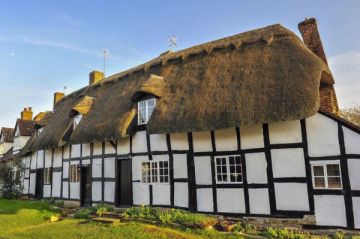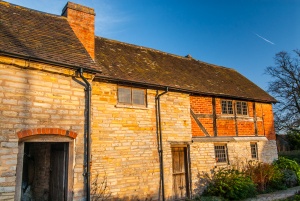
Three miles outside Stratford to the north lies the small village of Wilmcote. Here stands a lovely half-timbered Tudor farmhouse built of oak from the nearby Forest of Arden and stone from Wilmcote.
This was the childhood home of Mary Arden, the eighth daughter of a well-to-do yeoman farmer named Robert Arden. The house is indicative of how a better-off family would have lived in the late Tudor period.
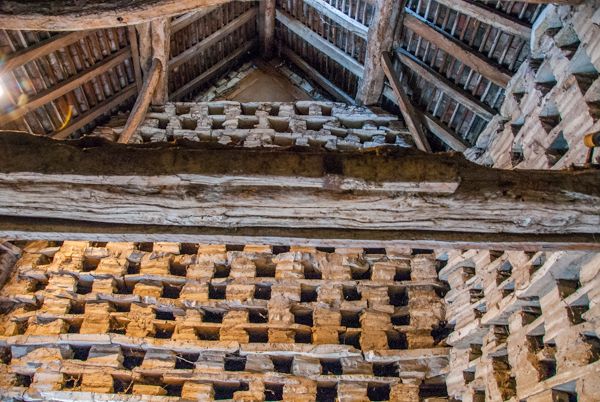
There is more to Mary Arden's House than the Tudor farmhouse. In the grounds are several interesting buildings, including stables, a cider mill, and a dovecote with nesting holes for 657 doves.
Which house did Mary Arden live in?
An interesting tale adheres to Mary Arden's House. For centuries the traditional farmhouse immediately the east of the current visitor parking lot was thought to be the house where Shakespeare's mother was born and lived prior to her marriage to John Shakespeare.
The identification of this building as Mary Arden's House was based on local tradition. A few years ago the adjoining farm came on the market. This property was purchased by the Shakespeare Birthplace Trust to prevent any modern development being built on the site. It was only later than detective work by historians revealed that this adjoining farm was, in fact, the actual home of Mary Arden!
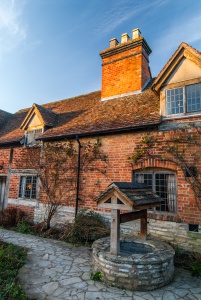
So if you see pictures taken prior to the year 2000, the building portrayed as Mary Arden's House is actually Palmer's Farm. Today, a visit to Mary Arden's House takes in two adjoining groups of traditional rural buildings.
The first, Palmer's Farm, is displayed very much as a wealthy Elizabethan farm would have lived. There are lovely pieces of rural furniture, a huge inglenook fireplace, and delightfully sloping floors in the upstairs bedrooms.
Note that the timber framing on the side of the house facing the road features thick timbers set close together, while the timbers on the other side of the house are set relatively far apart. Historians speculate that the house builders wanted to impress their neighbours with the number of timbers they could afford to use, but since no one but them could see the other side of the house they skimped.
Though it seems funny, it does show how conscious of status symbols and wealth the Elizabethan period became, as social standing began a slow move away from status based on noble name and rank, to a system that recognized wealth as the major basis for status.
Perhaps the finest piece of furniture is a 16th-century cupboard with Stuart panelling. More rare is a lovely copper mould for making sugar biscuits. Children will especially enjoy the Elizabethan mousetrap, which thuds down with a startling 'thump' on an unsuspecting model mouse.
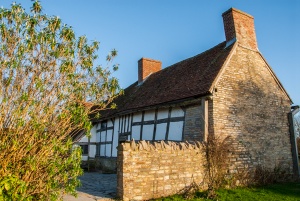
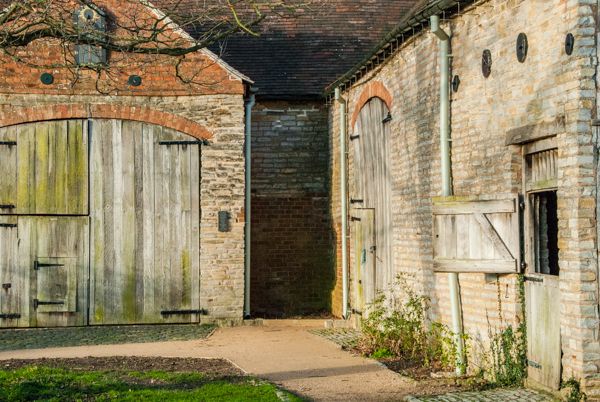
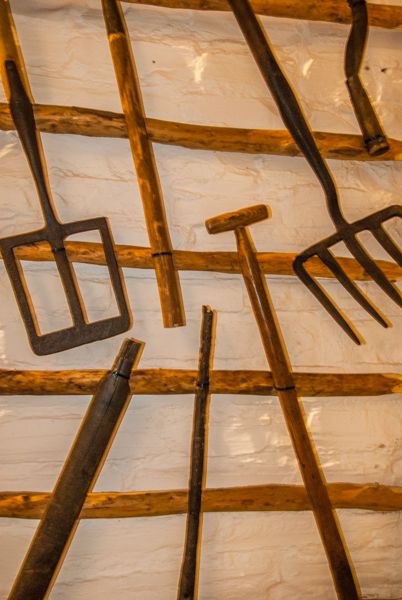
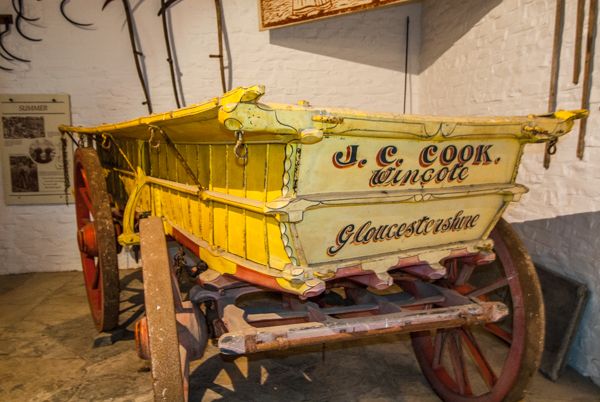
Outside the house is a collection of stone and wooden farm buildings housing displays of rural crafts and farm implements, including a display of cruck framing, a cooper's workshop, and a stone cider press. One striking building is the dovecote, which has holes for 657 birds. The dovecote was seen as another status symbol, and a sign of the wealth of the family that owned the farm.
The second farmhouse you come to is Mary Arden's House. Until the 1970s the house was owned by an elderly woman who had lived there since the 1920s. When she died, the house was preserved very much as she had left it. So the interior is an intriguing time capsule of traditional Victorian and Edwardian household implements and furniture.
This presents an intriguing contrast to the very different Elizabethan furnishings of Palmer's Farm, which offers a much better idea of how Mary Arden would have lived.
Mary Arden's House for Families
Aside from the domestic buildings and rural life displays, there is quite a lot for families to explore; there is a pigsty - featuring some very friendly pigs - a nature trail and wildflower meadow, an adventure playground, Cotswold sheep, and Longhorn cattle. But the most popular feature for children is the falconry display, where children of any age can watch, and get to hold, birds of prey. Our children, ages 6 and 12, enjoyed their visit immensely.
Tudor farmhouse
Medieval dovecote
Traditional farm buildings and crafts
More Photos

About Mary Arden's House
Address: Station Road,
Wilmscote,
Warwickshire,
England, CV37 9UN
Attraction Type: Historic Building
Website: Mary Arden's House
Location
map
OS: SP166 582
Photo Credit: David Ross and Britain Express
HERITAGE
 We've 'tagged' this attraction information to help you find related historic attractions and learn more about major time periods mentioned.
Historic Time Periods:
Find other attractions tagged with:
16th century (Time Period) - Edwardian (Historical Reference) - Elizabethan (Architecture) - Medieval (Time Period) - Shakespeare (Person) - Stratford-upon-Avon (Place) - Stuart (Time Period) - Tudor (Time Period) - Victorian (Time Period) -
NEARBY HISTORIC ATTRACTIONS
Heritage Rated from 1- 5 (low to exceptional) on historic interest
Billesley, All Saints Church - 1.5 miles (Historic Church) 
Anne Hathaway's Cottage - 2.4 miles (Historic Building) 
Shakespeare's Birthplace - 2.9 miles (Historic Building)
Nash's House - 3 miles (Historic Building)
New Place - 3 miles (Historic Building)
Shakespeare's Schoolroom & Guildhall - 3.1 miles (Historic Building)
Tudor World - 3.1 miles (Museum)
Hall's Croft - 3.1 miles (Historic Building)
Nearest Holiday Cottages to Mary Arden's House:
Stratford-upon-Avon, Warwickshire
Sleeps: 4
Stay from: £451.00 - 1987.00
Stratford-upon-Avon, Warwickshire
Sleeps: 4
Stay from: £444.00 - 1670.00
Stratford-upon-Avon, Warwickshire
Sleeps: 4
Stay from: £448.00 - 1745.00
More self catering near Mary Arden's House