Castles in Clwyd, North Wales - Denbighshire and Flintshire
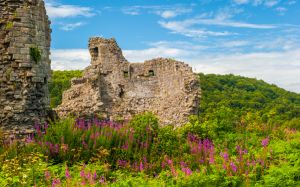
Caergwrle Castle was begun by Dafydd ap Grufudd in 1277 and was destroyed a mere seven years later. The castle was ruined in the subsequent conflict with Edward I, but later rebuilt by Edward. A fire damaged the castle and it was never repaired. Sections of the curtain wall remain, with a round keep and corner towers, all in a poor state.
Wrexham Road, Caergwrle, Clwyd, Wales
Heritage Rating:  ?
?
Nearest Self Catering Cottages

Here's romance! The dramatic castle of Dinas Bran is one of the most beautifully situated castles in Wales - and that's saying something. Set high on a hill above Llangollen, Dinas Bran, or Crow Castle, as it is popularly known, is inextricably linked to the legends of King Arthur. The castle was mentioned in the Arthurian romance Perlesvaus as a possible hiding place of the Holy Grail, and home of Bran (Bron), the Fisher King, brother-in-law of Joseph of Arimathea.
Llangollen, Clwyd, Wales
Heritage Rating:  ?
?
Heritage Highlight: Myths and legends cling to this romantic ruin
Nearest Self Catering Cottages

Chirk Castle is a Border fortress begun by Roger Mortimer around 1295 and completed in 1310. The castle was remodelled extensively by Sir Thomas Myddelton in the late 16th century and rebuilt following damage in the English Civil War. The grim stone structure is set in lovely parkland of a more peaceful 18th century. Luxurious staterooms in neo-Classical style adorn the interior, giving the lie to the forbidding exterior. Offa's Dyke runs through the park surrounding the castle.
Chirk, Wrexham, Clwyd, Wales, LL14 5AF
Heritage Rating: ?
Nearest Self Catering Cottages

Denbigh Castle was begun in 1282 by Henry de Lacy for Edward I during Edward's great push to subdue Wales. De Lacy, perhaps symbolically, built his fortress on top of an earlier Welsh castle occupied by Dafydd ap Gruffudd. Every trace of the Welsh castle was destroyed, and walls of the new Norman English building were extended to include a new English settlement. The Welsh temporarily took the castle during the uprising of 1294.
Castle Lane, Denbigh, Clwyd, Wales
Heritage Rating: ?
Nearest Self Catering Cottages
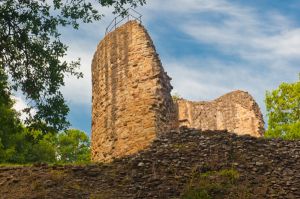
The origins of Ewloe Castle are somewhat unclear. There may have been a simple earthwork and timber fortification here from the time of Owain Gwynedd, but the earliest record we have of a castle at Ewloe dates from 1257, after Llewelyn Fawr captured this area of Flintshire from the English crown.
Ewloe, Hawarden, Clwyd, Wales
Heritage Rating: ?
Nearest Self Catering Cottages
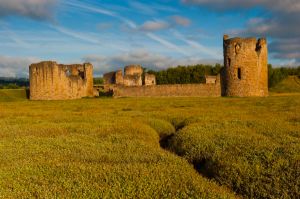
When Edward I made his first incursion into the north Wales kingdom of Gwynedd in 1277 he began a programme of castle building to strengthen his claim to rule, and dominate the Welsh. One of the first Edwardian castles was at Flint, the 'gateway to Wales'. The masonry castle linked to a fortified town was to serve as a model for subsequent building projects throughout the region.
Flint, Clwyd, Wales
Heritage Rating: ?
Nearest Self Catering Cottages
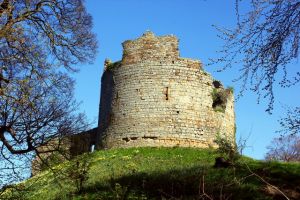
A Norman earthwork motte survives of an early castle that was later built in stone about 1280. A well preserved circular keep and scant remains of a rectangular tower remain from the stone castle.
Hawarden, Clwyd, Wales
Heritage Rating: ?
Nearest Self Catering Cottages
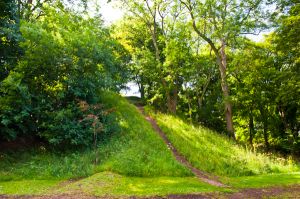
Mold Castle consists of the remains of a Norman motte and bailey timber fortress built upon a natural hill. The first written record of a castle here comes from 1146 but it seems likely the castle we see today was built around 1100.
Pwll Glas, Mold, Clwyd, Wales
Heritage Rating: ?
Nearest Self Catering Cottages
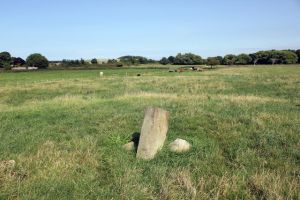
The scanty remains of a motte with surrounding ditch and bailey, built c1165, later destroyed by Owain Gwynedd. Prestatyn Castle consists of a rectangular enclosure surrounded by remnants of a stone wall and a ditch.
Prestatyn Road, Prestatyn, Clwyd, Wales
Heritage Rating: ?
Nearest Self Catering Cottages

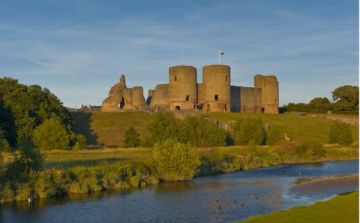
Rhuddlan Castle is famous for being the place where Edward I issued the document in 1284 that set up the government of Wales under his rule. He held a parliament in the town, and a plaque is on the wall of the Old Parliament House commemorating the event.
Castle Gate, Castle Street, Rhuddlan, Clwyd, Wales, LL18 5AD
Heritage Rating: ?
Heritage Highlight: One of the great castles of Wales, the site where Edward I proclaimed his Statue of Wales
Nearest Self Catering Cottages