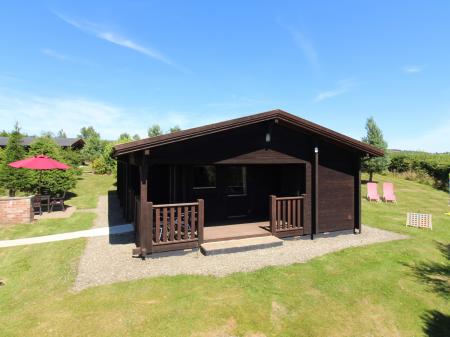
Traditional farmworkers' cottage, fenman's hut, village shop, stone barn and workshops all recreate farm life in Cambridgeshire over the centuries. Lending to the historical presence is adjacent Denny Abbey.
Ely Road,
Waterbeach,
Cambridge,
Cambridgeshire,
England,
CB5 9PQ
A superb medieval church at the southern end of Herefordshire's Golden Valley that once served as the church of a Cistercian abbey. The abbey was founded in 1147 by monks from Morimond in France - the only daughter house ever founded by Morimond. The church was begun in 1175 and consecrated one century later.
The rather scanty remains of 13th century Greyfriars Priory stand on the slope of a hill overlooking the vanished port of this once bustling town. Now little more than a small village, Dunwich was once a busy shipping centre, one of the busiest ports in the east of England. At one time there were at least 15 churches and other religious establishments at Dunwich, of which Greyfriars was but one. Other religious orders with a presence at Dunwich included the Hospitallers, Benedictines, and Dominicans (Blackfriars). However the encroaching sea buried medieval Dunwich beneath the waves, and the ruins of Greyfriars are one of the last remaining reminders of the historic past.
Westleton Road,
Dunwich,
Suffolk,
England
A Premonstratensian monastery established around 1300 on the banks of the River Swale. The refectory stands to a considerable height, and there are remnants of wall paintings in the old parish church in the abbey grounds. Easby Abbey is situated in a lovely dell in wooded countryside but within sight of Richmond Castle, and there is a path along the river joining the abbey and castle. Easby Abbey is in the care of English Heritage.
Richmond,
Yorkshire,
England
Established in the 12th century by the Archbishop of Canterbury as a place of hospitality to pilgrims, Eastbridge Hospital has operated as an almshouse for the last 400 years. View the Gothic undercoft, Pilgrims Chapel, and see the Refectory with its 13th century wall paintings.
25 High Street,
Canterbury,
Kent,
England,
CT1 2BD
A beautifully situated medieval abbey overlooking the River Tees, just south east of Barnard Castle. Egglestone Abbey was established around 1195 by a group of Premonstratensian canons, on land donated by Ralph de Multon. Unfortunately the donor was only renting the land from Ralph de Lenham, and did not have the right to donate it! De Multon was fined 15 marks, but the canons were allowed to stay.
Barnard Castle,
County Durham,
England
The village parish church of St Mary and St Helena evidences the long history of the site as a Benedictine founded in 1078 by Judith, niece of William the Conqueror. Once part of the nunnery church, it is unusual in maintaining a campanile, or detatched bell tower, which was erected after the nunnery tower was demolished.
Church End,
Elstow,
Bedfordshire,
England,
MK42 9XT
Extensive remains of a 12th century Cistercian abbey, that has been named a World Heritage site. Named after the many springs in the area, Fountains grew to become one of the largest and richest houses in Britain. The architecture is superb, including the surviving 168 ft. tower. In October, Fountains hosts a "son et lumiere" show (sound and light to us uneducated louts).
Ripon,
Yorkshire,
England,
HG4 3DY
A wonderful church and small chapter house grace this ruined abbey of red sandstone in a secluded valley near Barrow-in-Furness.
Barrow-in-Furness,
Cumbria,
England,
LA13 0PS
Is there a place more steeped in legend and myth than Glastonbury? Probably not. Legend holds that the earliest church here was founded by St. Joseph of Arimathea in about 60AD, and that when he planted his staff in the earth a thorn tree burst forth. In the grounds of the ruined Benedictine monastery there is a thorn tree of a variety common to the Middle East which is given to bloom around Christmas time.
By the late Middle Ages Glastonbury had become the richest abbey in England, due to the heavy pilgrimage trade. It was rich enough to build an inn for well-to-do pilgrims (the George Inn, on nearby High Street, which still welcomes guests 500 years later). The best preserved building in the abbey grounds is the old Abbot's Kitchen, a curious square building which appears round due to its octagonal roof. In the abbey grounds are the reputed graves of King Arthur and Queen Guinevere, which were conveniently discovered by the Glastonbury monks in the 12th century, when the abbey needed a financial boost. Outside the grounds are the abbey tithe barn, which now serves as a wonderful rural museum, and 4 miles away at Mere is the abbey's Fish House, were fish was salted and cured.
Glastonbury,
Somerset,
England,
BA6 9EL
Greyfriars is the partial remain of an early Tudor friary church of the Franciscan order of monks. The Franciscans were often called 'Grey Friars' due to the colour of their robes.
Greyfriars Walk,
Gloucester,
Gloucestershire,
England
Ruins of a Cistercian abbey founded in 1246. Hailes was an important pilgrimage site in the Middle Ages. There is a small museum.
Winchcombe,
Cheltenham,
Gloucestershire,
England,
GL54 5PB
The ruins of a 12th century Augustinian abbey in a lovely rural setting. The roots of Haughmond Abbey go back to the 11th century when a a small religious community was established here. Around 1135 the community was refounded as a house of Augustinian canons under the patronage of William Fitzalan of Clun, and finally, in 1155 it became a full-fledged abbey.
Shrewsbury,
Shropshire,
England
Hulne Priory, was founded in 1240 by Carmelite monks, making it perhaps the first Carmelite priory in England. The priory was destroyed during the Dissolution of the Monasteries by Henry VIII, but considerable parts of the monastic buildings remain intact. Among the remains are scattered Victorian sculptures of monks praying. After the priory was dissolved the property fell to the Percy family, Dukes of Northumberland, and the priory buildings now stand amidst Hulne Park, used by the Dukes as a hunting park. A very short walk away is Alnwick Abbey Gatehouse, the only surviving part of a 12th century Premonstratensian abbey.
Hulne Park,
Alnwick,
Northumberland,
England
Attraction Type:
Abbey Heritage Rating:? Location: From Alnwick take Ratten Row, off the B6346 Wooler road. Limited parking along the verge for foot access to Hulne Park. Public access to the park is permitted, but there are no visitor facilities.
OSNU164157 Nearest
attractions and accommodation Nearest:hotels - cottages - Bed
and Breakfasts
Jarrow's monastery of St Paul was one of the most influential centres of learning in the late Saxon era, with a reputation that spread across Europe. The monastery was established by Benedic Biscop, a Northumbrian noble who lived from about 628-690 AD. Biscop is said to hae been religiously inspired after a visit to Rome. Biscop obtained a grant of land at Wearmouth from Ecgrifth, King of Northumbria, and there he established St Peter's monastery. He obtained a second grant of land at Jarrow, where he established St Paul's monastery in about 681 AD.
Jarrow,
Tyne and Wear,
England
Attraction Type:
Abbey Heritage Highlight: Remains of the 7th century Saxon church are incorporated into the chancel of the current church Heritage Rating:? Location:
In Jarrow, on a minor road north of the A185, just south of the River Tyne; follow signs for Bede's World. Open access site.
Jervaulx Abbey is a ruined Cistercian monastery located in a peaceful valley setting in the Vale of Ure, a few miles east of the Yorkshire Dales. The monastery was founded in 1156 as a daughter house of Byland Abbey. Apart from its historical significance and the beauty of the location, Jervaulx is known for its horticulture; over 180 varieties of wildflower grow in and on the abbey walls.
Park House,
Jervaulx,
Yorkshire Dales,
Yorkshire,
England,
HG4 4PH
A 16th century gatehouse is all that remains of medieval Kingswood Abbey. The gatehouse is composed of a wide central arch with a gabled chamber above, and two story precinct walls to either side. The modern road runs through the gateway arch. The mullioned widow above the archway is beautifully sculptured in late Perpendicular style.
Kirkham Priory was founded as an Augustinian monastic house around 1120 by Walter Espec, Lord of Helmsley. It is rather surprising to consider that in its heyday, Kirkham Priory rivalled Rievaulx Abbey as one of the largest and wealthiest monastic settlements in the north of England. However, that heyday did not last long, and by the late 13th century Kirkham was deeply in debt. Somehow the monks held on until the priory was finally dissolved by Henry VIII.
Augistinian canons founded this priory in 1165. The chancel and transepts are in ruins, but the nave lives on as the parish church. Lovely site in a peaceful, wooded valley.
Lanercost,
Cumbria,
England
Impressive remains of a 14th century Premonstratensian abbey, one of the best preserved monastic sites in Suffolk. The abbey was established in a marshy coastal location south of Minsmere.
B1069,
Leiston,
Suffolk,
England
Lesnes Abbey was founded by Richard de Luci in 1178. De Luci was chief Justiciar of England under Henry II, and he may have founded the abbey in repentance for his role in the murder of Thomas a Becket. The founder's great-granddaughter, Roesia, had her heart buried at the abbey after her death. Only the foundations remain today, but the give an idea of what this small abbey on the banks of the Thames must have been like.
Abbey Road,
Belvedere,
Kent,
England,
DA17 5DL
A lovely 12th century Augustinian Abbey in a peaceful rural setting. The abbey was founded by Richard de Belmeis in 1143 at Lizard, but it moved to Donnington the follwing year and to Lilleshall in 1148. The main buildings were constructed in the 12th and 13th centuries. These include the abbey church, sacristy, chapter house, warming room, kitchen, and refectory.
Lilleshall,
Shropshire,
England
One of the first outposts of Christianity in England. Founded by St. Aidan in the 7th century. The exquisite Lindisfarne Gospels, illuminated here about 698 AD, are now in the British Library. St. Cuthbert was bishop here, and when miracles were reported at his shrine in the 8th century, Lindisfarne became a centre of pilgrimage. The Vikings heard of the monastery's wealth, and sacked the place in 793. Eventually the monks fled Viking persecution, and it was not until the 12th century that the priory was re-established, and it is the ruins of that building that you can see today.
Holy Island,
Berwick-upon-Tweed,
Northumberland,
England,
TD15 2RX