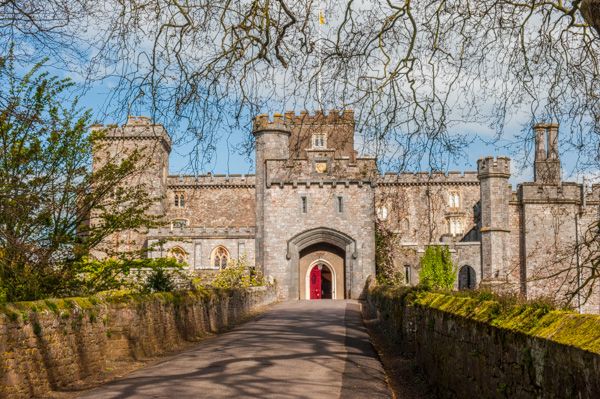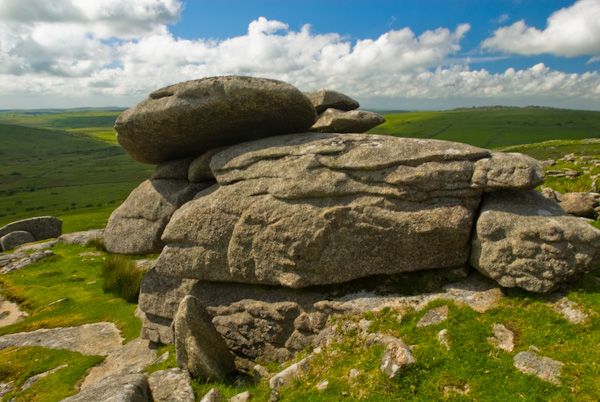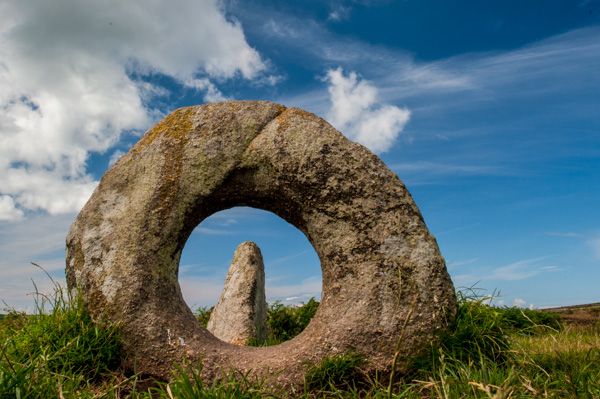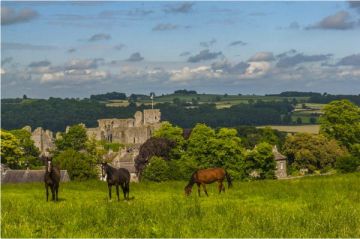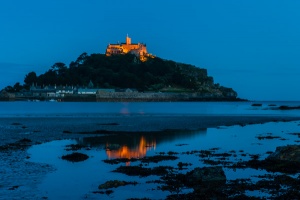
Although you'll hear this region called by many names - The West Country, or simply, The South West - by any name it is an area that is well worth taking the time to explore. In the south of Devon the high plateau of Dartmoor is dotted with prehistoric remains, while wild ponies still graze the moors. Within the bounds of Dartmoor National Park is Castle Drogo, a Victorian stately home built as a mock castle.
There is nothing "mock" about St Michael's Mount. The medieval fortress perches on a rocky island in Mount's Bay near Penzance, Cornwall, and can be reached by a causeway from the mainland only at certain times of day - or by boat for the less adventurous visitor. Penzance itself is a pretty town, made famous by the Gilbert and Sullivan opera "The Pirates of Penzance", and beloved of artists who have flocked to the area for centuries, drawn by the warm light and mild climate.
The West Country is a place of dramatic contrasts; the south coast is mild, warmed by the Gulf Stream, and popular as a boating centre. The south is blessed with a number of superb gardens, among them Trewithen and Trebah, where the unusually warm climate has allowed subtropical and rainforest plants to thrive.

By contrast, the rugged north coast of Cornwall is a haven for surfers drawn by the wind and waves, and the sandy beaches of the south give way to rock-strewn headlands and lonely cliff-top walks. The South West Coast National Trail follows the coast from the borders of Devon to Somerset in the north, providing superb walking and excellent views. In many places your only companions on the trail will be swirling flocks of seabirds.
Along the way, the path passes Tintagel, where the ruins of a medieval castle cling to rocks above the crashing waves. Legends tell that Tintagel was the location of King Arthur's Camelot, or that it was the place of his birth. Further south is St. Ives, another artist's haven, where a mile of golden sand and clear waters could make you think you're on a South Sea island rather than England.

One of the premier attractions in the West Country is Land's End, which is the most westerly point of mainland England. But enterprising visitors will not stop there; a short boat or plane trip brings you to the Isles of Scilly, a bit of tropical paradise transported to English waters. The islands are blessed with the mildest climate in Britain, and boast superb beaches and water sport opportunities.
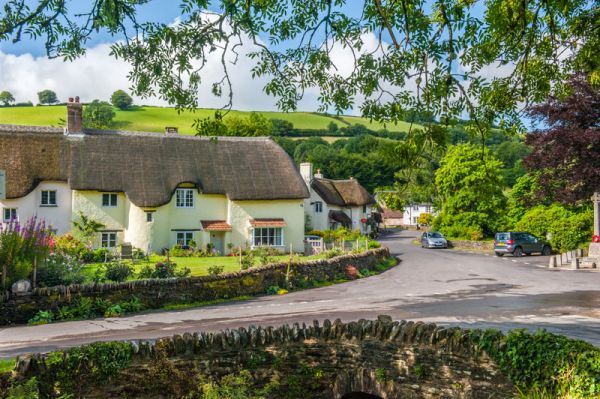
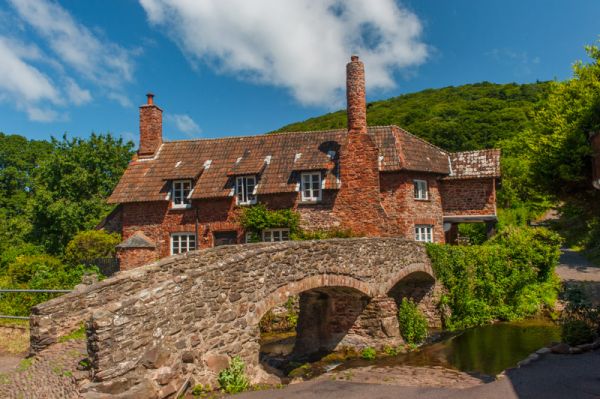
Back on the mainland, another National Park graces the north coast of Devon; Exmoor is excellent walking country, with high plateaus split by steep valleys and dotted with pretty villages like Selworthy, beloved of calendar photographers.
Exmoor verges on the county of Somerset, a pastoral place, where the rural lifestyle still rules, despite the encroachment of seaside resorts. At Glastonbury, the striking Tor with its ruined tower looks out over the Somerset Levels, low fields which were once below water. The Tor is reputed to be the Isle of Avalon, the last resting place of King Arthur, and Arthurian legends abound in the area. The ruin of Glastonbury Abbey hold a grave claimed by medieval monks to be that of Arthur and his queen, Guinivere.
Just a few miles away on the edge of the Mendip Hills is Wells, the smallest city in England, where the magnificent Cathedral is supported by unusual scissor-arches and a 14th-century clock still strikes the hours as clockwork knights do battle. Beyond Wells is the delightfully-named Wookey Hole, natural showcaves which were once inhabited by prehistoric settlers. A more famous underground cousin of Wookey Hole is Cheddar, which gave its name to the cheese which was once stored in its cool caverns.
More Photos