(modelled on Fountains Abbey, Yorkshire)
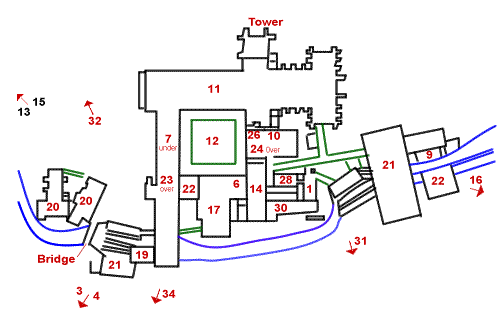
Note: not all the places listed are visible on this plan.
1 Abbot or Prior's house
2 Almonry - where alms in the form of food or money were distributed to the needy by the almoner
3 Bakehouse
4 Brew House
5 Buttery The word has nothing to do with "butter", but comes from old French "boterie" and the Latin "botaria", meaning "cask or bottle". The buttery was a storage area for ale and wine.
6 Calefactory - a warming room
7 Cellarium - A storeroom, often underground
8 Cemetary
9 Chapels
10 Chapter House - the meeting rooms for the administrative body of the monastery. In England the chapter house was usually polygon-shaped, with a sharply pointed roof.
11 Church - usually the first part of the monastery top be completed in stone.
12 Cloister - an open area, often grassed, sometimes with a fountain in the centre.
13 Corn mill
14 Dormitory - often called "dorter" from the French "dortoir", the sleeping quarters of the monks.
15 Farm
16 Fish ponds
17 Fraterhouse - Sometimes called "frater" or "refectory" - the dining area.
18 Garden
19 Garderobes - latrines.
20 Guest Houses
21 Infirmary - the sickroom of the monastery, often with its own chapel and kitchens.
22 Kitchen - the kitchen was generally in a separate building because of the risk of fire.
23 Lay brothers dormitory - the lay brother was not a full-fledged monk. He took religious vows, but focused on a life of manual work, allowing the monks to spend more time in scholarship and contemplation.
24 Library - the precious books and manuscripts of the monastery were often chained to desks, so valuable were they.
25 Locutory - a room for conversation, also a place where monks might meet with people from the outside world.
26 Night Stairs - permitted passage from the dortoir to the church for night services.
27 Piggery
28 Prison cells - a monk or lay brother might be confined in a cell for major transgressions.
29 Quarry
30 Reredorter - Small rooms at the rear of the dorter (dormitory) with seats and running water.
31 Smithy - Located away from the main buildings because of the risk of fire.
32 Stables
33 Workshops
Related:
Life in a Medieval Monastery
Feudalism and Medieval Life
Also see "Medieval London" in our "London History" guide.