Northumberland Towns and Villages Gazetteer
- Map of Towns and Villages in Northumberland
- Map of ALL Towns and Villages in England
- Map of all attractions in Northumberland
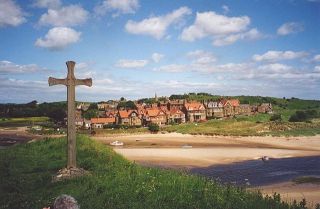
A lovely seaside village at the mouth of the River Aln, Alnmouth was once a busy port until a 19th-century storm changed the course of the river. There may have been a settlement here as early as the 7th century, and Alnmouth has been suggested as the site of a synod in 684 to decide on a bishop for the diocese of Hexham.
Alnmouth, Northumberland, England
Heritage Rating:  ?
?
Nearest Self Catering Cottages

Alnwick is a very pretty town, with plenty of historic interest packed into a small space. The town name gives a clue as to its origins. Alnwick grew up on the River Aln, which translates as bright, or clear. The second part of the name (wick) comes from the Old English 'wic' for a settlement, or trading centre. Thus Alnwick means a settlement on the clear river.
Alnwick, Northumberland, England
Heritage Rating:  ?
?
Heritage Highlight: Medieval Alnwick Castle
Nearest Self Catering Cottages
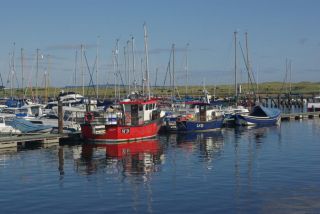
A small town at the mouth of the River Coquet, Amble grew up in the Victorian period as a transport centre for the coal mining industry. Now it is an active fishing port and a popular centre for visitors to Northumberland's coast.
Amble, Northumberland, England
Heritage Rating:  ?
?
Nearest Self Catering Cottages
Bamburgh is a very popular seaside village, dominated by the imposing bulk of Bamburgh Castle, a medieval castle much remodelled during the 17th and 19th centuries. The castle looks out over a broad, sandy beach, which sweeps around the coast to the dramatic ruins of Dunstanburgh Castle.
Bamburgh, Northumberland, England
Heritage Rating: ?
Heritage Highlight: Medieval Bamburgh Castle
Nearest Self Catering Cottages

A small village in central Northumberland, Belsay is home to two historic attractions. The older is Belsay Castle, a 14th-century fortified manor with a tall pele tower. It was constructed about 1370 and was home to the powerful Middleton family. Nearby is the fascinating shell of Belsay Hall, an ornate Victorian mansion built for Sir Charles Monck in the early 19th century.
Belsay, Northumberland, England
Heritage Rating: ?
Heritage Highlight: 14th century Belsay Castle
Nearest Self Catering Cottages

Without a doubt one of the most historic towns in England, Berwick stands at the mouth of the River Tweed, at the border with Scotland. Indeed, over the course of its long and sometimes bloody history, Berwick has been claimed by both Scotland and England. The ruins of a medieval castle still stand in the town, and the old town walls constructed by Elizabeth I of England remain remarkably intact.
Berwick-upon-Tweed, Northumberland, England
Heritage Rating: ?
Heritage Highlight: Medieval town walls and remains of Berwick Castle
Nearest Self Catering Cottages

Blanchland is a small village on the border of Northumberland and County Durham. It deserves its popularity as one of the prettiest villages in the north of England.
Blanchland, Northumberland, England
Heritage Rating: ?
Heritage Highlight: Remains of the abbey gatehouse and abbot's lodgings
Nearest Self Catering Cottages

A busy port town on the Northumberland coast, some 13 miles north of Newcastle, Blyth has a history dating back to the 13th century, but it was really the development of coal mining in the 18th century that put Blyth on the map.
Blyth, Northumberland, England
Heritage Rating: ?
Nearest Self Catering Cottages
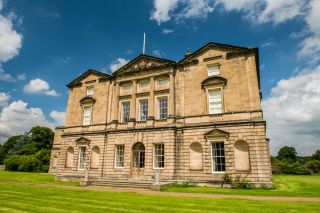
Bywell is a small village situated on the north bank of the Tyne between Hexham and Newcastle. There are four historic buildings of note in this attractive village. The first is Bywell Castle, built by Ralph Mortimer in about 1430. All that remains of the castle is an impressive fortified gatehouse.
Bywell, Northumberland, England
Heritage Rating: ?
Nearest Self Catering Cottages

Chillingham is a hamlet in northern Northumberland best known as the location of Chillingham Castle, home of the Tankerville family. Chillingham Castle is reputedly the most haunted castle in England.
Chillingham, Northumberland, England
Heritage Rating: ?
Heritage Highlight: Haunted Chillingham Castle
Nearest Self Catering Cottages