Castles in Gwynedd
Abergwyngregyn Castle is a simple Norman motte founded by Hugh d'Avranches, Earl of Chester, in about 1090. Today, little remains beyond a tumble of stones marking the location of a stone keep atop the motte. The castle mound was built up with boulders taken from the nearby river.
Abergwyngregyn, Llanfairfechan , Gwynedd, Wales
Heritage Rating:  ?
?
Nearest Self Catering Cottages

Beaumaris Castle is a concentric castle begun in 1295 for Edward I. The castle stands on a marshy plain (the name means "beautiful marsh"). Beamaris was designed by James of St. George, who also worked on Harlech. The innovation here was staggered entrances between the inner and outer walls. The castle was never finished, as the Welsh threat evaporated.
Castle Street, Beaumaris, Anglesey, Gwynedd, Wales, LL58 8AP
Heritage Rating:  ?
?
Nearest Self Catering Cottages
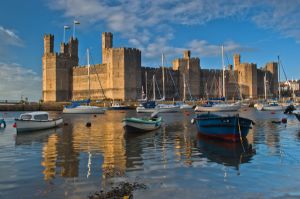
Caernarfon Castle is at the same time a forbidding military fortress and a royal palace. It is in this latter role that Caernarfon is most famous, for it was here that the future Edward II was born, and here that he was named the first Prince of Wales by his astute father. Opulent medieval accommodation is set within a pair of imposing curtain walls. Caernarfon is one of Edward I's most imposing fortresses, and one of the finest medieval castles in Wales.
Castle Ditch, Caernarfon, Snowdonia, Gwynedd, Wales, LL55 2AY
Heritage Rating:  ?
?
Heritage Highlight: The finest of Edward I's Welsh castles and a World Heritage Site
Nearest Self Catering Cottages
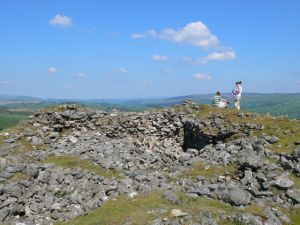
Carndochan Castle is a ruined 13th-century Welsh castle atop a rocky crag near Bala. A traditional Welsh D-shaped tower was augmented with another rounded tower and a small cluster of central buildings within the defensive perimeter. Several other castles and remains of Roman forts are nearby, attesting to the strategic importance of the location.
Llanuwchllyn, Snowdonia, Gwynedd, Wales
Heritage Rating: ?
Nearest Self Catering Cottages
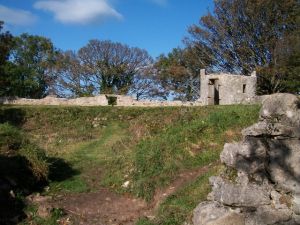
Castell Aberlleiniog is a Norman motte surrounded by a ditch, built around 1088 for Hugh d'Avranche, the powerful first Earl of Chester. The early structure was replaced during the Civil War with a stone building surrounded by a curtain wall.
Llangoed, Anglesey, Gwynedd, Wales
Heritage Rating: ?
Nearest Self Catering Cottages
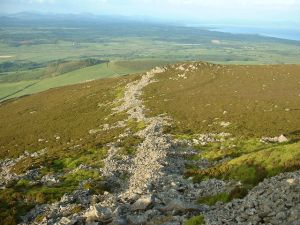
Castell Carn Fadrun is one of the earliest Welsh stone castles, built by the sons of Owain Gwynedd in the late 12th century. The Welsh normally built timber fortifications surrounded by earthwork defences, but here the rudimentary stone buildings are set within the remains of an extensive Iron Age hillfort.
Garnfadryn, Lleyn Peninsula, Gwynedd, Wales
Heritage Rating: ?
Nearest Self Catering Cottages
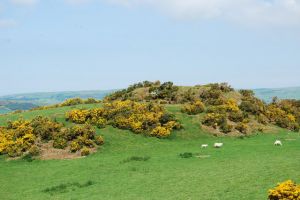
Castell Cynfael is a traditional 12th-century motte and bailey fortress, though built by the Welsh, not the Norman invaders. The bailey was created by cutting a deep ditch across a high promontory, and the site commands good views over the Dysynni below. Tradition holds Cadwaladr ap Grufudd responsible for building Cynfael Castle, sometime in the mid 1100s.
Tywyn, Gwynedd, Wales
Heritage Rating: ?
Nearest Self Catering Cottages

Dramatically sited below Cader Idris, the triangular fortress of Castell-y-Bere rises above the Dysynni valley. The castle was built by Llewelyn the Great in 1221 and fell to Edward I in 1283. Typical of Llewelyn, the castle has twin D-shaped towers. The atmosphere of the ruins is terrific, and the scenery alone makes Castell-y-Bere well worth a visit. The castle site affords fantastic views east towards Cader Idris and west down the valley towards the coast at Tywyn.
Llanfihangel-y-pennant, Abergynolwyn, Gwynedd, Wales, LL36 9TS
Heritage Rating: ?
Nearest Self Catering Cottages

Begun in 1283, bristling with eight round towers and two barbicans. The castle's defensive walls extend to take in the entire medieval core of Conwy town. Edward I considered the site of such strategic importance in his conquest of the Welsh that he rushed craftsmen to Conwy from all over England, and the castle was erected in just one summer of frantic work. The result is one of the most imposing fortresses in all of Europe.
Rose Hill Street, Conwy, Gwynedd, Wales, LL32 8AY
Heritage Rating: ?
Nearest Self Catering Cottages
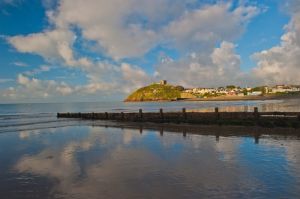
Perched in a lovely location above Tremadog Bay, Criccieth Castle is a dramatic reminder of the conflicts between Welsh and English that helped define the medieval history of Wales. The castle was probably begun in the early 13th century, possibly by Llewelyn the Great. After Llewelyn's death, his sons quarrelled and Dafydd ap Llewelyn held his brother Grufudd prisoner at Criccieth.
Castle Street, Criccieth, Lleyn Peninsula, Gwynedd, Wales, LL52 0DP
Heritage Rating: ?
Nearest Self Catering Cottages