Historic Houses in Gwynedd
- Map of Historic Houses in Gwynedd
- Map of ALL Historic Houses in Wales
- Map of all attractions in Gwynedd
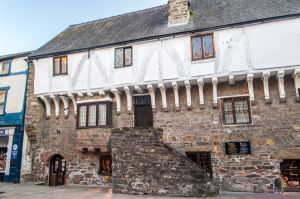
This medieval merchant's house is the oldest dwelling in Wales and features an exhibition on life in Conwy from Roman times to the present.
Castle Street, Conwy, Gwynedd, Wales, LL32 8AY
Heritage Rating:  ?
?
Nearest Self Catering Cottages
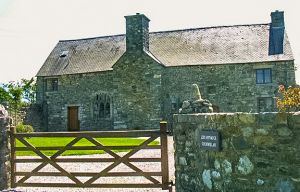
Cochwillan Old Hall is a late 15th century house, considered one of the best examples of a Welsh medieval estate centre. The almost unaltered house retains its medieval hammerbeam roof. Only the hall, solar, and buttery are on view.
Tal y Bont, Bangor, Gwynedd, Wales, LL57 3AZ
Heritage Rating: ?
Heritage Highlight: 15th century hammerbeam roof in the hall
Nearest Self Catering Cottages
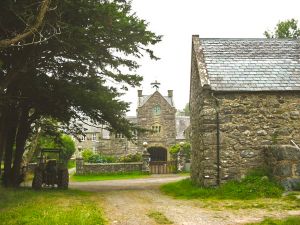
18th century parkland and gardens surround a late 16th century house, home of the Vaughan family for centuries. The house was remodelled in the 18th and 19th centuries and served briefly as a school and hostel.
Dyffryn Ardudwy, Gwynedd, Wales, LL44 2RJ
Heritage Rating:  ?
?
Nearest Self Catering Cottages
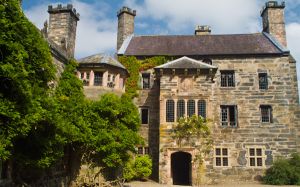
Gwydir Castle is a fortified manor house built around 1500 by the Wynn family, with 17th and 19th century additions. The Tudor courtyard house sits amid Grade 1 listed gardens with a large peacock population. Gwydir is known as one of the most haunted houses in Wales.
Llanrwst, Conwy, Gwynedd, Wales, LL26 0PN
Heritage Rating: ?
Nearest Self Catering Cottages

Penarth Fawr is a well-preserved example of a Welsh gentry house built in the mid 15th century with 18th-century renovations. The house is thought to have been built by Madoc of Penarth in 1416, to a design known as an aisled truss hall house.
Chwilog, Pwllheli , Lleyn Peninsula, Gwynedd, Wales, LL53 6PR
Heritage Rating: ?
Nearest Self Catering Cottages
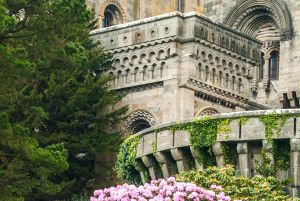
A romantic mock-Gothic fantasy castle built between 1820-1840. The Norman Gothic theme is carried to the interior, which features marvellous plasterwork, some of it painted to resemble wood and stone.
Bangor, Gwynedd, Wales, LL57 4HT
Heritage Rating: ?
Nearest Self Catering Cottages
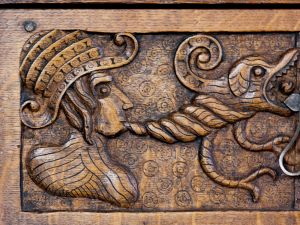
Plas Mawr is one of the finest Elizabethan townhouses in Britain, considered an architectural gem, especially notable for its ornamental plasterwork and original furniture.
High Street, Conwy, Gwynedd, Wales, LL32 8DE
Heritage Rating: ?
Heritage Highlight: Superb 16th century plasterwork
Nearest Self Catering Cottages
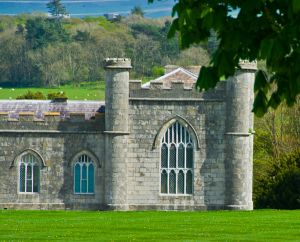
Plas Newydd (not to be confused with the house of the same name at Llangollen), is the family home of the Marquis of Anglesey. The house is an elegant 18th century mansion designed by James Wyatt in a mix of Classical and Gothic styles, built around a 14th century hall.
Llanfairpwyll, Anglesey, Anglesey, Gwynedd, Wales, LL61 6DQ
Heritage Rating:  ?
?
Nearest Self Catering Cottages
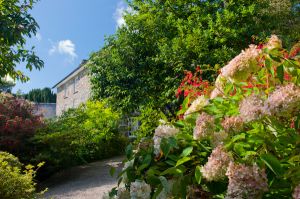
A small 16th century manor house surrounded by extensive gardens, offering wonderful views over Hells Mouth Bay. There was a fortified house at Plas yn Rhiw as early as 900 AD. The house was restored by the three Keating sisters in the 1930s and has been restored by the National Trust to the way it would have been during their tenure in the 30s.
Rhiw, Pwllheli, Lleyn Peninsula, Gwynedd, Wales, LL53 8AB
Heritage Rating: ?
Nearest Self Catering Cottages
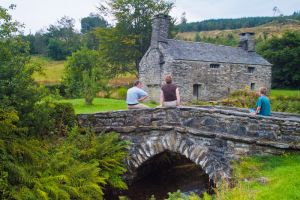
Ty Mawr Wybrnant is a farm dwelling where Bishop William Morgan, the first translator of the Bible into Welsh, was born in 1545. The traditional farmhouse is built of stone and set in a fabulous remote countryside location in the Conwy valley. Pathways lead from the house through the surrounding woodland.
Penmachno, Betws-y-Coed, Snowdonia, Gwynedd, Wales, LL25 0HJ
Heritage Rating: ?
Heritage Highlight: Birthplace of Bishop William Morgan
Nearest Self Catering Cottages