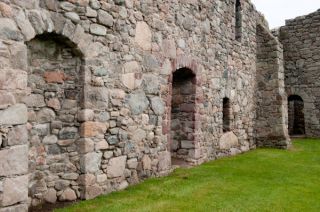
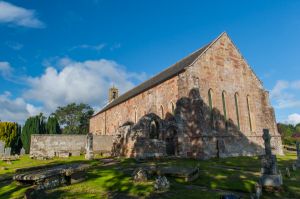
Tradition sugests that the first monastery at Deer was established by St Columba and his follower Drostan. Nothing is known of this early monastery, and indeed, we do not know if the story has any truth. However, there was certainly some sort of monastic settlement here, as evidenced by the Book of Deer, a sort of pocket gospel, written at Deer in the 10th century.
A950,
Old Deer,
Grampian,
Scotland,
AB42 4LP
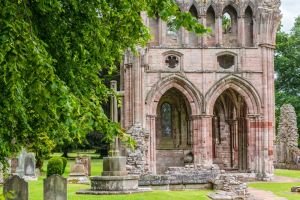
Substantial Premonstratensian ruins from 12th and 13th centuries in beautiful secluded setting on River Tweed. The grave of Sir Walter Scott is in the north transept.
Melrose,
Borders,
Scotland,
TD6 0RQ
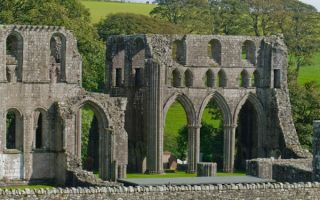
Dundrennan Abbey is perhaps the most complete Cistercian monastery in Scotland and features some of the best Gothic architecture in the country. The abbey was founded in 1142 by Fergus, the first Lord of Galloway, under the patronage of King David I of Scotland, as a daughter house of Rievaulx Abbey in Yorkshire. The same Cistercian monks from Rievaulx went on to found further abbeys in Galloway at Glenluce and Sweetheart.
Dundrennan,
Dumfries and Galloway,
Scotland,
DG6 4QH
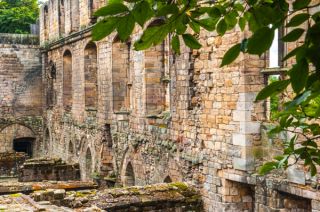
Benedictine priory founded by Queen Margaret in 1070's and elevated to abbey status by David I in 1128. Substantial remains of church, domestic buildings and palace. The western part of the building is the nave of the Abbey church, and the eastern end is the parish kirk. Favorite place for burial of Scottish royalty, including Malcolm Canmore, Queen Margaret and Robert the Bruce - a commemorative brass is found on the floor of the abbey. Adjacent royal palace was the former guesthouse of the abbey. James VI gave the palace to his wife, Anne of Denmark.
St Margaret Street,
Dunfermline,
Fife,
Scotland
This was a religious center as early as the 5th century. The Abbey was founded in the 13th century. The roof collapsed in 1742 and killed 42 people (prophesied in 16th century by a seer).
Fearn,
Highlands and Islands,
Scotland