Castles in Dyfed
(Pembrokeshire, Ceredigion, and Carmarthenshire)
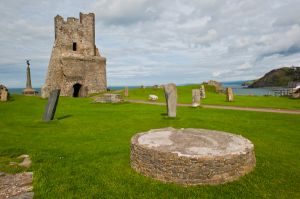
The evocative ruins of Aberystwyth Castle stand on a promontory looking over the harbour. The ruins are the remnants of a late 13th century castle built by Edward I in his push to conquer Wales. There was an earlier castle on the heights of nearby Rhydyfelin, built by the powerful Norman baron, Gilbert de Clare around 1110.
New Promenade, Aberystwyth, Dyfed, Wales
Heritage Rating:  ?
?
Nearest Self Catering Cottages
Caer Penrhos is an earthen ringwork fortification possibly built by Cadwaladr, son of Grufudd ap Cynan, sometime around 1149. The castle is set within an earlier Iron Age earthwork. The views are superb.
Penrhos, Llanrhystud, Dyfed, Wales
Heritage Rating: ?
Nearest Self Catering Cottages

Camrose Castle is a small Norman motte and bailey fortification, built around 1080 as an outlier to Haverfordwest Castle during the first wave of Norman settlement in south Wales. Camrose Castle was one of the Norman 'Landsker' castles, built along an imaginary line between Welsh and English speaking areas of south Wales.
Camrose, Haverfordwest, Dyfed, Wales
Heritage Rating:  ?
?
Nearest Self Catering Cottages
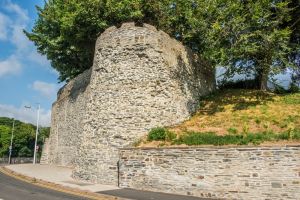
There was a motte and bailey castle here on the banks of the River Teifi as early as 1093, though quite where that early Norman structure was located is a matter of conjecture. In 1110 Gilbert de Clare, who was responsible for quite a few of the early Norman castles in Wales, constructed a second fortification.
Castle Street, Cardigan, Dyfed, Wales, SA43 1JA
Heritage Rating: ?
Nearest Self Catering Cottages

The ruins of Carew Castle stand in majestic splendour on the low banks of the River Carew, near Pembroke. Gerald of Windsor erected a Norman motte and bailey castle here about 1100, building on a still earlier Iron Age fort. It is perhaps odd that the fort was built here in a low-lying position beside the river, rather than on a natural defensive hilltop as was more common.
Carew, Tenby, Dyfed, Wales, SA70 8SL
Heritage Rating:  ?
?
Nearest Self Catering Cottages
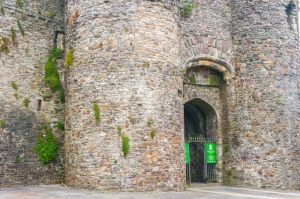
There was a Norman castle in Carmarthen as early as 1094, though perhaps in a different location. By 1105 the current castle occupied its perch on an outcrop above the River Tywi. The original motte was augmented by stone defences in the early 13th century. The curtain wall was added later in that century, and a gatehouse and south-west tower in the 14th century.
Castle Hill, Carmarthen, Dyfed, Wales
Heritage Rating: ?
Nearest Self Catering Cottages
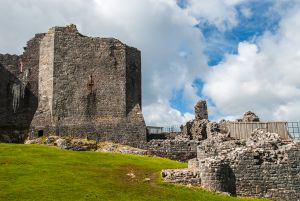
A 13th-century ruin atop a sheer cliff, Carreg Cennen is one of the most dramatically sited of Welsh castles. It's a stiff climb, but worth it just for the atmosphere. The site may have been used by the Romans, as Roman coins and even earlier pre-Roman skeletons have been found here.
Tyr-y-Castel Farm, Trapp, Llandeilo, Dyfed, Wales, SA19 6UA
Heritage Rating: ?
Nearest Self Catering Cottages

Castell Dinerth was built by the de Clare family - as were so many other Norman/Welsh castles - sometime around 1110. It had not long existed before it was burned by Gruffydd ap Rhys.
Aberarth, Dyfed, Wales
Heritage Rating: ?
Nearest Self Catering Cottages
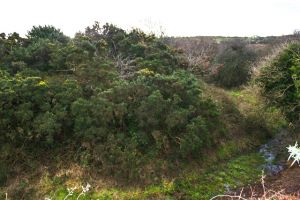
Castell Gwallter is a motte and bailey castle with a ditch and rampart surviving, built about 1110. The castle was the administrative centre of the Anglo-Norman lordship of Geneu'r-glyn. The castle mound is completely overgrown and little or nothing remains of any buildings on the site.
Llandre, Dyfed, Wales
Heritage Rating:  ?
?
Nearest Self Catering Cottages

Cilgerran Castle stands in a beautiful position at the top of a deep, wooded gorge, overlooking the River Teifi. The first castle on the site was erected by Henry I to strengthen his hold on south-west Wales. Henry granted lordship of Cilgerran to Gerald of Windsor, already lord of Pembroke. Gerald was married to Nest, known to history as the 'Helen of Wales'. Nest was the daughter of Rhys ap Tewdwr, ruler of the Welsh kingdom of Deheubarth.
Cilgerran, Cardigan, Dyfed, Wales, SA43 2SF
Heritage Rating: ?
Nearest Self Catering Cottages