Historic churches in Scotland Travel and destination information for Scotland
- churches with a particular historic, architectural, or scenic interest.
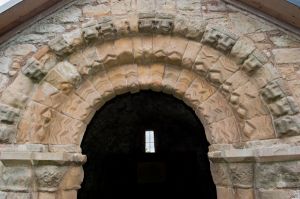
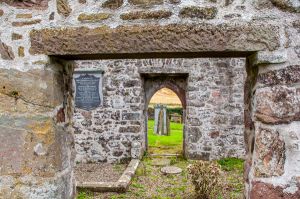
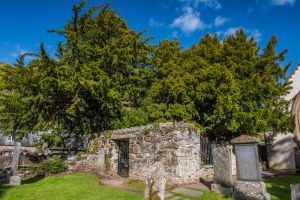
The medieval parish church of Edrom features a very finely carved Romanesque doorway. The church dates to at least 1139, when it was granted to Coldingham Priory. The medieval building was dismantled in 1737, leaving only the doorway and a transept chapel, known as the Blackadder Aisle. The doorway was moved to form the main entrance to a detached burial vault near the new church, which was begun in 1732.
Edrom,
Borders,
Scotland
Attraction Type:
Church Heritage Rating:? Location: In Edrom, 3.5 miles north east of Duns off the A6105. Off the drive to Edrom House.
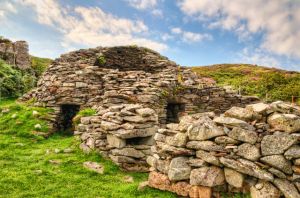
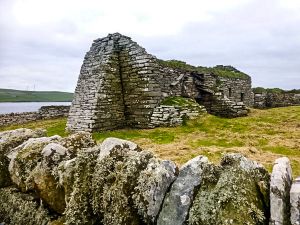
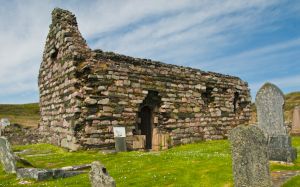
One of the most intriguing - and also one of the less accessible - sites in the care of Historic Scotland, Eileach an Naoimh is a tiny uninhabited island in the Garvellachs group between Jura and Mull. On the island are a series of early Christan monuments including a pair of churches, two graveyards, and domestic buildings such as a kiln, barn, and a double-beehive hut. The monastic cells are within a pentagonal enclosed area looking over a landing place. Beyond the enclosure is another cell divided into two chambers.
Garvellach Islands,
Strathclyde,
Scotland
Attraction Type:
Church Heritage Rating:? Location: An island in the Garvellach group, north of Jura. No regular boat service, so if you want to visit you will have to arrange transport privately.
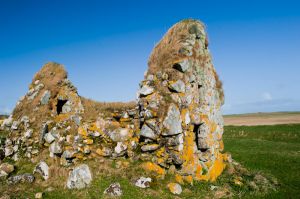
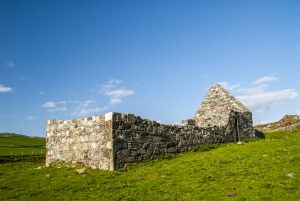
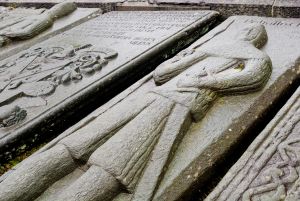
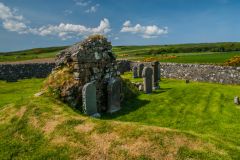
On a small island off Kilmory, on the west coast of the Knapdale peninsula, stands a small chapel associated with St Cormac. One end of the chapel stands roofless to the sky, but the east end still protects a vaulted chancel with an effigy of an ancient churchman. The figure is thought to date to the 12th century.
Kilmory,
Strathclyde,
Scotland
Attraction Type:
Church Heritage Rating:? Location: On an islet off the coast of Knapdale. Open access, but you will need to arrange a boat from the mainland.
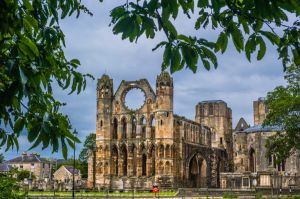
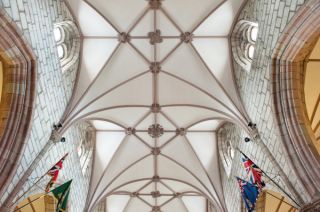
Elgin Cathedral was founded in 1224 and almost completely finished by 1300. This relatively short time span of construction means that it is a wonderfully intact example of early Gothic style.
The old church at Kirktown of Fetteresso was founded in 1246 by Bishop David de Bernham of St Andrews. It would later become the mother church for nearby chapels at Dunnottar and Cowie. The Fetteresso church was dedicated to Ciaran (Kieran), a 6th century Irish saint with links to the Mearns area.
Kirktown of Fetteresso,
Grampian,
Scotland,
AB39 3UP
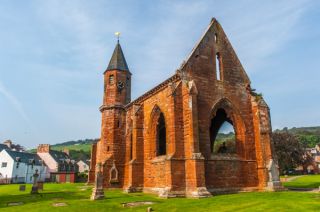
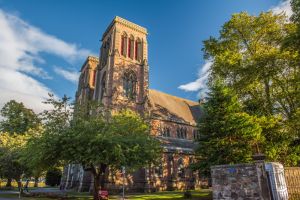
Fortrose Cathedral dates to the 13th century. This lovely red sandstone church was built for the Bishops of Ross in the first half of the 13th century. The initial building was smaller in scale than most medieval cathedrals, as the see of Ross was not a wealthy one. The early building was extended in the 14th and 15th centuries to create the cathedral we see today.
Fortrose,
Highlands,
Highlands and Islands,
Scotland
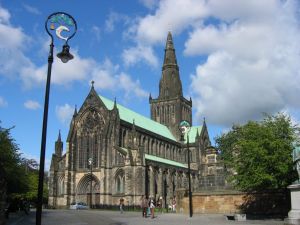
Gothic cathedral built during 13th-15th centuries. Only Scottish mainland medieval cathedral surviving the Reformation undamaged (except for western towers). Elaborately vaulted crypt, rich moulded arches in nave, timber roof, unique stone screen. Choir and lower church are of First Pointed style with finely worked details. Lower church has tomb of St Mungo, Glasgow's patron saint.
Cathedral Square,
Glasgow,
Strathclyde,
Scotland,
G4 0RH
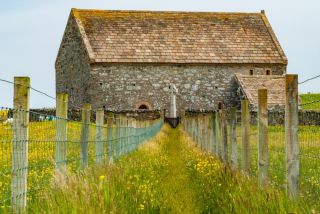
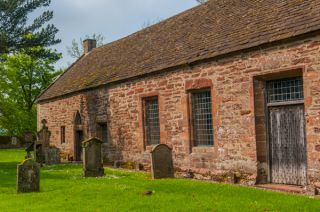
A whitewashed 16th century stone church standing in a lovely location south of the River Tay. St Mary's is a long, low building, boasting a painted ceiling dating from 1630. The ceiling depicts a variety of heraldic symbols and other decorative elements.
Grandtully,
Perth and Kinross,
Tayside,
Scotland
Attraction Type:
Church Heritage Rating:? Location: Off a lane 3 miles north east of Aberfeldy, south of the A827
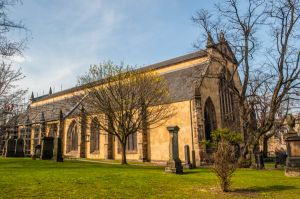
St Mary's is known as 'The Lamp of Lothian', a testament to the architectural and spiritual significace of this, the largest parish church in Scotland. The current church dates to the 14th century and replaces an earlier building destroyed when Haddington was sacked and burned by the English in 1356.
Haddington,
Lothian,
Scotland
Attraction Type:
Church Heritage Highlight: The Lauderdale Aisle, with a superb Maitland family memorial. Heritage Rating:? Location: On Sidegate, just off the High Street in Haddington
The scanty remains of a small rectangular chapel, on the Tarbat peninsula near Invergordon. Near the chapel stands a full scale replica of the Hilton of Cadboll Pictish cross slab, one of the finest carved Pictish stones in Scotland.
Hilton of Cadboll,
Highlands and Islands,
Scotland
One of the most significant historic sites in the Western Isles, Howmore is a complex of churches, chapels, and a burial ground, on a site that may have been used in pre-Christian times. The main chapel dates to at least the 8th century, and may stand on a prehistoric site levelled to make way for the new buildings. Much of the site is enclosed within a short wall of 19th century provenance.
Howmore,
South Uist,
Highlands and Islands,
Scotland
On a small island off Balnahard, on the west coast of Mull, stands a 13th century chapel containing medieval grave slabs of a type common throughout the west Highlands. The name translates loosely as 'island of Cainneach', a reference to St Cannoch, or Kenneth, an Irish saint and associate of St Columba.
Inchkenneth island,
Balnahard,
Isle of Mull,
Strathclyde,
Scotland
Attraction Type:
Church Heritage Rating:? Location: On an island off the west coast of Mull. Access by boat hire from Mull.
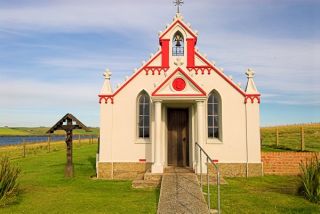
A shrine built by Italian prisoners of war during WWII, using a quonset hut and salvaged scraps of metal and wood. The chapel is a moving example of the marriage of faith and art under trying circumstances. The interior is beautifully painted and contains lovely ironwork and trompe l'oeil artwork.
Mainland,
Orkney,
Highlands and Islands,
Scotland
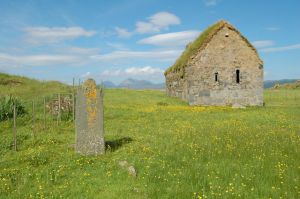
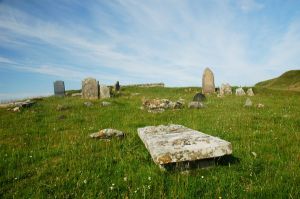
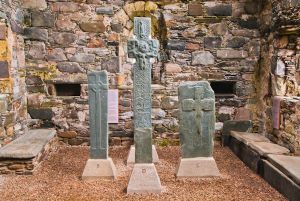
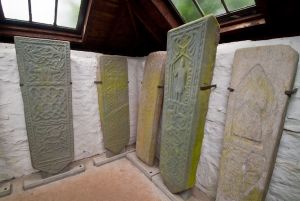
Near the southern tip of the Knapdale peninsula stands an isolated 12th century chapel of a type once common throughout the West Highlands. Within the chapel is a ramarkable collection of 12th and 13th century grave slabs gathered from the churchyard and brought inside to protect them from the elements. One stone appears to have been produced at Saddell Abbey, in Kintyre, and imported to Keills. In addition to the grave slabs are other examples of early medieval scultpture, and the wonderful early Christian cross known as the Keills Cross.
Keills,
Strathclyde,
Scotland
Attraction Type:
Church Heritage Highlight: Keills Cross, a 7th century carved cross Heritage Rating:? Location: On a minor road at Keillmore, 6 miles south west of Tayvallich, off the B8025
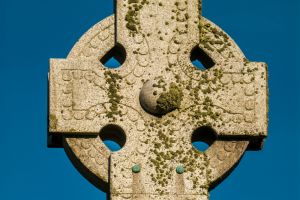
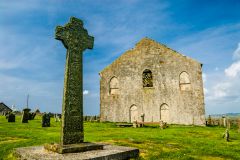
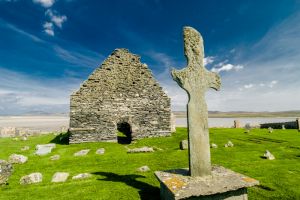
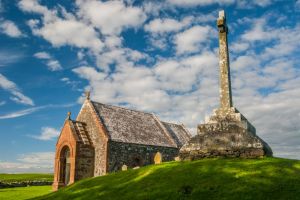
A magnificent 8th century high cross stands outside the ruined church at Kildalton, on the south coast of Islay. The Kildalton Cross is considered one of the best high crosses in Scotland and is similar in style to several crosses of a similar age on Iona, suggesting that it was made by a stonemason from Iona. The cross has a central boss with a ring around the cross head in a style often called a Celtic cross.
Islay,
Kildalton,
Isle of Islay,
Strathclyde,
Scotland
Most people come to Kilmartin village to see the wonderful collection of carved grave slabs in the churchyard and in a small mausoleum at the back of the churchyard. However, the church itself harbours even more interesting historic remains in the shape of a pair of carved crosses. The older of the 'Kilmartin Crosses' dates to the late 9th or early 10th century while the other is probably late medieval. The crosses used to stand outside the church but were moved within the building for protection from the elements.
Kilmartin Glen,
A816 Kilmartin,
Strathclyde,
Scotland
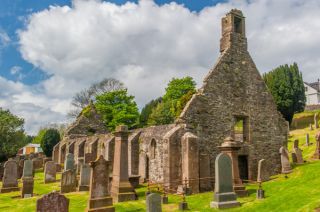
Gathered together at Kilmartin church are 80 sculpted stone grave slabs gathered from around the Kilmartin reggion. The earliest of the slabs dates to the 13th century, and the latest to 1712. Most of the stones (those thought to be most at risk from weathering) are protected under cover of a former mausoleum building at the rear of the churchyard. A few others still lie 'in situ' within the churchyard.
Kilmartin Glen,
A816 Kilmartin,
Strathclyde,
Scotland
Attraction Type:
Church Heritage Rating:? Location: Stone collection is in the Kilmartin churchyard, on the A816. Crosses are within the church; open Spring-Summer.
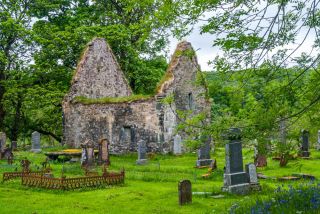
The 18th century church at Kilmodan boasts some of the finest carved stones in Argyll. Many of these have been placed in a small building at the rear of the churchyard to protect them from the elements. The building probably belonged to the Campbells of Auchenbreck and was used as a burial enclosure.
Clachan of Glendaruel,
Colintraive Kilmodan,
Cowal,
Strathclyde,
Scotland
Attraction Type:
Church Heritage Rating:? Location: At Clachan of Glendaruel, 8 miles north of Colintraive, off the A886.
The little medieval chapel at Kilmory Knap holds a treasure-trove of beautifully carved Early Christian cross slabs and later West Highland grave slabs mixed with examples of early medieval sculpture. The chapel, which is dedicated to St Mary, was never a church in its own right, but a subsidiary chapel to Keills, across Loch Sween.
B8025,
Kilmory,
Knapdale,
Strathclyde,
Scotland,
PA31 8RT
Attraction Type:
Church Heritage Highlight: Macmillan's Cross, one of the best West Highland crosses Heritage Rating:? Location: On a long arm of the Knapdale peninsula between Loch Sween and Loch Caolisport in South Knapdale, off the B8025. Free entry. Apr-Sep: 9.30am-6.30pm daily; Oct-Mar: closed
Website:Kilmory Knap Chapel Historic Scotland Location
map OSNR703752 Nearest
attractions and accommodation Nearest:hotels - cottages - Bed
and Breakfasts
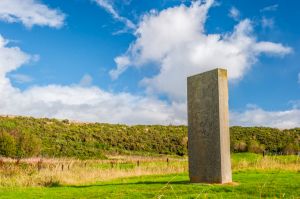
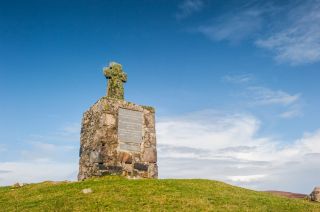
This ancient cross, now covered in lichen, stands on a Victorian plinth atop a small hill beside the road. The cross was discovered in 'the old graveyard' at Kilphedder and set in place by Dr Alexander MacLeod of Balelone. There is a plaque upon the plinth which makes for interesting reading; it tells us that the tablet was inserted and the plinth restored by Norman MacLeod of Calcutta, grandson of Alexander MacLeod, in 1913.
A865,
Scolpaig,
Highlands and Islands,
Scotland
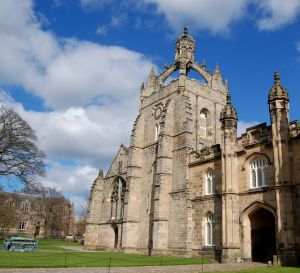
Founded in 1495 and built in the Gothic style. Famous for its Renaissance crown spire, restored in the 17th century after storm damage. Interior has rare group of medieval carved fittings: canopied stalls, rood screen and pulpit.
High Street,
High Town Aberdeen,
Grampian,
Scotland,
AB24 3UB
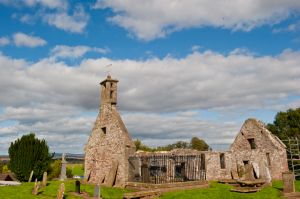
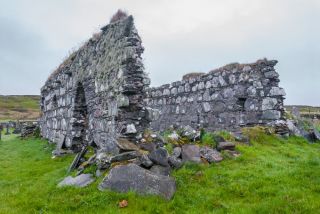
The late medieval parish church of Kinkell stands roofless on the banks of the River Don, a few miles south of Inverurie. Rather incongruously, the church is almost directly opposite a modern factory on the far bank, which makes for a rather bizarre setting.
Inverurie,
Grampian,
Scotland
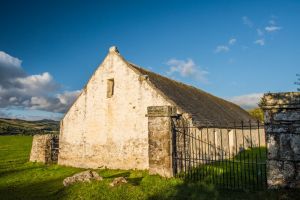
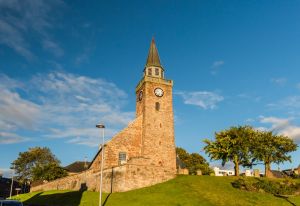
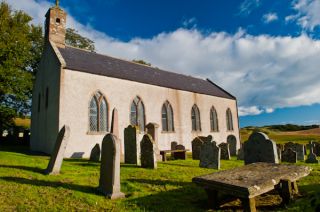
On the edge of a secluded farm field, looking out over the North Sea, stands the simple whitewashed Old Church of Kinneff, half-forgotten, and no longer used for regular worship. It is hard to imagine that this lonely building was the scene of one of the most important events in the history of Scotland. For Kinneff Old Church was where the Honours of Scotland were hiddden for 9 long years during the turmoil of Cromwell's Commonwealth.
Kinneff,
Grampian,
Scotland,
DD10 0TJ
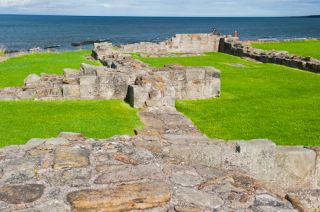
The paltry ruins of the earliest collegiate church in Scotland stand on the cliff top behind St Andrews Cathedral. Otherwise known as the 'Church of the Blessed Mary of the Rock', or simply St Mary on the Rocks, St Mary's was built in the 12th century on the site of a 9th century Culdee Church.
The modern chapel at Kirkmadrine is home to three of the earliest surviving Christian carved stones in Britain. The three stones date from the late 5th or early 6th centuries, and reportedly stood for many years in the churchyard. The carved stones are displayed in a plexiglass case rather oddly set into the exterior of the west wall of the chapel, which serves as a burial aisle for the MacTaggarts of Ardwell. Beside the carved stones are a further 5 cross fragments found in the area. These cross fragments date from the 8th to the 12th century.
Clachanmore,
Dumfries and Galloway,
Scotland
Attraction Type:
Church Heritage Rating:? Location: 2 miles south west of Sandhead, on a minor road off the A716 in the Rhinns of Galloway.
The perfect holiday gift - Free entry to National Trust properties throughout England, Wales, and Northern Ireland, plus discounted admission to National Trust for Scotand properties
Save 25% on gift membership when you pay by Direct Debit