Historic churches in Scotland Travel and destination information for Scotland
- churches with a particular historic, architectural, or scenic interest.
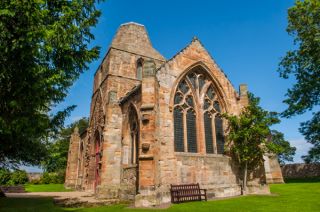
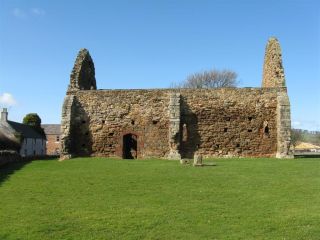
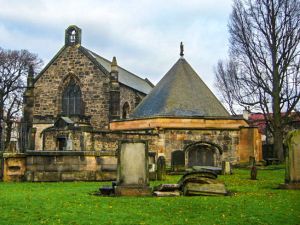
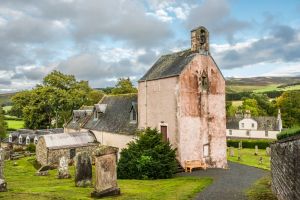
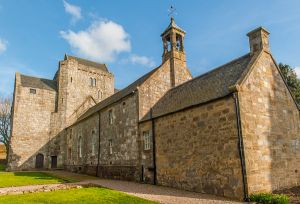
Chancel and apse are 15th century. Transepts and steeple were added by the widow of the Lord Seton, who was killed at Flodden in 1513.
Cockenzie,
Lothian,
Scotland
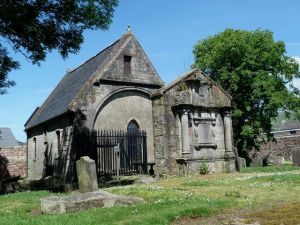
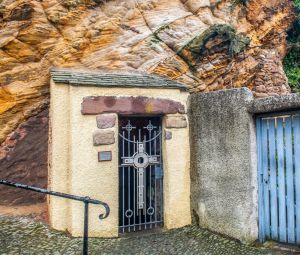
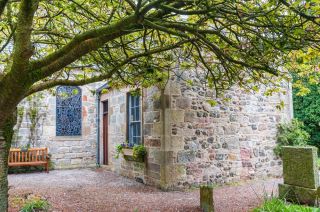
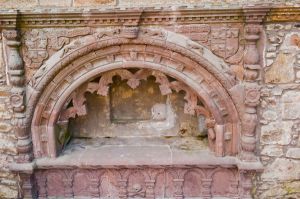
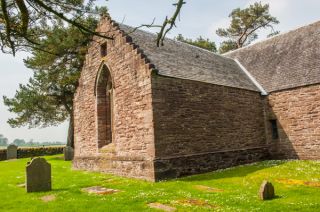
In 1812 the medieval church of Largs was torn down when a new church was built nearby. The only part of the earlier church to survive is the north transept, also known as the Skelmorlie Aisle. The aisle was built in 1636 by Sir Robert Montgomery of Skelmorlie as a place to hold an elaborate stone tomb for himself and his wife, Lady Margaret Douglas.
Gateside Street,
Largs,
Strathclyde,
Scotland
Attraction Type:
Church Heritage Rating:? Location: In the centre of Largs on the A78. Signposted from the High Street.
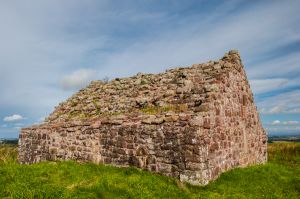
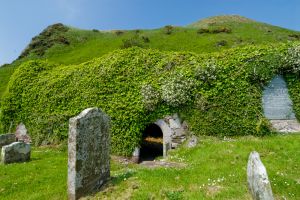
The Soutra Aisle is all that remains of one of the largest and most important medieval hospitals in Scotland. The House of the Holy Trinity at Soutra was founded around 1160 by Malcolm IV as an Augustinian hospital, monastery, and church serving travellers, the poor, the sick, and the aged. The site for such a grand hospital might seem odd at first glance, but the monastery was sited beside Dere Street, the old Roman road which was still the main road linking Northumberland with south east Scotland well into the medieval period.
B6368,
Fala,
Borders,
Scotland
Attraction Type:
Church Heritage Rating:? Location: On the B6368. Signposted off the A68 south of Dalkeith and Fala. Parking nearby.
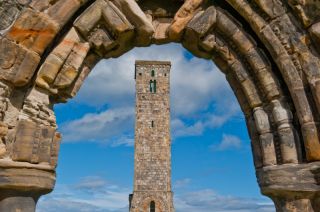
Remains of Scotland's largest cathedral, established in 1160. 16th century precept walls, 12th and 13th century gables and south wall still stand. St Rule's Tower - in the cathedral - is part of first Augstinian church. Countryside views from the top of the tower. Museum has collection of early Christian and medieval monuments and relics.
St Andrews,
Fife,
Scotland
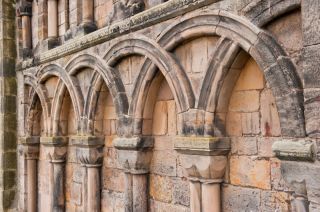
The 12th century church of St Athernase at Leuchars has been called perhaps the finest example of Romanesque church architecture in Scotland. The church stands on a mound in the centre of the village, which is best known today for its annual air show and the nearby RAF base.
Schoolhill,
Leuchars,
Fife,
Scotland
Attraction Type:
Church Heritage Highlight: Superb Romanesque apse with blind arcading and carved heads Heritage Rating:? Location: Off the A919, 5 miles northwest of St Andrews. On street parking on several nearby streets.
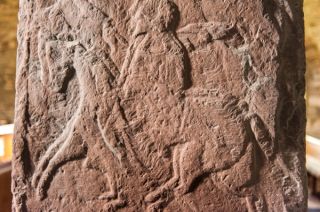
Tall cross-slab carved with Pictish symbols, figure sculpture and traditional Celtic carving symbols. The original stone is preserved inside the church, and a replica stands in the village square. The cross stands almost 3 metres high, and probably dates to the 8th or 9th century.
An intriguing site at the southern end of the Isle of Bute, St Blane's consists of a 12th century Romanesque chapel built inside the remains of a 6th century Celtic monastery supposedly founded by St Blane. Blane's monastery existed until at least the late 8th century, and the site was an important burial site until the 12th century, when a small church was built within the monastery to serve as a parish church for the southern end of Bute.
Kingarth,
Bute,
Argyll and Bute,
Strathclyde,
Scotland,
FK15 9DJ
Attraction Type:
Church Heritage Rating:? Location: At the south end of the Isle of Bute, on the minor road south of Kingarth
A 14th century church with 16th century clock tower with the oldest working clock in Scotland. The mausoleum contains the grave of Sir James Douglas, known as the "Black Douglas" and also that of the 5th Earl of Angus, known as "Bell the Cat".
Douglas,
Strathclyde,
Scotland
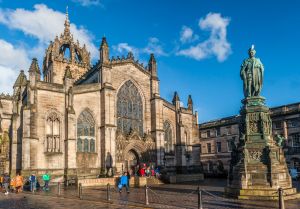
15th century church, changed by alterations, serves as the High Kirk of Edinburgh. Delicate crown spire of 1495, massive central pillars of 1120. Thistle Chapel, in Gothic style, has fan-vaulted ceiling, carvings, heraldic and religious details. John Knox was minister here in 1560. Parliament met here.
Royal Mile,
Edinburgh,
Lothian,
Scotland,
EH1 1RE
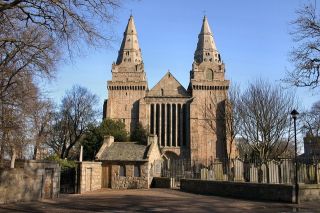
Nave and towers used as church. Ruined transepts with altar tomb. Church has unique flat, wooden medieval ceiling with heraldic designs.
Old Aberdeen,
Grampian,
Scotland
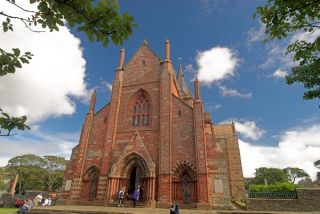
Begun in 1137 in honor of St Magnus, Earl Magnus of Orkney. A well preserved medieval cathedral, Norman in character, built of alternating bands of red and yellow sandstone.
Broad Street,
Kirkwall,
Mainland,
Orkney,
Highlands and Islands,
Scotland,
KW15 1NX
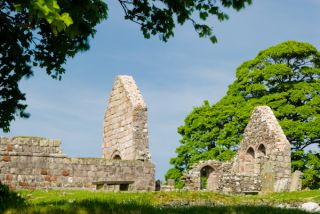
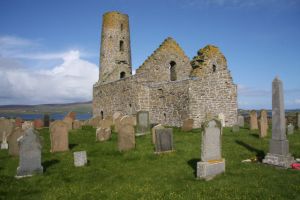
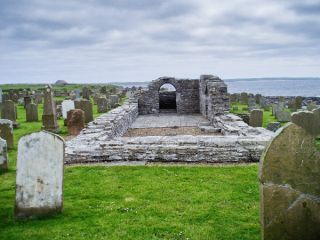
The roofless ruins of a 12th century church stand in the north west of the little isle of Egilsay, off the easter end of Rousay. The church was built in the late 12th century and is composed of a rectangular nave which terminates in a square chancel. At the west end of the church is a striking round tower, which still stands to almost its full height. The church lost its roof in the 19th century.
Egilsay,
Skaill,
Orkney,
Highlands and Islands,
Scotland
Attraction Type:
Church Heritage Rating:? Location: On the island of Egilsay 0.5m from the Skaill pier. Reached by regular ferry service from Tingwall Terminal on Orkney Mainland
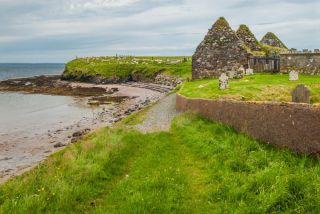
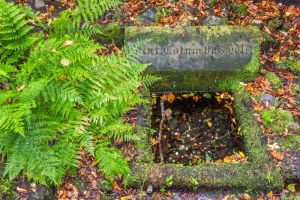
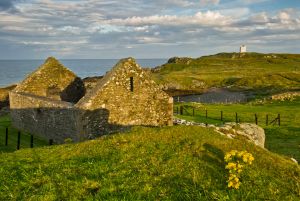
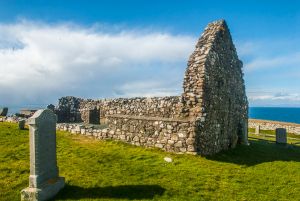
The oldest ecclesiastical remain in the north of Scotland, St Mary's is a roofless 12th century chapel on a headland overlooking the sea. The chapel is surrounded by a graveyard that was in use until sometime after 1872, and a short distance away is a holy well also dedicated to St Mary.
Crosskirk,
Highlands and Islands,
Scotland
Attraction Type:
Church Heritage Rating:? Location: On the A836 6 miles west of Thurso
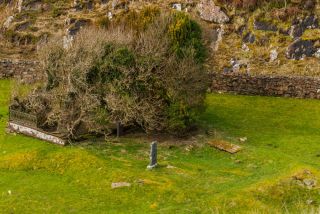
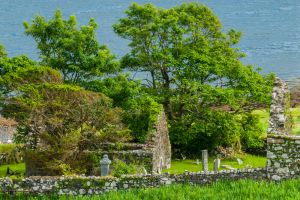
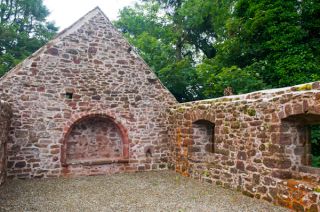
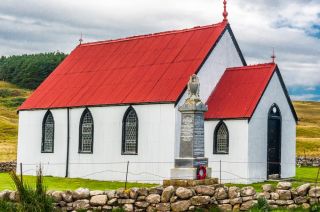
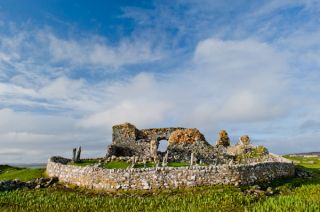
The partial ruins of a 14th century chapel founded by Amie MacRuari (MacRory), the wife of John, first Lord of the Isles. Lady Amie is said to have established the chapel to serve the fishermen of Kallin, many of whom are thought to have been buried in a nearby graveyard associated with the chapel, though no trace of this now remains.
Kallin,
Highlands and Islands,
Scotland
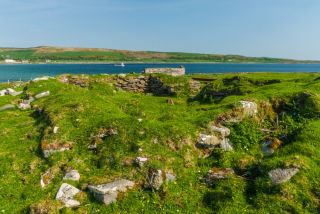
A roofless 13th century chapel erected on the traditional site where St Ninian landed. The chapel was probably used by medieval pilgrims making their way to Whithorn Priory and the shrine of St Ninian. The chapel is a simple rectangular building measuring about 31' x 16'6" internally. It was built around the year 1300 on the site of an earlier 12th century building.
Lower part of a chapel built by James III has shrine of a Pictish saint. Unique hexagonal vaulted chamber.
Restalrig Collegiate Church,
Restalrig Road South Edinburgh,
Lothian,
Scotland
Stobo is one of the oldest religious sites in the Scottish Borders, with roots going back to the 6th century. According to tradition, the original church at Stobo was founded by Kentigern, more popularly known in Scottish history as St Mungo.
B712,
Stobo,
Borders,
Scotland,
EH45 8NX
The old ruined kirk at Tarves is remarkable for the 16th century altar tomb of William Forbes and his wife, Elizabeth Gordon, of Tolquhon Castle, about a mile away. Forbes was the 7th Laird of Tolquhon, and was responsible for greatly enlarging and rebuilding the earlier medieval castle.
Tarves,
Grampian,
Scotland
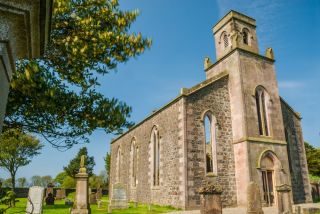
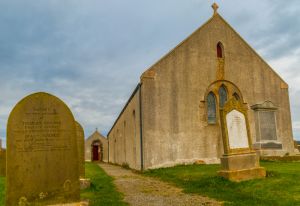
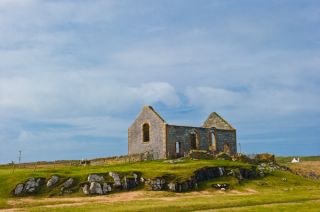
Just off the coastal round on the extreme east end of Berneray stands a roofless ruin of a church designed by famed Scottish engineer Thomas Telford. Though Telford was most known for his engineering works, especially bridges, he also undertook several architectural commissions, and the Berneray church is among these.
Bays Loch,
Berneray,
Highlands and Islands,
Scotland
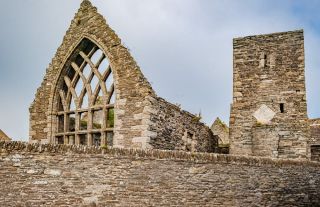
Torphichen Preceptory is the only known example of a church built by the Knights Hospitaller of St John of Jerusalem in Scotland. The Hospitallers, as they are commonly known, were a medieval order of knights, loosely contemprary with the Knights Templar. The Templars raised the ire of powerful politicians and clergy, and were suppressed, but the Hospitallers survived to eventually found the St John Ambulence society.
Bowyett,
Torphichen,
Lothian,
Scotland,
EH48 4NB
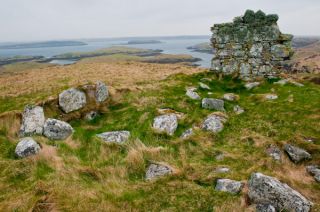
Known in Gaelic as Teampull na Trionaid, this ruined chapel dates to the late 12th or early 13th century. It is traditionally said to have been established by Beathag, daughter of Somerled. The chapel was expanded and rebuilt from 1350-1390 by Ami Nic Ruri, wife of John, Lord of the Isles.
A865,
Cairinis,
North Uist,
Highlands and Islands,
Scotland
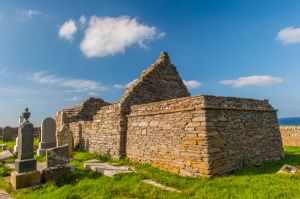
A roofless 12th century Romanesque church, one of best preserved medieval churches of Orkney. It was built by an unknown Norse chief, whose farm lies atop the nearby cliffs. The building is simple, consisting of only a nave and aisle. For many it years served as the parish church.
Tuquoy,
Westray,
Orkney,
Highlands and Islands,
Scotland
The perfect holiday gift - Free entry to National Trust properties throughout England, Wales, and Northern Ireland, plus discounted admission to National Trust for Scotand properties
Save 25% on gift membership when you pay by Direct Debit