The cantref is an early Welsh administrative district, roughly similar in function to the English 'hundred'. The term is pronounced 'KAN-trev'.
Meaning of 'Cantref'
The term is made up of two parts. Can or cant comes from the term for a hundred, while 'tref' is a much less distinct term which might mean a house, settlement, or even a town. Thus the compound term 'cantref' generally meant a hundred settlements
In this case, 'hundred' was not a precise number of settlements, but a traditional regional division.
Though it shares an obvious link to the English 'hundred', the cantref was distinctly Welsh and had its own legal and social emphasis. The Welsh cantref was at the top end of the Welsh administrative hierarchy: Cantref -> Commote -> Maenol -> Tref.
In Welsh history the cantref was made up of a number of commotes (cymydau), though cantrefi (the plural of cantref in Welsh) was the original division and the commote a later subdivision.
Most cantrefi were divided into several commotes, usually 2 or 3, but as many as 7 for the largest. Two commotes per cantref was the ideal, but the real number of commotes varied.
Legal Functions
Each cantref traditionally had its own court, and the boundaries between cantrefs often coincided with areas of distinct Welsh dialects, or even kingdoms. The court was usually administered by the most powerful landowners within each cantref.
From the 12th century, the legal function of cantref was taken over by the smaller commote, which became the standard administrative district in Wales. It is important to note that the role of the cantref varied by region and time period. The early medieval Welsh legal system, when the role of the cantref evolved, was not uniformly applied across Welsh territory.
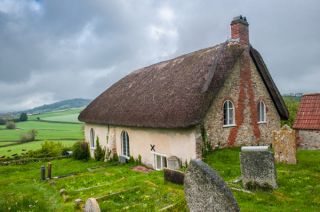
Several modern Welsh places retain the word 'cantref' in their names. The most obvious is the village of Cantref in Powys. There is also a Cantref House at Llanfrynach, near Brecon, which lies at the foot of the Caefn Cantref ridge.