- Also known as Aidan of Lindisfarne
- Birth: circa AD 590
- Died AD 651
- Feast Day: 31 August
- Symbol: A monk holding a flaming torch
- Patron saint of firefighters
Known as the Apostle of Northumbria, Aidan was likely born in Connacht, Ireland around AD 590. Little is known of his upbringing, but he is said to have joined St Senan at the monastery he established at Inniscattery Island in the Shannon estuary.
Aidan then left Ireland to join the monastery at Iona, off the west coast of Scotland. There he met Oswald, a Northumbrian prince in exile.
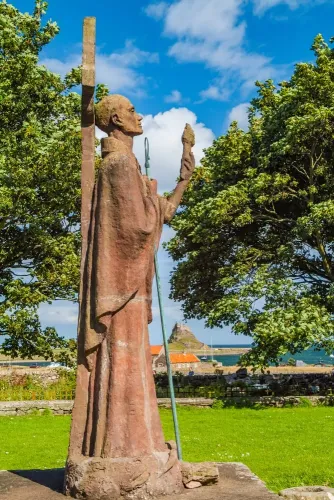
In AD 634 Oswald seized the throne of Northumbria, vowing to establish the Christian religion in his realm. He asked for missioneries from Iona to spearhead his efforts to convert his kingdom. The first bishop sent from Iona was Corman, whose methods alienated the Northumbrians. Corman left Northumbria in disgrace and Aidan was sent in his stead.
Aidan of Lindisfarne
In the year 635 Aidan established the seat of his new Northumbrian diocese on the island of Lindisfarne, known thereafter as Holy Island.
Under Aidan's gentle hand, Christianity spread throughout northwestern Britain, founding churches, monasteries, and schools. Aidan gained an enviable reputation for charity and was known for ransoming slaves and feeding the poor. He was largely responsible for the spread of Celtic Christianity throughout Northumbria in the 7th century.
Aidan travelled on foot, conversing with everyone he met, from the poorest to the wealthiest. One famous story says that when the Mercians under King Penda attacked Bamburgh, seat of the Northumbrian kings, Aidan's prayers extinguished the flames and convinced the Mercians to abandon their siege. For this episode Aidan is considered the patron saint of firefighters.
When King Oswald died in 642, his son Oswin (sometimes known as Oswine) continued royal patronage of Aidan's work. Oswin was murdered in 651, and Aidan died only a few days later.
He was buried at Lindisfarne, in the monastery he had helped establish. Some of Aidan's relics later made their way to Glastonbury Abbey in Somerset, where they were an object of veneration and drew pilgrims from across Britain.
St Aidan's feast day is traditionally 31 August in the Anglican tradition. Like many early British saints, Aidan was never officially canonised, but simply recognised as a saint by his popularity after his death.