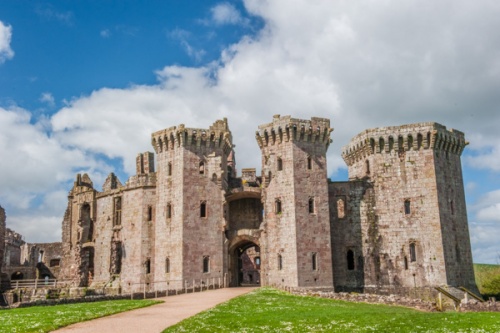
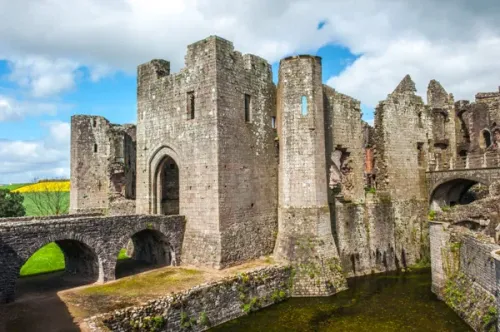
The traditional home of the Somerset family, Earls of Worcester, Raglan Castle was one of the very last castles built in Britain, begun in 1435 by William ap Thomas. It is part castle, part palace, with far more attention to comfort than earlier castles. However, it was certainly built for defence as well, for it took one of the longest sieges of the Civil War to subdue it.
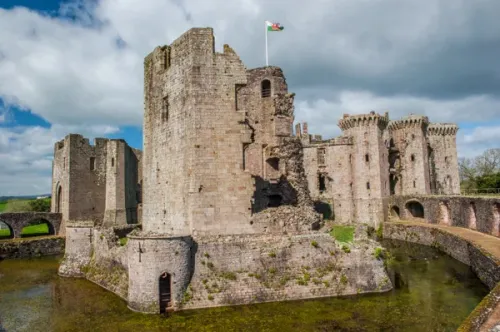
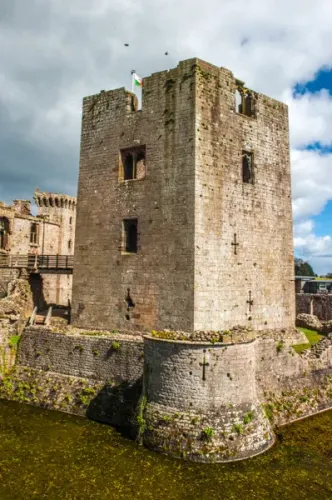
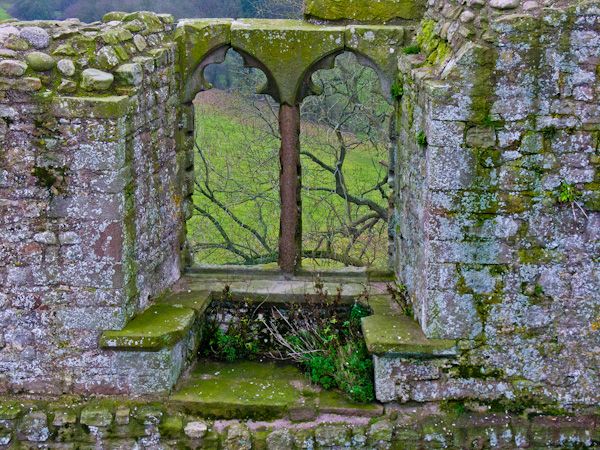
Cromwell's engineers did their best to destroy the massive Great Tower, but failed. Look for the ornate window and huge fireplace in the hall.
History
Raglan is, without doubt, one of the finest and most enjoyable medieval castles to visit in Wales. There was a Norman motte and bailey fortification here, held by Walter Bloet, a vassal of Richard 'Strongbow' de Clare.
There was certainly a complex of manorial buildings at Raglan as early as the 13th century, and there are still remains dating from the 13th and 14th centuries. However, the majority of Raglan as we see it today is 15th century, making it one of the last major castles to be built in Britain.
The first part of Raglan built by Sir William was the Great Tower, a moated tower keep contained within the castle walls, and only reachable from within the castle itself. So impressive was this Great Tower that it became known as the 'Yellow Tower of Gwent'.
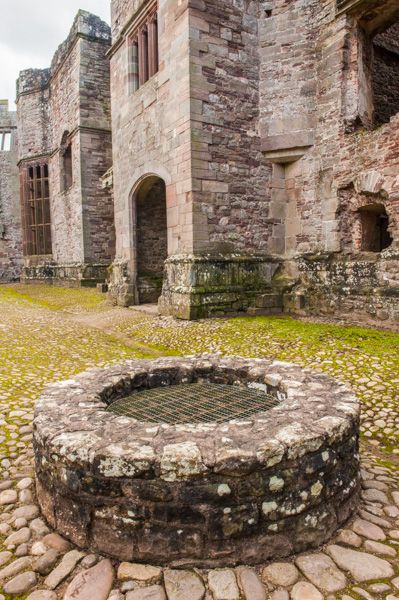
After Sir William died in 1461 his son, William Herbert, became Baron Herbert of Raglan. Baron Herbert undertook a massive programme of building at Raglan, in an effort to underline his new social status. He added luxurious domestic suites of rooms set around a fountain courtyard, built a huge gatehouse, and added the Pitched Stone Court.
Baron William's fall was as quick as his rise, however, and he was executed in 1469, leaving his grand building projects unfinished. The castle then passed to the Somerset family, Earls of Worcester. It was the 3rd Earl, William Somerset, who finished the castle, extending the Pitched Stone Court, rebuilding the hall, and erecting a fashionable long gallery.
Somerset also built a garden, with a water parterre, walled garden, and classical statues of Roman emperors dotted around the moat walk. Unfortunately, little of Somerset's original gardens remain.
Most of Somerset's work was destroyed during the Civil War, when Parliamentary troops besieged Raglan for 10 weeks, prompted by the 5th Earl's unflinching support for Charles I. Though the siege was ultimately successful, Parliament's attempts to destroy Raglan were only partially successful, so strongly was the castle built.
The Earl himself died in captivity, however, enough remains of his palatial fortress to impress modern visitors. Indeed, it is hard not to be impressed by Raglan; even today, the sheer scale and grandeur of the late medieval vision is simply breath-taking.
Update:
It had been several years since my last visit to Raglan, on a cold, grey day, when the stones themselves seemed to shiver. This time the sun shone, and Raglan gleamed like a fairy-tale fortress, rising high on a hill above the busy road below.
Seeing the castle again, I was awe-struck; I'd forgotten just what an impressive and imposing fortress this is. There is so much to see, it can easily take several hours to explore everything. But if you are in a hurry, here a few of my favourite parts:
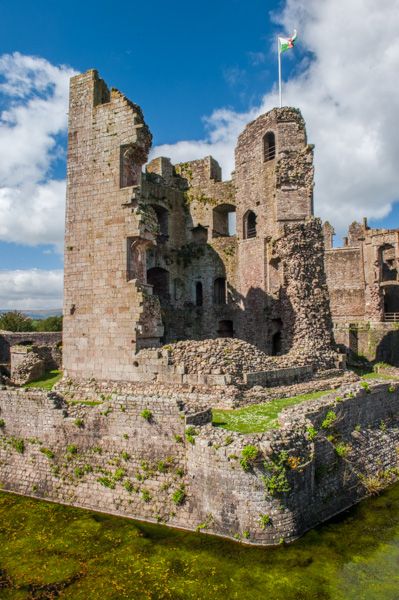
- The Great Tower - it isn't called great for nothing; this striking keep is practically a castle in itself. Climb to the top of the tower and look straight down into the moat far below, or out across the surrounding countryside. Wow.
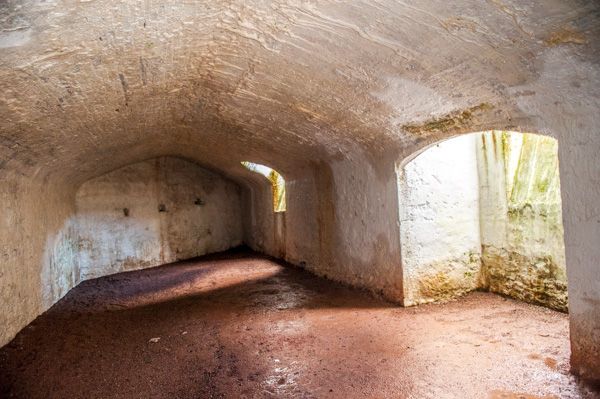
- The Cellars - Made to hold some 500 casks of wine.
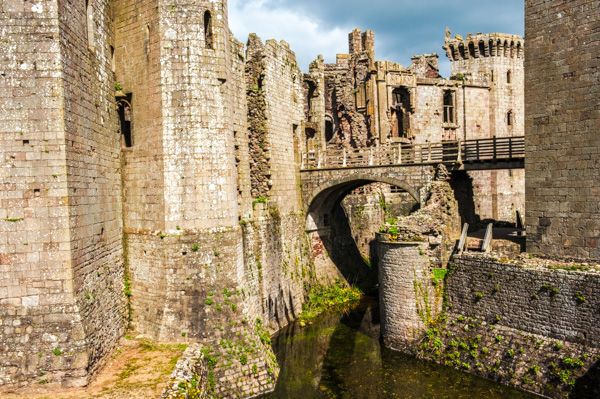
- The South tower - seen from outside the moat, this castellated tower and bridge are impressive enough to be the main castle entrance, but it is just' a secondary approach to the inner courtyard.
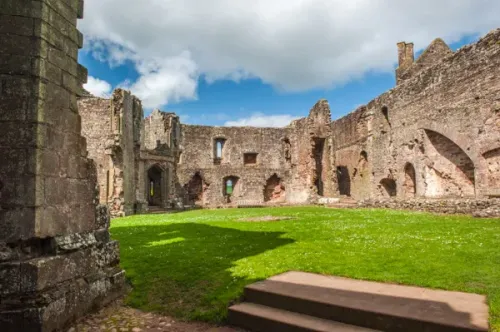
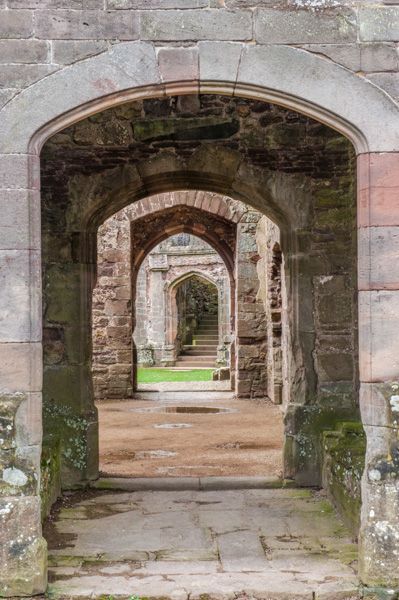
- Worn but still beautiful carvings high on the walls are all that remains of the long gallery. If the carvings are anything to go by, it must have been a very impressive gallery indeed.
More Photos

About Raglan Castle
Address: Raglan, Monmouthshire, Wales, NP15 2BT
Attraction Type: Castle
Location: Off the A40 eastbound (no right turn westbound, proceed to the next roundabout and turn around)
Website: Raglan Castle
Email: RaglanCastle@wales.gsi.gov.uk
Cadw
Location map
OS: SO411 080
Photo Credit: David Ross and Britain Express
HERITAGE
 We've 'tagged' this attraction information to help you find related historic attractions
and learn more about major time periods mentioned.
We've 'tagged' this attraction information to help you find related historic attractions
and learn more about major time periods mentioned.
Historic Time Periods:
Find other attractions tagged with:
13th century (Time Period) - 14th century (Time Period) - 15th century (Time Period) - castle (Architecture) - Charles I (Person) - Civil War (Architecture) - Cromwell (Person) - Medieval (Time Period) - moat (Historical Reference) - motte and bailey (Historical Reference) - Norman (Architecture) - Parliamentary (Historical Reference) - Roman (Time Period)
NEARBY HISTORIC ATTRACTIONS
Heritage Rated from 1- 5 (low to exceptional) on historic interest
Treowen - 3.5 miles (Historic House) 
Hen Gwrt Moated Site - 4.5 miles (Historic Building)
Usk Castle - 4.9 miles (Castle) 
Usk, St Mary's Priory Church - 4.9 miles (Historic Church)
Wonastow, St Wonnow's church - 4.9 miles (Historic Church)
Usk Priory - 4.9 miles (Abbey)
Usk Roman Fortress - 4.9 miles (Roman Site)
Goetre, St Peter's Church - 5.7 miles (Historic Church)
Nearest Holiday Cottages to Raglan Castle :