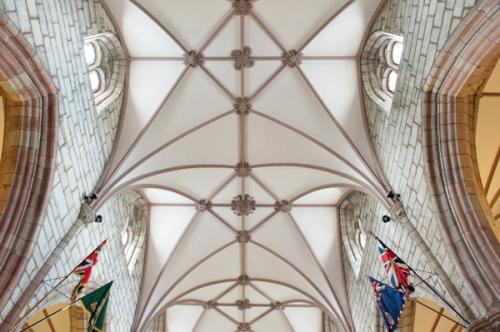
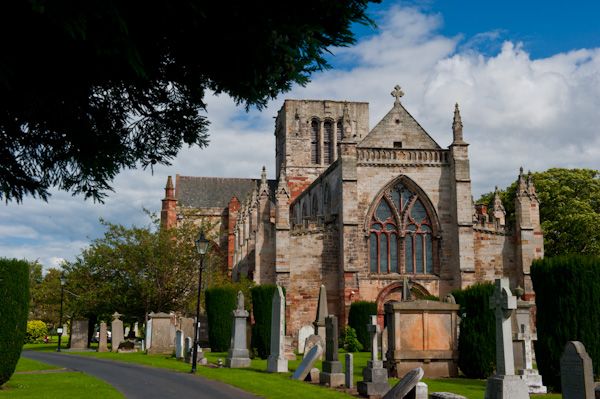
St Mary's Church in Haddington is known as 'The Lamp of Lothian', a testament to the architectural and spiritual significance of this, the largest parish church in Scotland. The current church dates to the 14th century and replaces an earlier building destroyed when Haddington was sacked and burned by the English in 1356.
Early History
The first church at Haddington was begun in 1139 when the Burgh of Haddington was granted to Ada, a daughter-in-law of King David of Scotland. A group of Franciscan friars established a priory here around 1242. The choir of the Franciscan church was known as The Lamp of Lothian because of the clarity and purity of the light.
Haddington once again suffered at the hands of English invaders when the town was occupied during Henry VIII's 'Rough Wooing', when he attempted to wed his young son to the equally young Mary, Queen of Scots.
Reformer John Knox - possibly a native of Haddington - helped restore St Mary's nave in 1561. The nave served as the parish church for over 400 years, while the choir and transepts remained roofless and open to the elements.
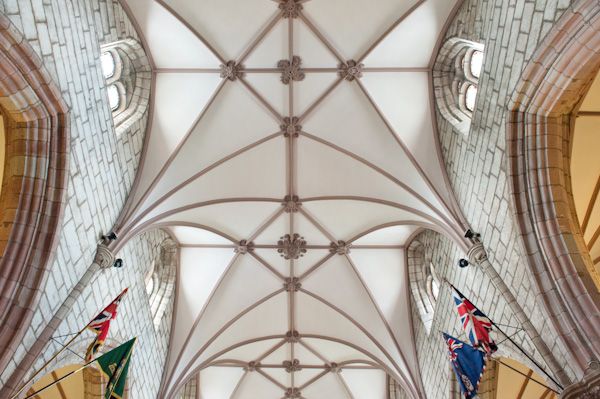
Further restorations in the Victorian period and the 20th century finally brought this marvellous medieval church back to its original glory. The restoration of St Marys has been called one of the most important church restorations of the 20th century.
The Lauderdale Aisle
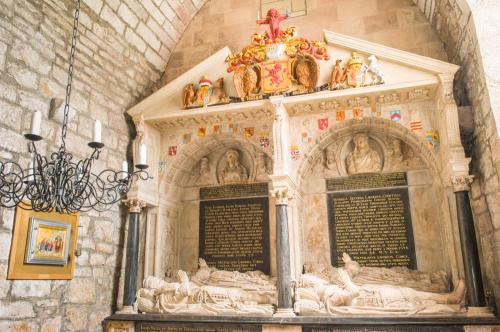
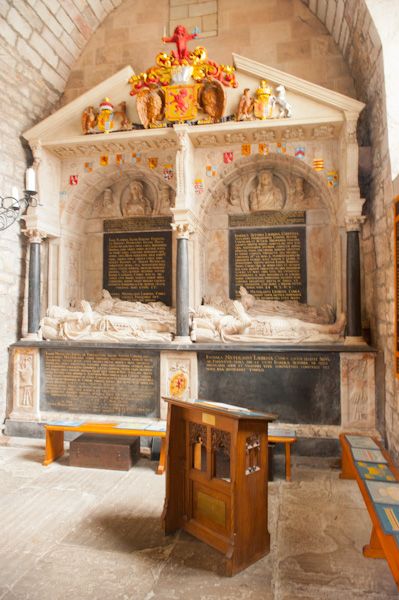
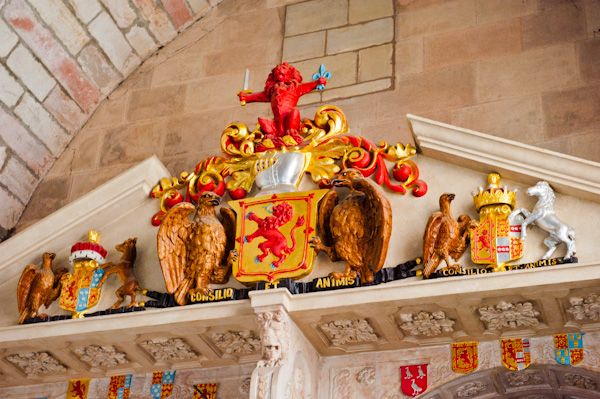
The most notable feature of St Mary's is the 16th-century Lauderdale Aisle, built onto the north side of the choir. This small chapel with a burial vault beneath it was established as a chapel for the Maitland family of Thirlstane. Over 1000 pilgrims come to the Lauderdale Aisle each year.
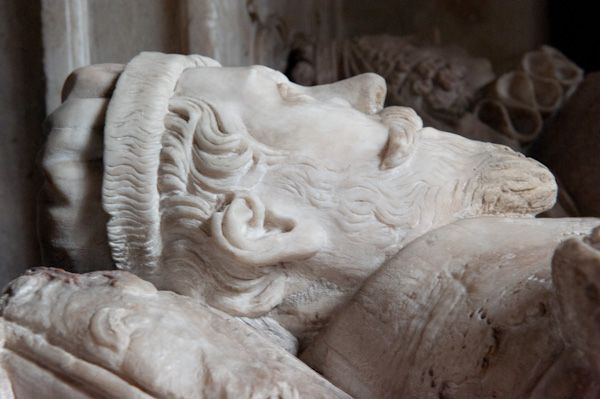
The centrepiece of the chapel is a grandiose alabaster and gilt memorial to John Maitland, Chancellor to James VI, and his son, also named John Maitland, the 1st Earl of Lauderdale.
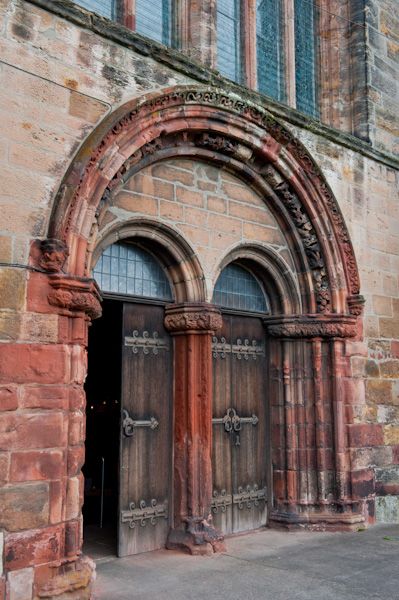
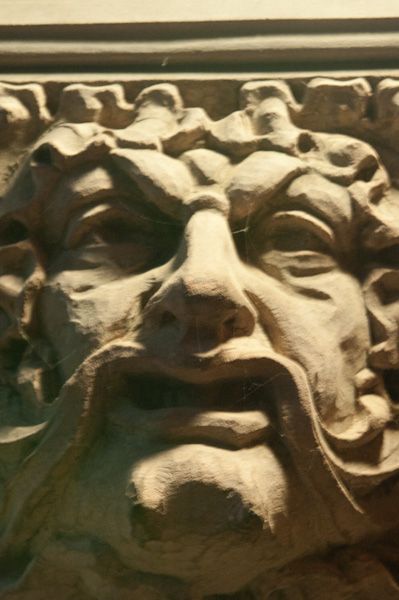
Among the surviving medieval features elsewhere in the church is a beautifully carved Green Man on a corbel supporting the west gallery. In the choir is a memorial to Jane Welsh, wife of writer Thomas Carlyle. Welsh was the daughter of Dr John Welsh of Haddington.
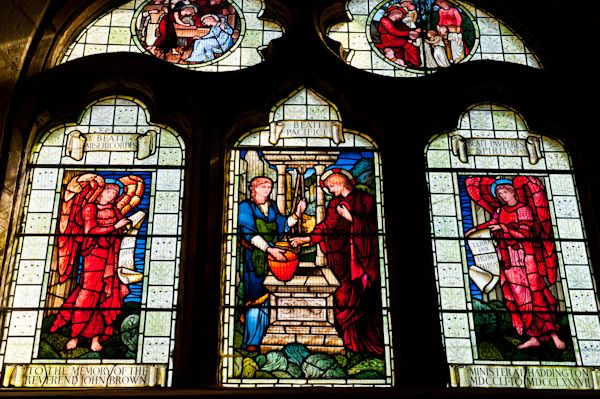
More modern are the stained-glass windows, including two excellent examples designed by Edward Burne-Jones, one of the leading lights of the Arts and Crafts movement.
More Photos
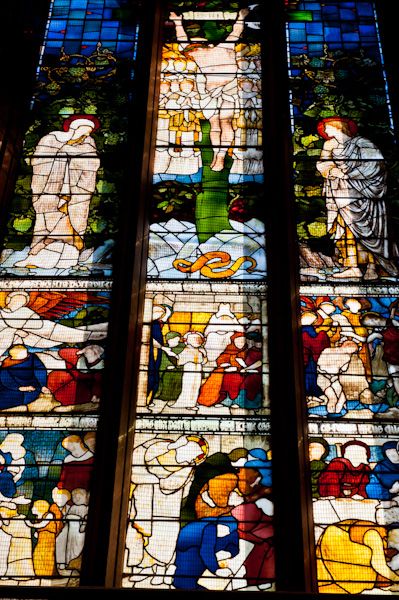
About Haddington, St Mary's Church
Address: Sidegate, Haddington, Lothian, Scotland, EH41 4BZ
Attraction Type: Historic Church
Location: On Sidegate, just off the High Street in Haddington
Website: Haddington, St Mary's Church
Location map
OS: NT517742
Photo Credit: David Ross and Britain Express
HERITAGE
 We've 'tagged' this attraction information to help you find related historic attractions
and learn more about major time periods mentioned.
We've 'tagged' this attraction information to help you find related historic attractions
and learn more about major time periods mentioned.
Historic Time Periods:
Find other attractions tagged with:
14th century (Time Period) - 15th century (Time Period) - 17th century (Time Period) - 19th century (Time Period) - 20th century (Time Period) - 4th century (Time Period) - Arts and Crafts (Architecture) - Burne-Jones (Person) - Edward Burne-Jones (Person) - Henry V (Person) - Henry VI (Person) - Henry VII (Person) - Henry VIII (Person) - John Knox (Person) - Mary, Queen of Scots (Person) - Medieval (Time Period) - Restoration (Historical Reference) - Victorian (Time Period) - William Morris (Person)
NEARBY HISTORIC ATTRACTIONS
Heritage Rated from 1- 5 (low to exceptional) on historic interest
Lauderdale Aisle - 0.4 miles (Historic Church) 
St Martins Kirk, Haddington - 0.4 miles (Historic Church)
Lennoxlove - 1.3 miles (Historic House) 
National Flag Heritage Centre - 2.2 miles (Museum)
Chesters Hill Fort - 2.6 miles (Prehistoric Site)
National Museum of Flight - 3.2 miles (Museum) 
Hailes Castle - 3.7 miles (Castle)
Gosford House - 4.7 miles (Historic House)
Nearest Holiday Cottages to Haddington, St Mary's Church:

Cockenzie and Port Seton, Lothian
Sleeps: 6
Stay from:£475 - £1,624