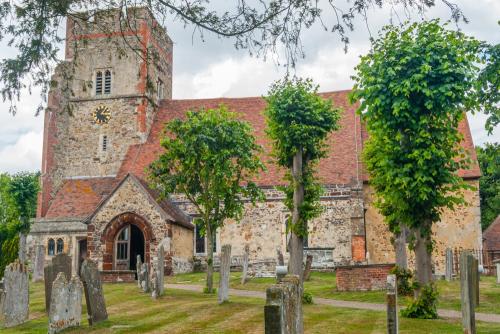
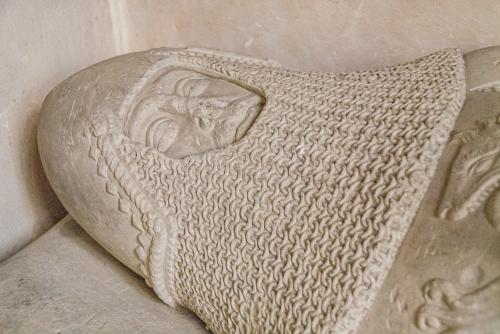
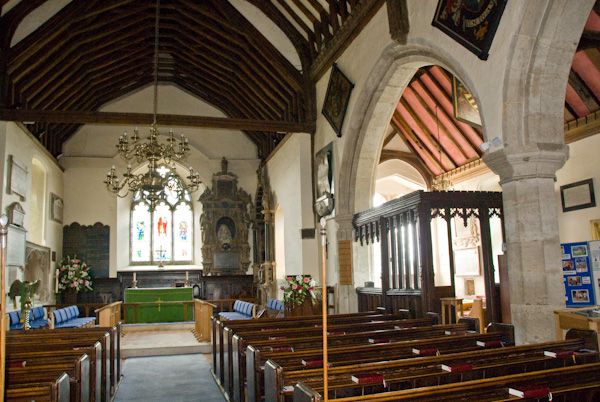
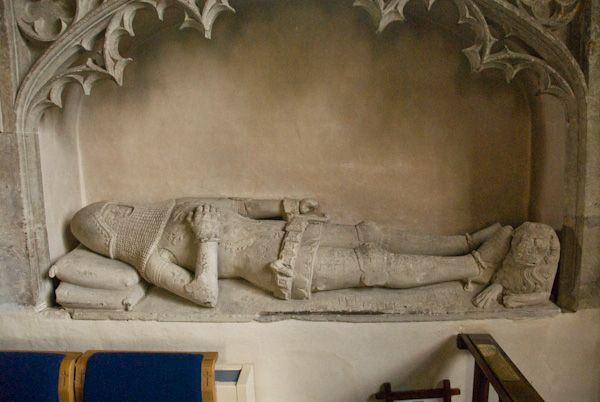
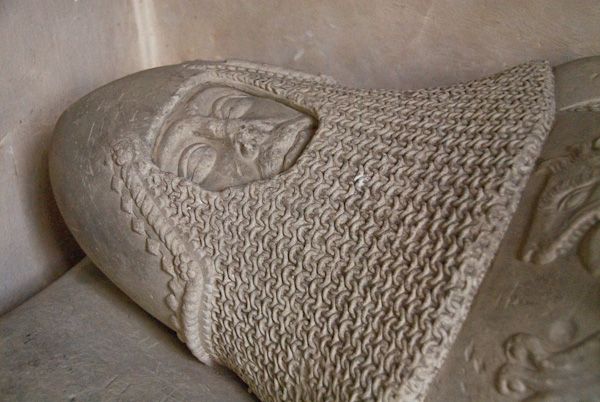
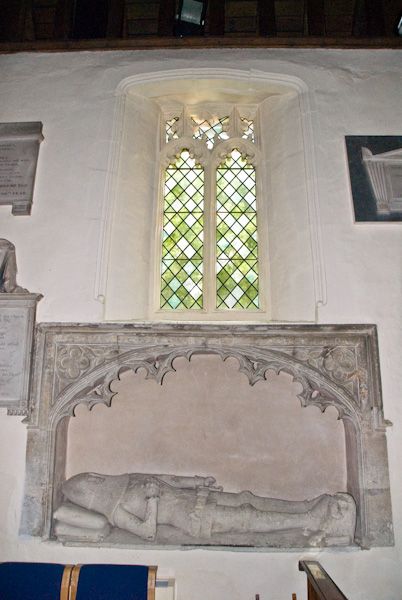
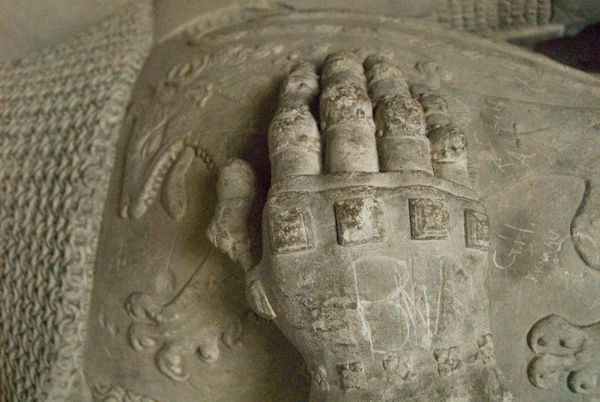
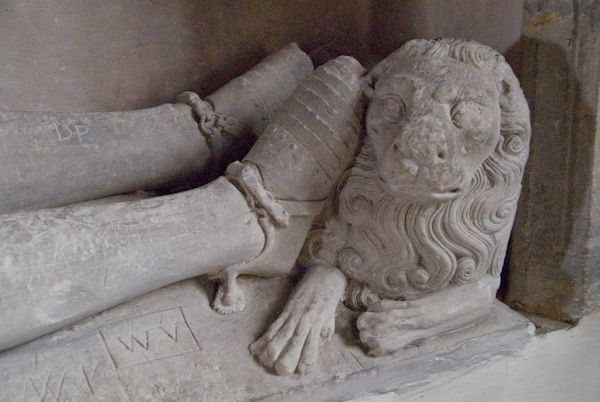
The parish church of St Peter, Ightham, is well worth a visit, primarily to see its collection of historical memorials. The oldest of these is that of Sir Thomas Cawne, the builder of Ightham Mote, who died around 1374. The tomb is set against the north wall of the chancel, with a life-sized stone effigy of Sir Thomas clad in a bascinet and mail armour.
It is possible that the tomb was the work of the same craftsman who created the similar tomb of the Black Prince at Canterbury Cathedral. Above the Cawne tomb is the oldest window in the church, funded by a bequest in Sir Thomas's will.
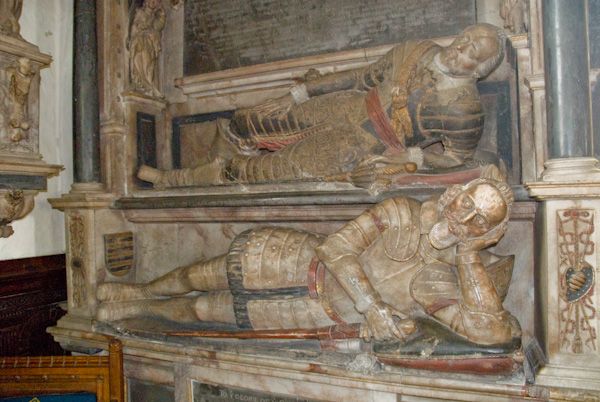
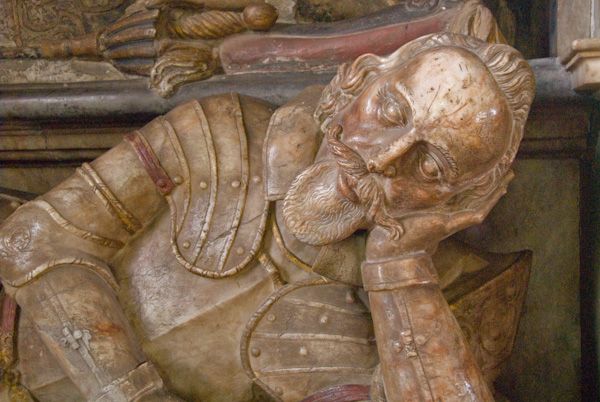
Nearby is a grandiose Jacobean monument to a pair of Sir William Selbys, uncle and nephew. The Selbys came to Ightham from their estates in the Scottish Borders around 1590s. In Scotland, they earned a reputation as heavy-handed Lords of the Marches. An inscription on the monument claims that the younger Sir William was responsible for exiling or executing over 1500 'wicked and desperate thieves' in the region.
On the wall is a monument to Dame Dorothy Selby (d. 1641), wife of the younger Sir William. She was a noted needleworker, and two of her designs, The Gunpowder Plot and The Golden Age, are shown on her monument.
Her passion for needlework was also the cause of her demise; it seems that she pricked her finger on a needle, the wound became infected, and she died as a result. The bust, and possibly the entire monument, were carved by the royal Master Mason.
Also within the church is a memorial to amateur Victorian archaeologist Benjamin Harrison. Harrison was the village grocer, but more importantly, he was an avid archaeologist, and he did much to encourage the study of prehistory. His memorial tablet is set beneath an example of a flint axe.
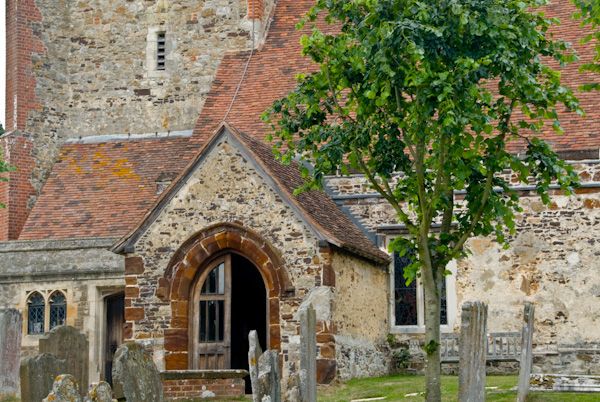
St Peter's is first mentioned in the 12th century, though it seems likely that there was a church here as early as the Saxon period. The Norman church was largely rebuilt in the 14th and 15th centuries, though Norman features survive in the chancel walls and two blocked windows in the east end. There are also nicely carved corbel heads in the south aisle.
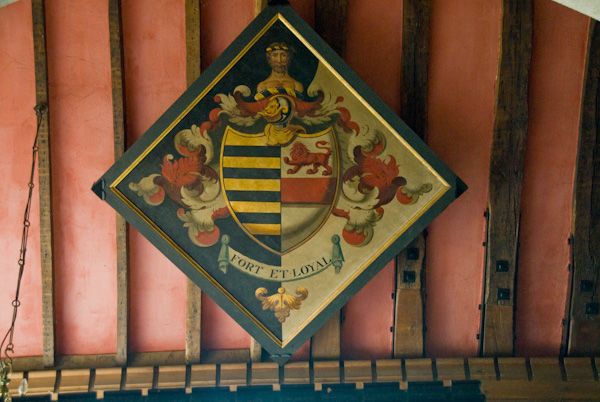
There are no less than 12 hatchments displayed in the church, making this one of the largest such displays in Kent. The brass chandelier is also worth a mention; it dates from 1574.
More Photos

About Ightham, St Peter
Address: Fen Pond Road, Ightham, Kent, England, TN15 9JD
Attraction Type: Historic Church
Location: Fen Pond Road is just off the A25. Parking is along the roadside, and there is also limited parking in the village centre, a short walk away.
Location map
OS: TQ594569
Photo Credit: David Ross and Britain Express
HERITAGE
 We've 'tagged' this attraction information to help you find related historic attractions
and learn more about major time periods mentioned.
We've 'tagged' this attraction information to help you find related historic attractions
and learn more about major time periods mentioned.
Historic Time Periods:
Find other attractions tagged with:
12th century (Time Period) - brass (Historical Reference) - Gunpowder Plot (Historical Reference) - Jacobean () - Norman (Architecture) - Saxon (Time Period) - Victorian (Time Period)
NEARBY HISTORIC ATTRACTIONS
Heritage Rated from 1- 5 (low to exceptional) on historic interest
Ightham Mote - 2.2 miles (Historic House) 
Great Comp Garden - 2.2 miles (Garden) 
Old Soar Manor - 2.3 miles (Historic House)
Knole House - 4.2 miles (Historic House)
Coldrum Longbarrow - 4.4 miles (Prehistoric Site) 
Riverhill Himalayan Gardens - 4.4 miles (Garden)
St Leonard's Tower - 5 miles (Historic Building)
East Peckham, St Michael's Church - 5.2 miles (Historic Church) 
Nearest Holiday Cottages to Ightham, St Peter:

Culverstone Green, Kent
Sleeps: 2
Stay from:£394 - £1,122