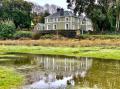
A combination of fantasy village and extraordinary gardens, Portmeirion is the work of Sir Bertram Clough Williams-Ellis, a Welsh architect. He began building in 1927 on his own private peninsula on the western coastline of Snowdonia, setting it into the architecture of a wooded hillside and beach.
Clough Williams-Ellis wanted to show that 'the development of a naturally beautiful site need not lead to its defilement'. He purchased the Portmeirion site in 1925 for just 20,000 pounds. The site was a deserted wilderness, but Clough Williams-Ellis drew up plans for an entire township.
The astonishing range of buildings was constructed in two phases; from 1925-1939 the site was laid out and distinctive Arts and Crafts buildings erected at key locations around the site. Then from 1954-1976, the remainder of the site was filled in with neo-classical and Palladian buildings to contrast with the earlier style.

Several of the buildings were saved from demolition and brought to Portmeirion piecemeal. So many buildings were saved in this way that Clough called his village 'a home for fallen buildings'.
What is Portmeirion?
It is difficult to categorize Portmeiron. Is it a village? A landscape garden? A piece of theatre?
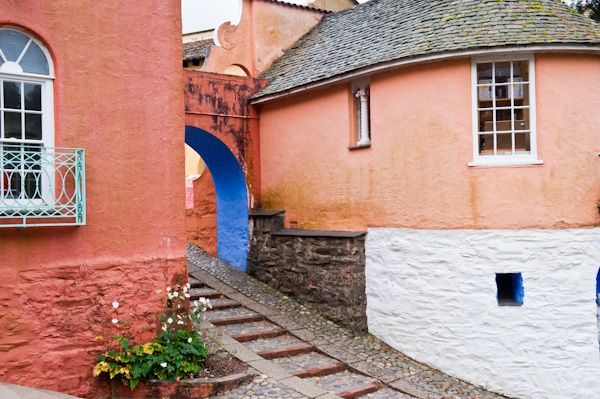
It is all of these and more - it is an experience! Clough Williams-Ellis created a fantasy village incorporating elements of Italian and Gothic design set in 85 acres of beautiful woodland gardens overlooking a harbour.

Clough Williams-Ellis was a fascinating and eccentric character, a tireless campaigner for the preservation of natural heritage, president of the Campaign for the Protection of Rural Wales for 20 years and a founding member of the Council for the Protection of Rural England (CPRE). He leant his influence to the campaign to establish national parks in England and Wales and actually drew up the boundaries of Snowdonia National Park.
What to See
At the centre of the village is the Central Piazza, with a Gothic Pavilion at one end and the Gloriette at the other. Statues of Hercules and the goddess Friga overlook the piazza and add to the Italianate flavour of the scene.

The Prisoner
Portmeirion became famous as the setting for the 1960s TV series, The Prisoner, starring Patrick McGoohan. All 17 of the series episodes were filmed in Portmeirion, and viewers of the series will immediately recognise many of the locations.
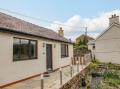
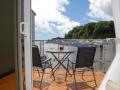
You can watch an audiovisual presentation on the development of the village, and many of the cottages are rented as out holiday homes. The internationally known Portmeirion Pottery, created by Sir Williams-Ellis' daughter, is sold in the village.
The village is surrounded by woodland gardens, with walks along the coastline and through the woods, with towering pines, sycamore, redwoods, and fir trees. There are lush displays in the Edwardian garden, with colourful Rhododendron, Azalea and Camellias in season.
More Photos




About Portmeirion
Address: Portmeirion, Gwynedd, Wales, LL48 6ER
Attraction Type: Village
Location: Off the A487
Website: Portmeirion
Email: info@portmeiron-village.com
Location map
OS: SH590 371
Photo Credit: David Ross and Britain Express
HERITAGE
 We've 'tagged' this attraction information to help you find related historic attractions
and learn more about major time periods mentioned.
We've 'tagged' this attraction information to help you find related historic attractions
and learn more about major time periods mentioned.
Find other attractions tagged with:
Arts and Crafts (Architecture) - Edwardian (Historical Reference) - neo-classical (Architecture) - Palladian (Architecture) - Snowdonia (Place)
NEARBY HISTORIC ATTRACTIONS
Heritage Rated from 1- 5 (low to exceptional) on historic interest
Deudraeth Castle - 0.1 miles (Castle) 
Llanfihangel-y-Traethau Carved Stone - 1.3 miles (Historic Church)
Wern Manor Gardens - 3.4 miles (Garden) 
Llyn Eiddew Bach III Stone Circle - 3.6 miles (Prehistoric Site)
Plas Brondanw Gardens - 3.6 miles (Garden)
Bryn Cader Faner Cairn Circle - 3.7 miles (Prehistoric Site)
Harlech Castle - 3.7 miles (Castle) 
Plas Tan-Y-Bwlch Gardens - 4.6 miles (Garden)
Nearest Holiday Cottages to Portmeirion: