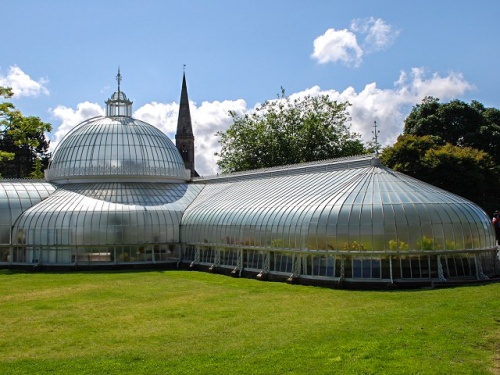
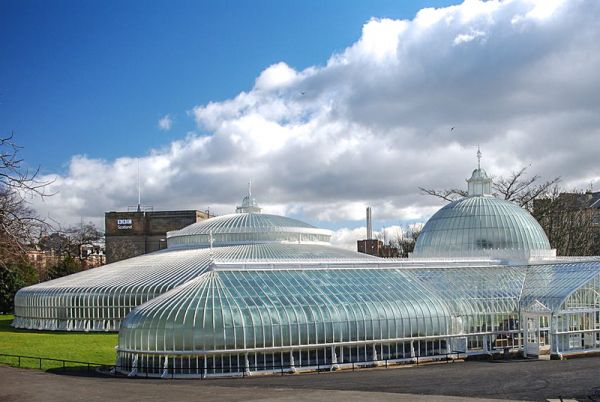
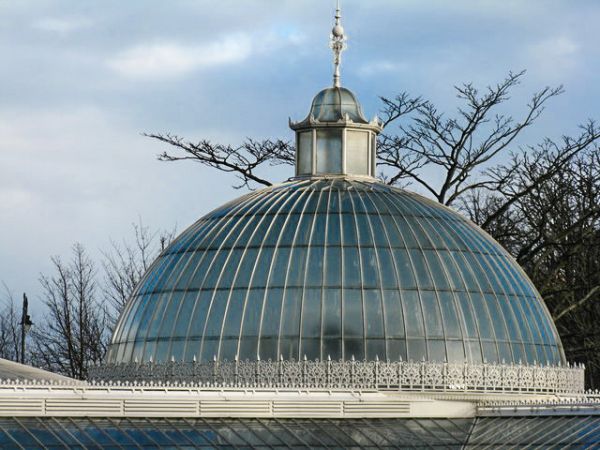
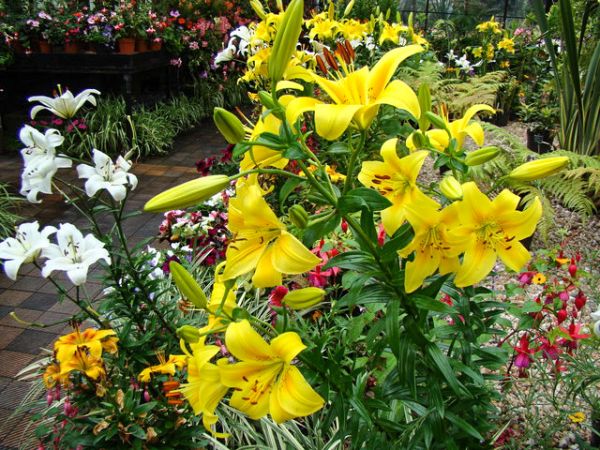
Glasgow's historic Botanic Gardens are centred on the dramatic 1873 Kibble Palace, Britain's largest glasshouse, housing a collection of tree ferns and plants from five continents. Eleven other linked glasshouses are home to a display of cacti and varieties of orchids.
History
In 1817 an eminent Scottish botanist named Thomas Hopkirk founded a botanic garden on an 8-acre site at the western end of Sauchiehall Street. Hopkirk donated over 3,000 plants, which formed the core of the garden's first collections. The garden was established with the help of the University of Glasgow.
The garden expanded so quickly that it quickly outgrew the Sauchiehall Street site, and in 1839 a new location was purchased on the banks of the River Kelvin, and in 1842 the Royal Botanic Institution of Glasgow opened the garden. Institute members were admitted, but the public was only allowed to visit on weekends, for a small admittance fee.
Kibble Palace
John Kibble was true Victorian eccentric, an entrepreneur, and businessman. He built a large glasshouse on his property at Coulport on the shores of Loch Long.
In 1871 he sold the glass and steel structure to the Royal Botanic Institution of Glasgow. The glasshouse was dismantled and shipped by barge to Glasgow, where it was enlarged and re-erected.
The cost of purchasing the glasshouse put the Institute into a serious financial hole. The City of Glasgow purchased the garden and is bound by law to keep them open as a public park and botanic garden forever.
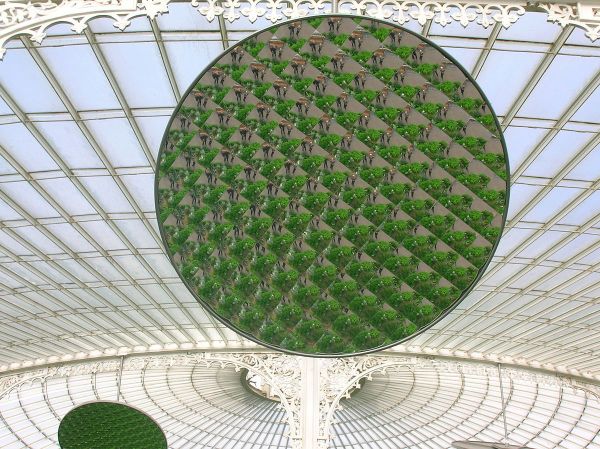
The new glasshouse opened to the public in 1873, its interior lit not only by natural sunlight but also by 600 gas lamps which could be coloured for a dramatic theatrical effect. The glasshouse covers an astonishing 2137 m2 and is built with a curved wrought iron and glass on a cast iron frame, resting on masonry piles.
The Kibble Palace, as it was called, was the setting not only for the garden's collections of tender plants but also for public events such as a religious revival meeting and the ceremonies installing Benjamin Disraeli and his great political rival, William Gladstone, as rectors of the University - at different times.
The Kibble Palace is home to the national collection of tree ferns, planted here in the 1880s and based on samples from New Zealand and Australia.
A new set of glasshouses was erected in 1878. These were built not of steel but teak, and are now called the Main Range to distinguish them from the Kibble Palace.
Additions to the original botanic collections include an herb garden, opened beside Kibble Palace in 1957, an arboretum and a species rose garden. There are riverside walks beside the River Kelvin, and areas of woodland in addition to the tropical and sub-tropical plants in the glasshouses.
The gardens are free to enter.
More Photos

About Botanic Gardens, Glasgow
Address: 730 Great Western Road, Glasgow, Strathclyde, Scotland, G12 0UE
Attraction Type: Garden
Location: In Glasgow's West End
Website: Botanic Gardens, Glasgow
Location map
OS: NS568673
Photo Credit: Patrick Mackie, licensed for reuse under the Creative Commons Licence
HERITAGE
 We've 'tagged' this attraction information to help you find related historic attractions
and learn more about major time periods mentioned.
We've 'tagged' this attraction information to help you find related historic attractions
and learn more about major time periods mentioned.
Historic Time Periods:
Find other attractions tagged with:
NEARBY HISTORIC ATTRACTIONS
Heritage Rated from 1- 5 (low to exceptional) on historic interest
Glasgow Cathedral - 2.3 miles (Cathedral) 
Bearsden Bath House - 3.2 miles (Roman Site) 
Pollok House - 3.8 miles (Historic House)
Crookston Castle - 4 miles (Castle)
Holmwood House - 4.8 miles (Historic House)
Barochan Cross - 5.3 miles (Prehistoric Site)
Paisley Abbey - 5.3 miles (Historic Church)
Paisley Museum - 6 miles (Museum)
Nearest Holiday Cottages to Botanic Gardens, Glasgow:
Nearby accommodation is calculated 'as the crow flies' from Botanic Gardens, Glasgow. 'Nearest' may involve a long drive up and down glens or, if you are near the coast, may include a ferry ride! Please check the property map to make sure the location is right for you.