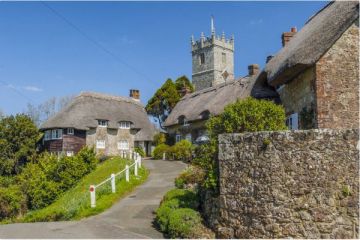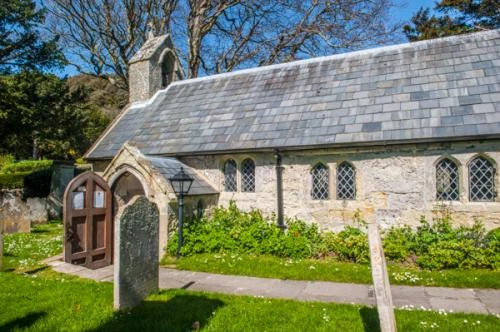
Tucked away in a leafy churchyard in St Lawrence, just east of Ventnor, stands St Lawrence Old Church, a lovely 12th-century church that was once the smallest in England.
History
Tradition says that the Old Church was built in 1191 by the De Aulas family of Wolverton as a private chapel. The earliest recorded rector was in 1201.
Old Church was the smallest parish church in England until 1842, when Charles Anderson-Pelham, the 1st Earl of Yarborough, added a chancel, extending the building eastward by 10 feet (some records say 15 feet). Before the extension, the Old Church measured 30 feet long, eleven feet wide, and six feet to the eaves.
The church fell out of use when a larger parish church was built in 1876-78, but Sunday evening services recommenced in 1924. It was restored and refurbished in 1926.
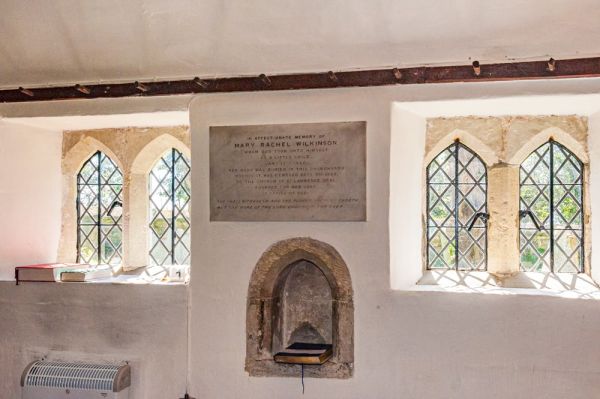
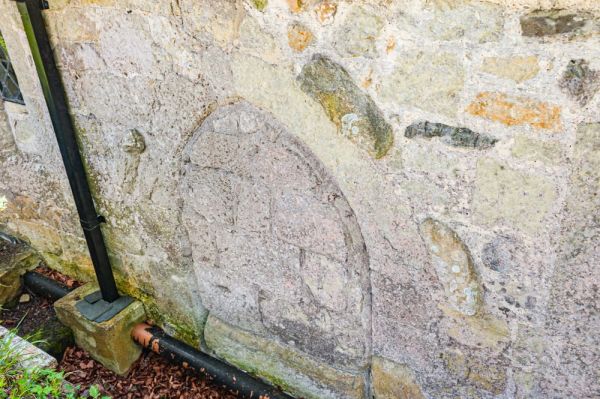
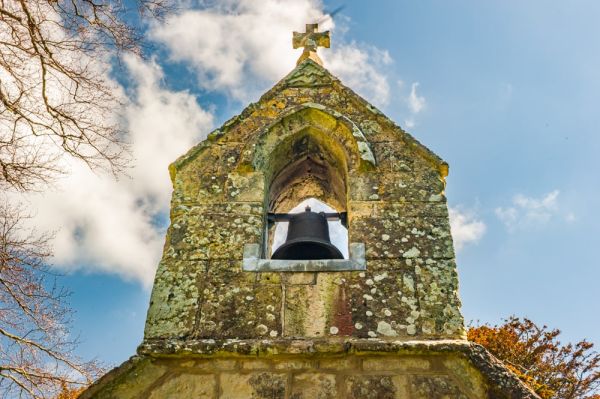
Nineteenth-century additions include the south porch, single bellcote, and chancel. In the north wall and visible from the outside is what remains of the medieval north doorway, now blocked up. Beside it, set low in the wall, is a blocked medieval window, thought to be original to the 12th-century church.
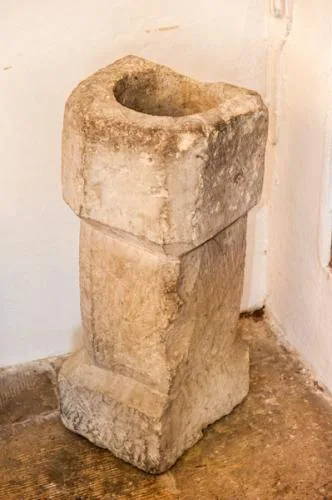
Standing in the north-east corner of the nave is a 15th-century holy water stoup. This was found in the churchyard and brought back inside the church.
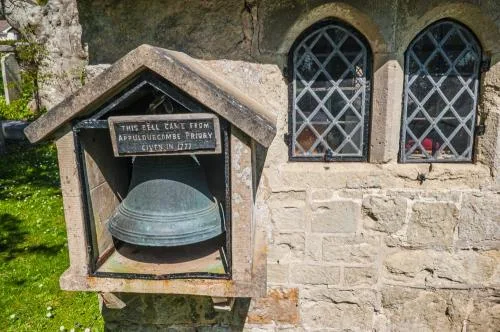
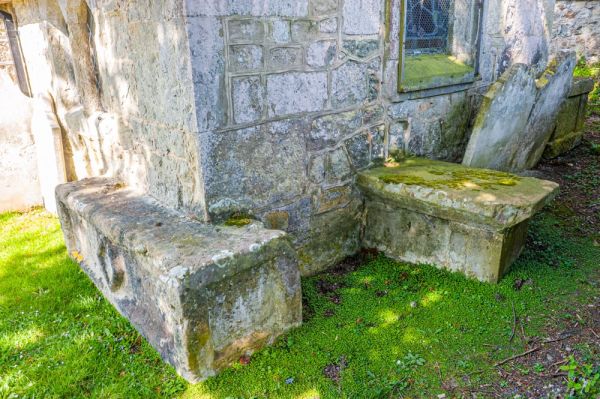
Outside the porch is an ancient bell given by Sir Richard Worsley of Appledurcombe Priory. The bell has a plaque with the date 1777, but that is the date that Worsley gave the bell to the church; the bell itself appears to be older. Abutting the south-east corner of the church is a Georgian table tomb and further table tombs help support the north-east corner and the east wall of the chancel.
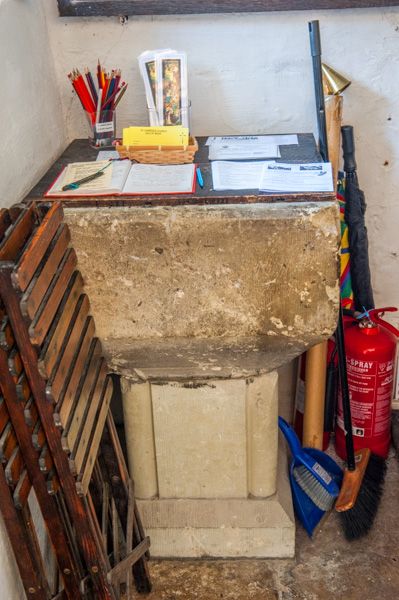
The font is Victorian, for the original medieval font was taken to the new church.
The yew trees in the churchyard were planted by Sir Raymond Jarvis, who was interred here in 1868. Jarvis served as aide-de-camp to General George Ramsay.
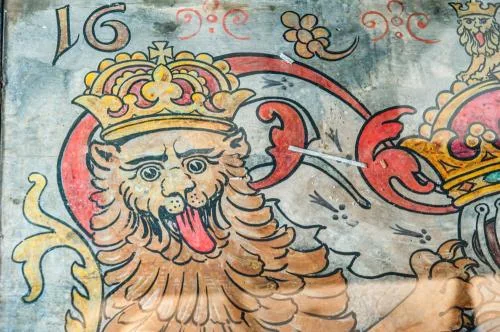
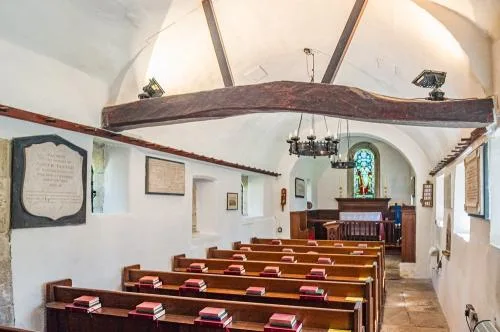
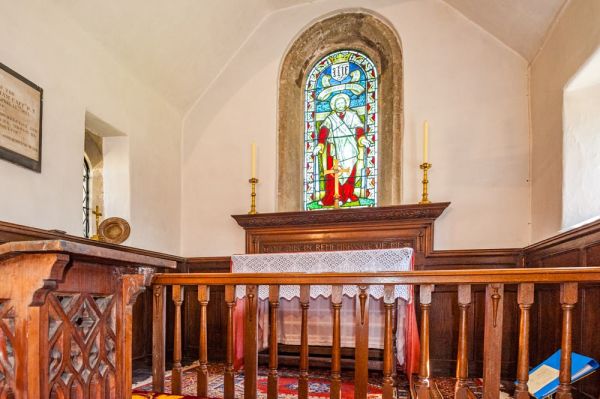
Historical highlights include a carved 19th-century reredos, and there is a row of old wooden coat pegs along the north and south nave walls. At the west end of the nave is a decalogue painted on a pair of arched boards, but the oldest furnishing is a royal coat of arms to King Charles II dated 1663.
St Lawrence Old Church is a delight; a simple two-celled church with ancient origins. It is fascinating to compare the Old Church with its Victorian replacement, a short stroll to the south-east.
Visiting
St Lawrence Old Church is at the eastern end of Seven Sisters Road. There is limited parking along nearby village streets.
Just west of the church is the St Lawrence Peace Garden, where you will find a memorial to the crew of the HMCS Alberni, a Royal Canadian Navy ship which was torpedoed in the English Channel on 21 August 1944 with the loss of 59 lives.
More Photos
About St Lawrence Old Church
Address: Seven Sisters Road, St Lawrence, Isle of Wight, England, PO38 1XH
Attraction Type: Historic Church
Location: On Seven Sisters Road, just east of the Peace Garden. Limited parking along nearby lanes.
Website: St Lawrence Old Church
Location map
OS: SZ536766
Photo Credit: David Ross and Britain Express
HERITAGE
 We've 'tagged' this attraction information to help you find related historic attractions
and learn more about major time periods mentioned.
We've 'tagged' this attraction information to help you find related historic attractions
and learn more about major time periods mentioned.
Historic Time Periods:
Find other attractions tagged with:
12th century (Time Period) - 19th century (Time Period) - Victorian (Time Period)
NEARBY HISTORIC ATTRACTIONS
Heritage Rated from 1- 5 (low to exceptional) on historic interest
St Lawrence Church - 0.1 miles (Historic Church) 
Ventnor Botanic Garden - 0.6 miles (Garden) 
Niton, St John the Baptist Church - 1.9 miles (Historic Church)
Appuldurcombe House - 2.3 miles (Historic House)
St Catherine's Oratory - 2.7 miles (Historic Building)
Bonchurch Old Church - 2.7 miles (Historic Church)
Godshill, All Saints Church - 3.3 miles (Historic Church) 
Shanklin, St Blasius Church - 3.6 miles (Historic Church)
Nearest Holiday Cottages to St Lawrence Old Church: