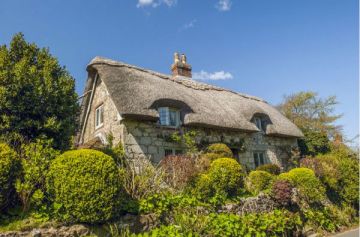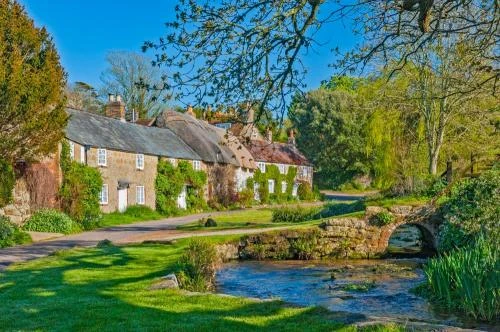
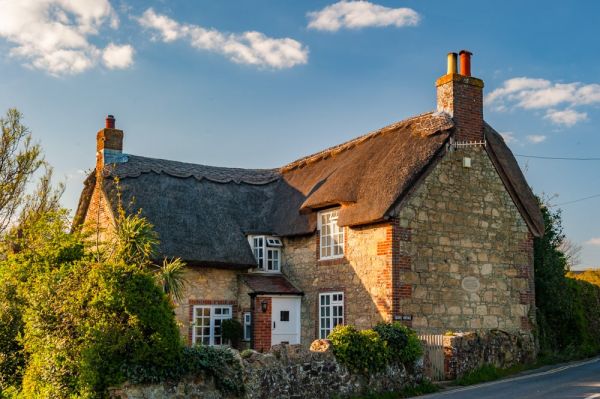
Calbourne is perhaps the prettiest village on the Isle of Wight, and a magnet for visitors and photographers alike, who are drawn by its thatched cottages, ancient church, historic water mill, and idyllic setting beside a placid waterway.
History
Calbourne grew up along the River Caul Bourne, a slowly meandering stream that runs three miles north from its source in a small lake, through the village, to the Newtown River Estuary at Shalfleet.
The village takes its name from the Old English 'Cawelburnan', commonly thought to mean a river where brassicas (e.g. kale) grow. Another interpretation is that the name means a river where baskets are used (for fish traps).
The earliest records of Calbourne come in a 12th-century copy of an AD 826 charter.
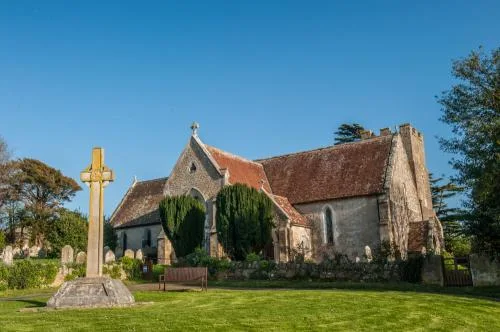
All Saints Church
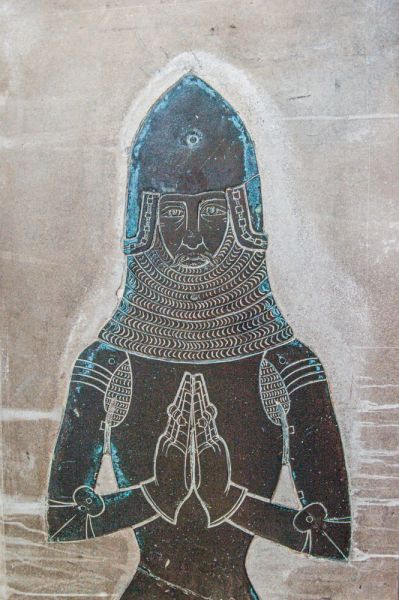
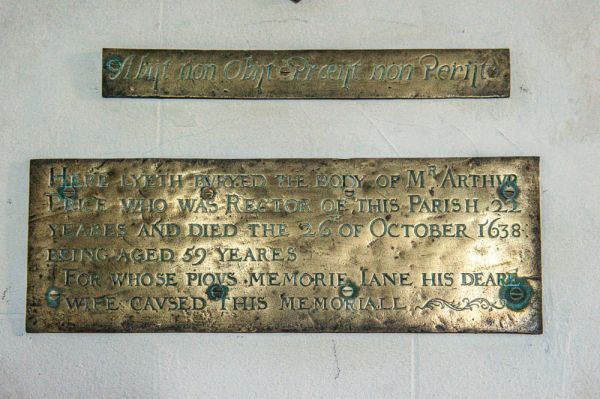
Calbourne's beautiful parish church was begun in AD 826, though the present building is largely a product of the 13th century. Historical highlights include a 14th-century funeral brass thought to commemorate William Montacute, Earl of Salisbury, who died whilst jousting, pierced through the eye by a lance borne by his father. The grief-stricken father vowed to create an altar tomb and a memorial brass in every church across his vast estates.
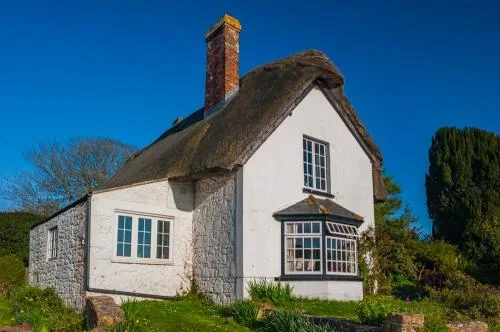
Opposite the church, on Lynch Lane, stands Grant's Cottage, a lovely thatched cottage dating to the 18th century. A plaque on the cottage exterior reminds us that it was here that author William H. Long was born in 1839. Long is best known for his Isle of Wight Dialect Dictionary and as the editor of the Oglander Memoirs.
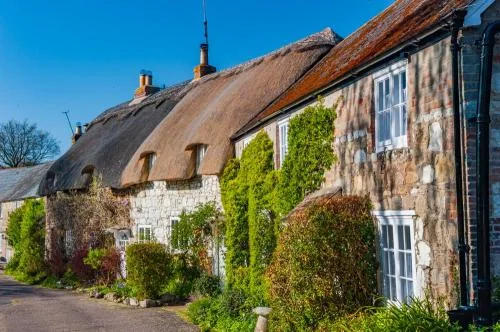
Winkle Street
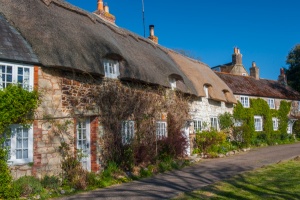
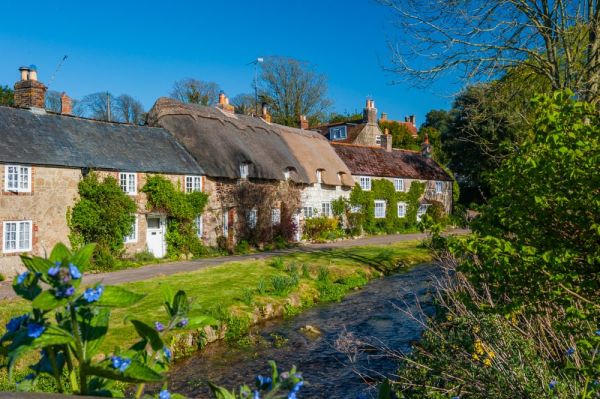
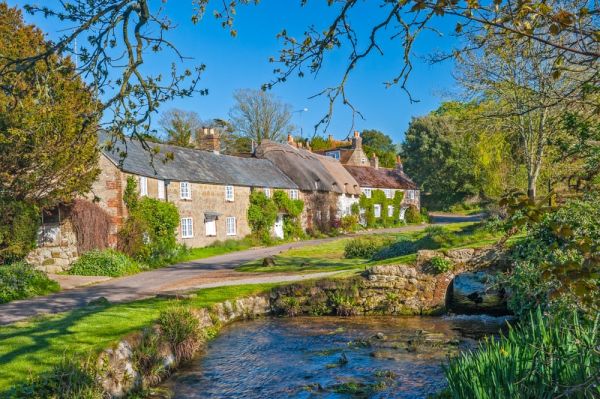
This picturesque row of thatched and tiled cottages stands on the banks of the River Caul Bourne, in the south-west corner of the village. The idyllic riverside view of the cottages has appeared on countless postcards and calendars, making it among the most recognisable scenes on the Isle of Wight.
The cottages date from the 17th and 18th centuries. Each cottage is unique, built from a mix of clunch, ironstone rubble, and brick. Facing the cottages is a stone-walled sheepwash thought to date to the 17th century. Winkle Street was originally named Barrington Row, after a local family.
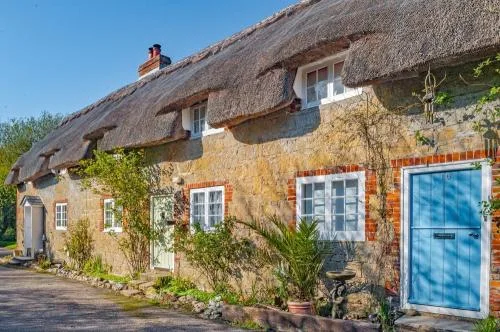
This idyllic scene has been painted by many artists, perhaps most famously by Alfred Heaton Cooper (1863–1929), who is best-known for his Lake district landscapes.
At the southern edge of Calbourne, set in beautiful grounds, stands the 18th-century mansion of Westover House, once owned by a relative of poet Elizabeth Barret Browning. The Westover estate goes back to the 11th century.
Even older is Swainston Manor, east of the village, which was established as early as AD 735. In the 12th century the Bishops of Winchester built a palace on the site, and the medieval palace chapel still survives. The manor is now a hotel.
Calbourne Water Mill
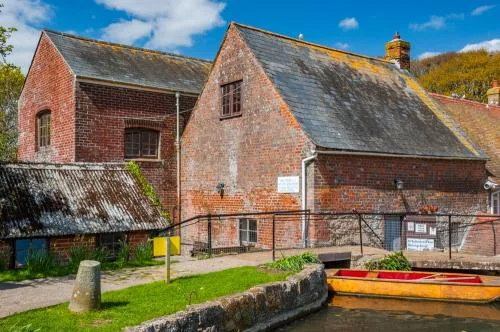
West of the village is a 17th-century watermill and mill house set on the Caul Bourne. There has been a mill on this site since the time of the Domesday Book in 1086, making this one of the oldest working water mills in Britain, but the present mill building dates to 1697.
Calbourne Water Mill is an extremely popular visitor attraction, offering mill tours, a restaurant, family activities, gardens, and accommodation.
There are 81 listed buildings in Calbourne parish, though that number includes historic buildings as far away as Newtown. Of these, four are listed Grade II*, and 77 as Grade II. North of the village lies the National Trust's Newtown Harbour Nature Reserve.
Visiting
Calbourne lies on the B3401 about 5 miles west of Newport. We didn't see any dedicated parking, but we found it easy to park along the verge of Lynch Lane. Do be aware that there is no vehicular access to Winkle Street for visitors. If you've to see Winkle Street, you need to park elsewhere in the village and explore on foot.
More Photos
About Calbourne & Winkle Street
Address: B3401, Calbourne, Isle of Wight, England
Attraction Type: Village
Location: Parking along village lanes. No vehicular access to Winkle Street.
Website: Calbourne
Location map
OS: SZ424866
Photo Credit: David Ross and Britain Express
HERITAGE
 We've 'tagged' this attraction information to help you find related historic attractions and learn more about major time periods mentioned.
Find other attractions tagged with:
11th century (Time Period) - 13th century (Time Period) - 14th century (Time Period) - 17th century (Time Period) - 18th century (Time Period) - 8th century (Time Period) - 9th century (Time Period) - Domesday Book (Historical Reference)
NEARBY HISTORIC ATTRACTIONS
Heritage Rated from 1- 5 (low to exceptional) on historic interest
Calbourne, All Saints Church - 0.1 miles (Historic Church) 
Shalfleet, St Michael the Archangel Church - 1.8 miles (Historic Church)
Long Stone Neolithic Burial Mound - 1.9 miles (Prehistoric Site)
Castle Hill (Mottistone) Hillfort - 1.9 miles (Prehistoric Site) 
Mottistone Manor Garden - 2.1 miles (Garden)
Mottistone, St Peter & St Paul Church - 2.2 miles (Historic Church)
Brook, St Mary's Church - 2.3 miles (Historic Church)
Brighstone, St Mary's Church - 2.5 miles (Historic Church)
Nearest Holiday Cottages to Calbourne & Winkle Street:
Freshwater, Isle of Wight
Sleeps: 8
Stay from: £1,260 - £8,187
Carisbrooke, Isle of Wight
Sleeps: 8
Stay from: £841 - £3,691
More self catering near Calbourne & Winkle Street