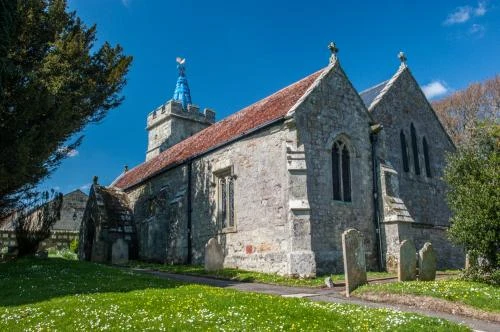
The 11th-century church of St John the Baptist was built by William FitzOsbern, the 1st Earl of Hereford (1011-1071), a relative of William the Conqueror and one of the most powerful Norman nobles in England.
FitzOsbern granted the church to the convent at Lire, in Normandy. At the Dissolution of the Monasteries it passed to the Crown. In 1626 Charles I gave it to Queen's College, Oxford.
History
The oldest part of the church is the nave, which likely began in the 11th century. A north aisle was added in the 12th century followed by a south aisle in the following century.
Around the same time as the south aisle was added, the church was extended with the addition of a chancel. A south porch was added in the 14th century and a tower in the 15th century. The spire was not installed until the beginning of the 17th century.
The church was comprehensibly restored in 1864, when the north aisle was rebuilt.
What to See
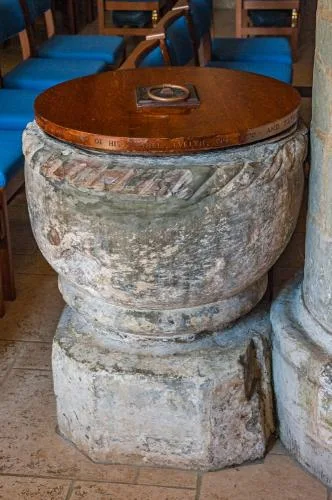
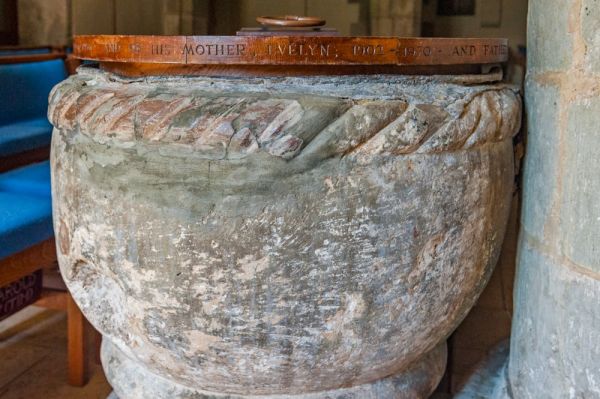
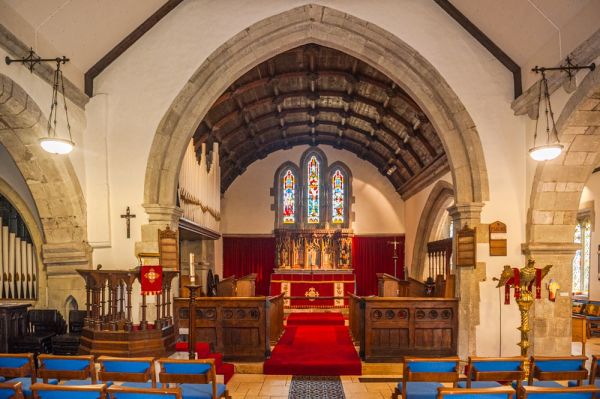
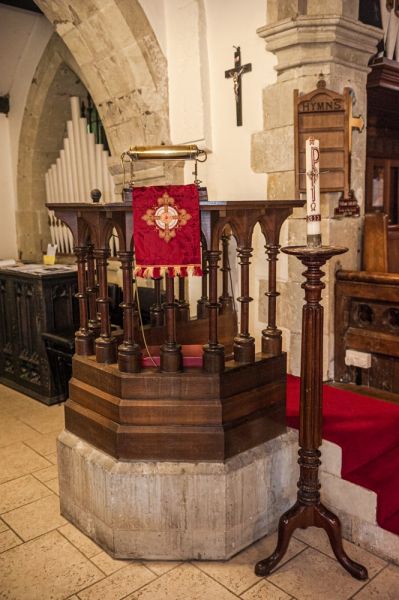
The font is possibly original to the church and features a cauldron-shaped bowl decorated with rope moulding under the rim exterior. The chancel arch is 13th-century work, and there is a hagioscope, or squint, allowing a sight of the altar from the north aisle.
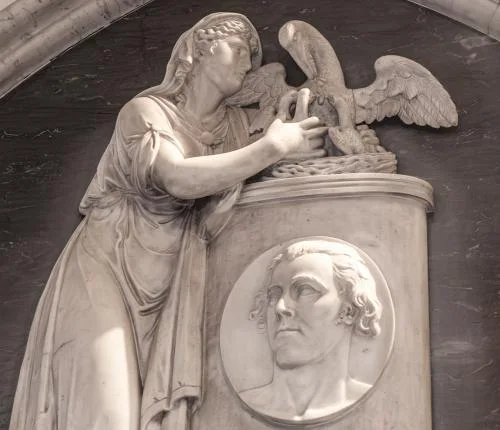
In the south chapel are a series of impressive monuments. The finest of these is to George Arnold, who died in 1806. The monument was crafted by John Flaxman (1755-1826). Arnold served as the Lieutenant Colonel of the South East Battalion of Volunteers and died at the age of 52.
The monument shows a woman in classical dress holding pelicans, while a column is carved with a flattering likeness of the deceased. The effusive epitaph reads as follows:
Weak words to paint the sorrow I'll essay,
Breath'd through these crowded aisles and long array.
While grieving comrades march in measur'd pace,
Once Arnold's banners now his bier to grace;
One ray of comfort beams their leader gone,
To place his ashes where may rest their own.
Prais'd and deplor'd, no less, in private life,
His varied worth. Affection for his wife.
A father's love, a tutor's plastic toil
To shape and rear his sons in Virtue's soil.
Sure balm religion only can bestow,
To sooth[e] for such sad loss a widow's woe;
And hers (the best of husbands doom'd to weep)
Come Faith to guide, unshaken empire to keep.
Till sister hope, the gloom to gild return,
And give this counsel, 'As a Christian mourn.'
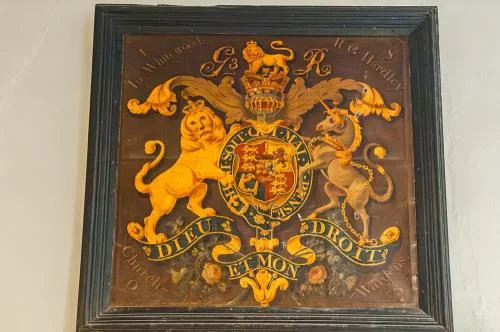
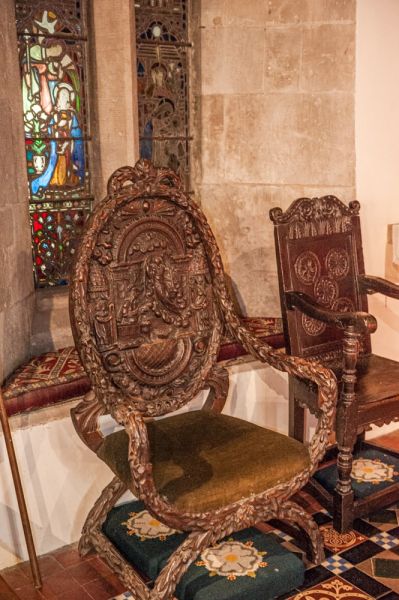
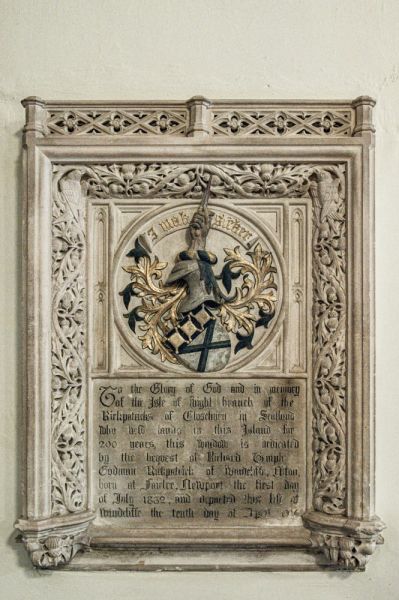
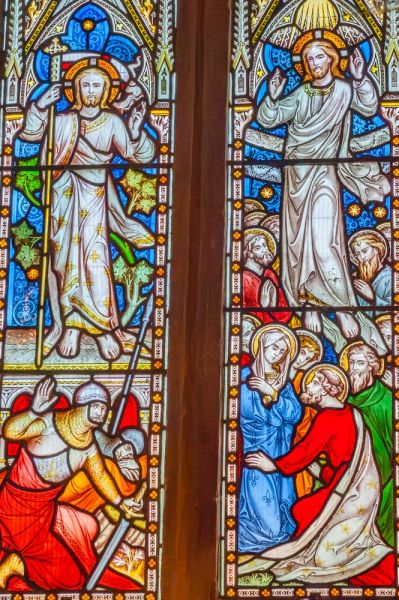
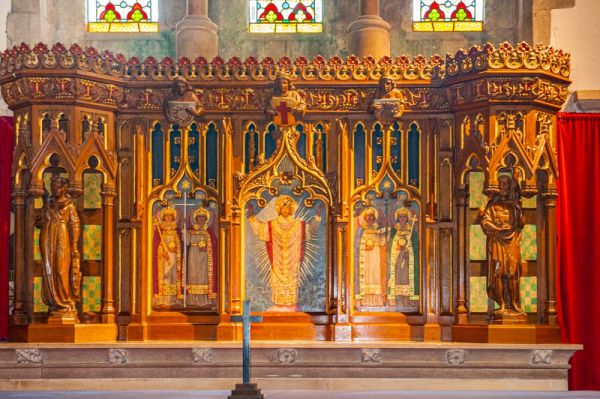
Other historical highlights include a royal coat of arms to George III, dated 1803, and a finely carved 17th-century chair in the sanctuary. A small plaque commemorates the installation of the Kirkpatrick Window, given in memory of Richard Kirkpatrick of Niton, who died in 1916.
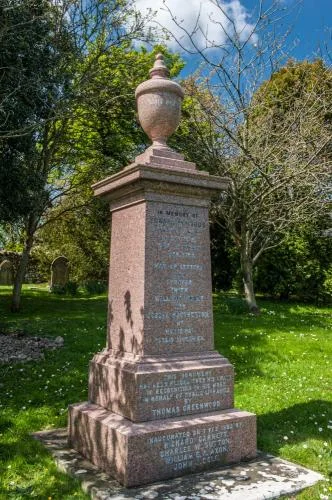
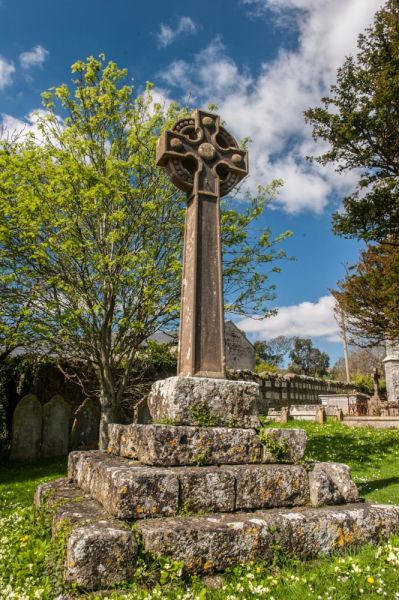
In the churchyard is the stepped base of a medieval cross. The original has been replaced by a modern cross in Celtic style, designed by the architect Joseph Clarke of London. Also in the churchyard is a memorial to Edward Edwards (d. 1886). Edwards was, along with William Ewert and Joseph Brotherton, instrumental in promoting the idea of free public libraries.
Visiting
St John's Church stands on Church Lane (A3055), at the western edge of Niton. There is limited parking outside the churchyard and along Pane Lane. The church was open when we visited and is, as far as we can determine, regularly open to visitors.
More Photos
About Niton, St John the Baptist Church
Address: Church Street, Niton, Isle of Wight, England, PO38 2BT
Attraction Type: Historic Church
Location: On Church street (the A3055), at the western edge of Niton. Parking along nearby lanes.
Website: Niton, St John the Baptist Church
Location map
OS: SZ505768
Photo Credit: David Ross and Britain Express
HERITAGE
 We've 'tagged' this attraction information to help you find related historic attractions
and learn more about major time periods mentioned.
We've 'tagged' this attraction information to help you find related historic attractions
and learn more about major time periods mentioned.
Find other attractions tagged with:
11th century (Time Period) - 19th century (Time Period) - Norman (Architecture)
NEARBY HISTORIC ATTRACTIONS
Heritage Rated from 1- 5 (low to exceptional) on historic interest
St Catherine's Oratory - 0.8 miles (Historic Building) 
St Lawrence Old Church - 1.9 miles (Historic Church)
St Lawrence Church - 2 miles (Historic Church)
Ventnor Botanic Garden - 2.5 miles (Garden) 
Appuldurcombe House - 3.2 miles (Historic House)
Godshill, All Saints Church - 3.4 miles (Historic Church) 
Bonchurch Old Church - 4.6 miles (Historic Church)
Shorwell, St Peter's Church - 4.9 miles (Historic Church)
Nearest Holiday Cottages to Niton, St John the Baptist Church: