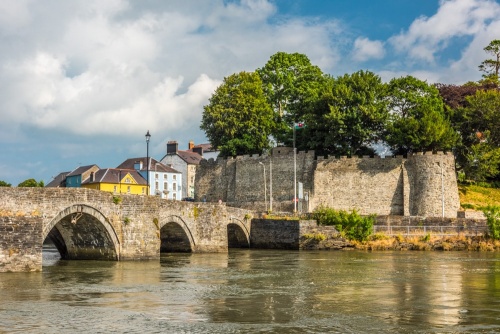
There was a motte and bailey castle here on the banks of the River Teifi as early as 1093, though quite where that early Norman structure was located is a matter of conjecture. In 1110 Gilbert de Clare, who was responsible for quite a few of the early Norman castles in Wales, constructed a second fortification.
History
Around 1170 Rhys ap Grufudd, Prince of Deheubarth, took control, and transformed Cardigan into the first Welsh-built stone castle. In 1176 Rhys held the first Eisteddfod, or festival celebrating Welsh culture, at Cardigan Castle.
After Rhys died in 1197 his sons squabbled, and Cardigan became a pawn in the endless struggle for superiority in south Wales between the English and Welsh. The castle was taken and retaken over the years, as Welsh and Normans vied for supremacy. After 1240 the English held it, and did not relinquish it again.
The castle was strengthened after the Welsh uprising of 1245, and walls were built around the growing town. Cardigan was besieged by the Welsh during the Owain Glyndwr uprising, but its connection to the sea meant the defenders were able to get supplies by ship, and they kept the Welsh at bay. The castle then fell into disrepair until it was garrisoned by Royalist supporters in the English Civil War.
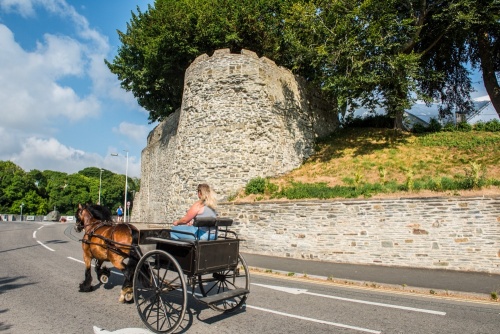
Cromwell overcame the defenders and ordered it to be "slighted" (made uninhabitable). Finally, in the 1880's a private house was built in the inner bailey, incorporating remains of the castle walls and buildings. That house in turn fell into disrepair and the castle itself was in danger of becoming a complete ruin.
The Castle Restored
In 2003 Ceredigion County Council purchased the site and a restoration project was launched with the aid of the Friends of Cardigan Castle charity. The result is that the ruined castle has been completely restored and is open to the public.
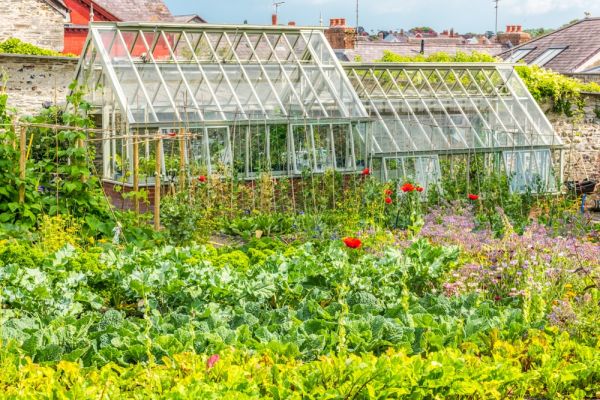
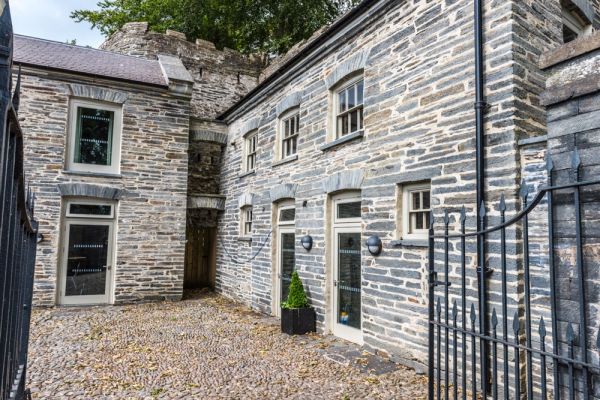
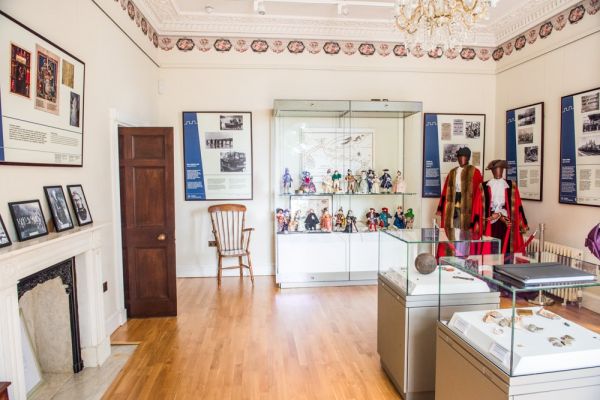
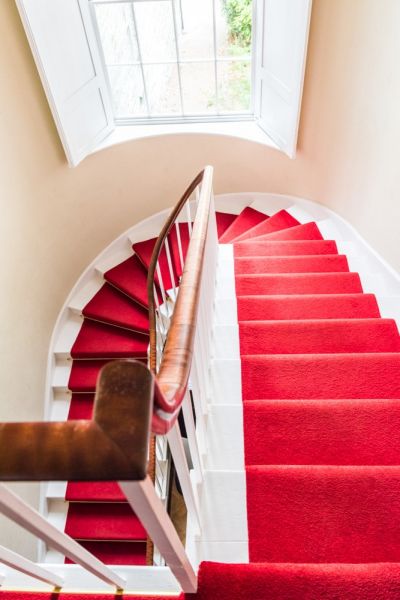
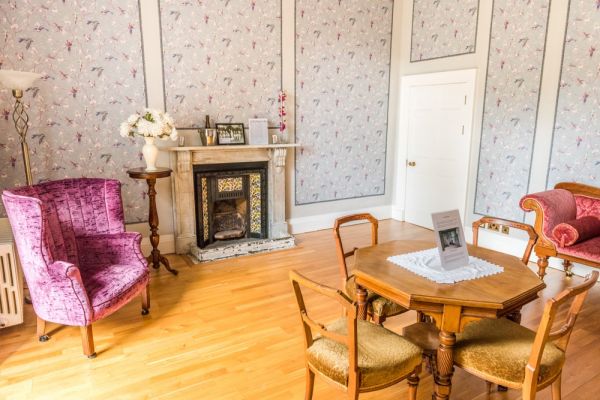
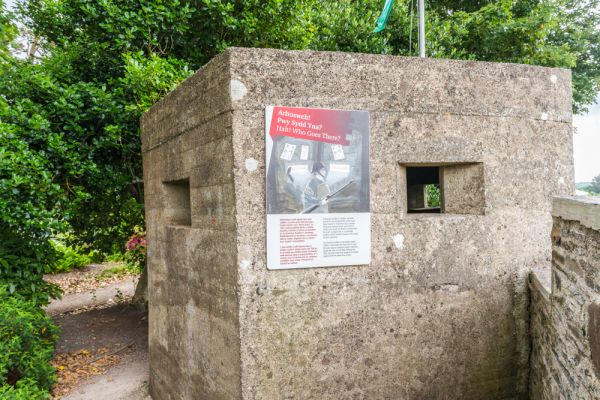
Visitors can tour the castle bailey and see the stables and the restored garden. Within the curtain wall is a WWII pillbox. Perhaps the most interesting part of a castle visit is the restored Victorian house within the bailey. Here you can see an exhibition on the castle's history and Welsh eisteddfods.
More Photos

About Cardigan Castle
Address: Castle Street, Cardigan, Ceredigion, Wales, SA43 1JA
Attraction Type: Castle
Location: Off the A478
Website: Cardigan Castle
Email: info@cardigancastle.com
Location map
OS: SN177 459
Photo Credit: David Ross and Britain Express
POPULAR POSTS
HERITAGE
 We've 'tagged' this attraction information to help you find related historic attractions
and learn more about major time periods mentioned.
We've 'tagged' this attraction information to help you find related historic attractions
and learn more about major time periods mentioned.
Historic Time Periods:
Find other attractions tagged with:
castle (Architecture) - Civil War (Architecture) - Cromwell (Person) - Gilbert de Clare (Person) - motte and bailey (Historical Reference) - Norman (Architecture) - Owain Glyndwr (Person) - Parliamentary (Historical Reference) - Restoration (Historical Reference) - Royalist (Person) - Victorian (Time Period)
NEARBY HISTORIC ATTRACTIONS
Heritage Rated from 1- 5 (low to exceptional) on historic interest
St Dogmael's Abbey - 0.9 miles (Abbey) 
Cilgerran, St Llawddog's Church - 1.9 miles (Historic Church)
Cilgerran Castle - 2.1 miles (Castle) 
Mwnt, Holy Cross Church - 3.9 miles (Historic Church)
Mwnt Bay - 3.9 miles (Countryside) 
LLech y Drybedd - 5 miles (Prehistoric Site) 
Cenarth, St Llawddog's Church - 6.3 miles (Historic Church)
National Coracle Centre, Cenarth Falls - 6.3 miles (Museum)
Nearest Holiday Cottages to Cardigan Castle: