Restenneth Priory was founded around the year AD 710. In that year the Pictish King Nectan, or Nechtan, wrote to Ceolfrid, Abbot of Wearmouth, asking for aid to resolve differences between the Celtic and Catholic church in his territory. He also asked for masons to help build a stone church.
A mission under St Boniface was dispatched north from Wearmouth, and soon established a series of monasteries in the Pictish lands. One of these new foundations was Restenneth Priory, dedicated to St Peter as were all of Boniface's churches in the Pictish territory.
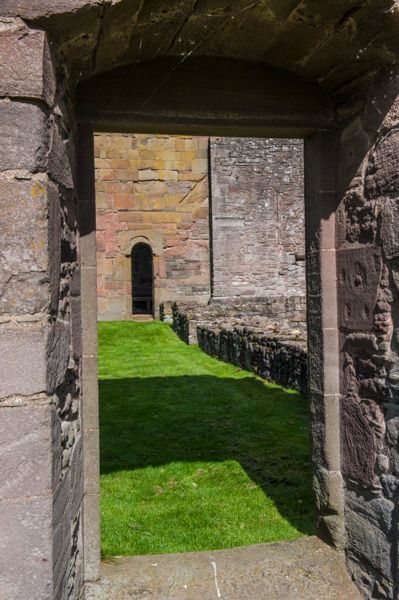
The lower section of the medieval priory church tower we see today may be a part of Boniface's 8th-century church; if so, it would be an extraordinary survival. There is some question as to whether the base is that old, however; some opinions put it in the 11th century, which would still make it one of the earliest stone buildings in Scotland.
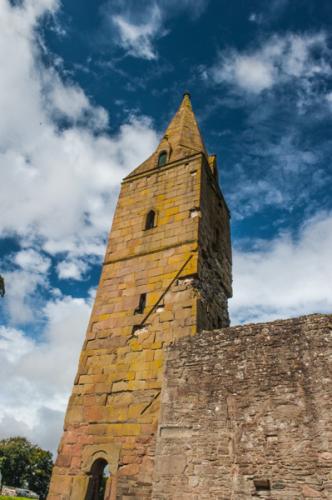
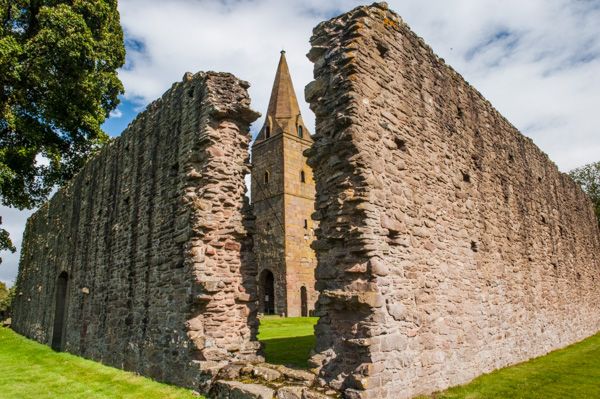
The tower is the most striking feature of the monastic ruins at Restenneth. It dates to around 1100, shortly before our first written record of the monastery, which mentions a priory of Augustinian canons.
King David I gave royal lands to the canons, and King Malcolm IV (1153-1165) granted the priory to Jedburgh Abbey. Throughout this period the priory church also served as the parish church for the residents of Forfar.
The tower rises 14 metres (about 45 feet), not including a slender 15th-century broach spire. It is hard to miss the similarity between this tower and St Rule's Tower at St Andrew's Cathedral, built at the same time, which suggests they may have been built by the same team of masons.
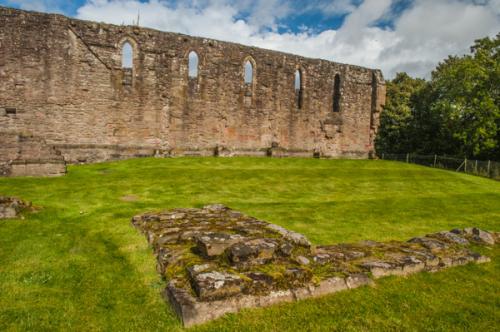
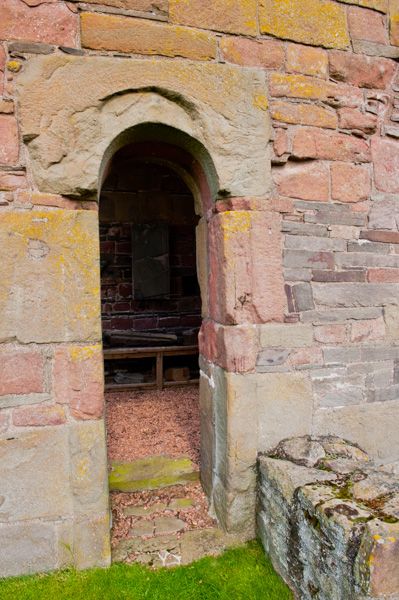
The lower section includes a doorway which looks like a porch entrance, suggesting that the medieval masons built the new tower atop the earlier Pictish church porch.
Despite generous endowments, the priory was never terribly large, supporting about 8 canons by the late 13th century.
The priory grew in size and importance when King Robert Bruce became a generous patron, and still more when Robert chose Restenneth as the burial place for his infant son, Prince John, who died around 1327. John is the only member of Bruce's family not to be interred at Dunfermline Abbey.
David II carried on royal support for the priory as a mark of respect for his dead brother.The priory lost its importance in the late medieval period, and by 1500 there were only 2 canons.
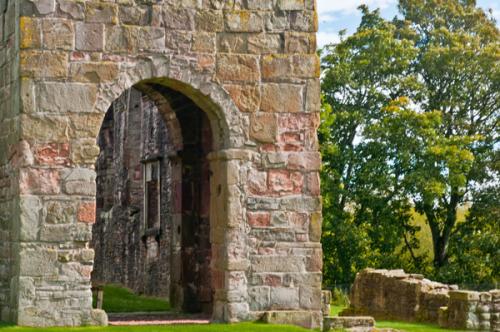
Like all monastic houses in Scotland, Restenneth was dissolved at the Reformation, and the monastic buildings passed through a number of private owners. One of the owners, George Dempster of Dunnichen, turned the old monastic choir into a family burial place.
The priory church ceased to be used by the parishioners, as the priory's former chapel in Forfar itself became the parish church. The final appearance of the priory in the pages of history comes in 1745 when the monastic buildings were damaged by soldiers during the Jacobite Rebellion.
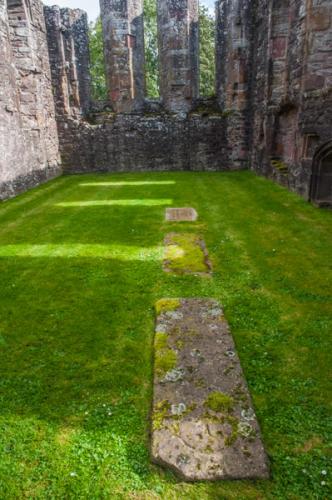
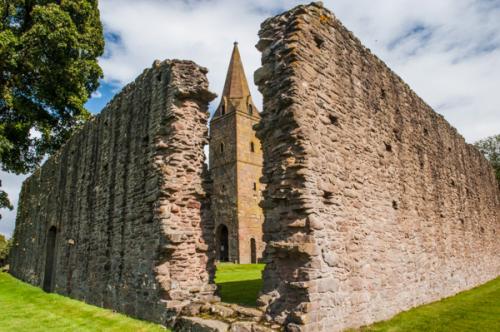
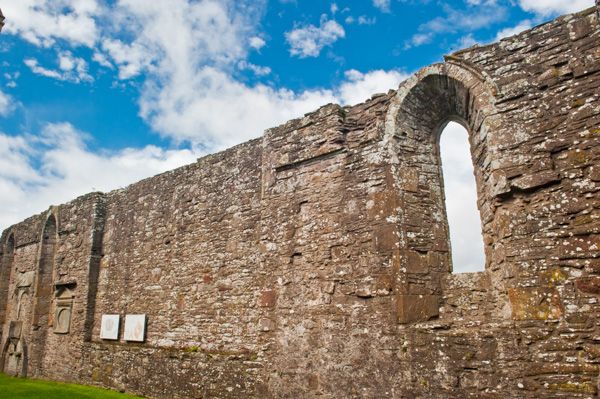
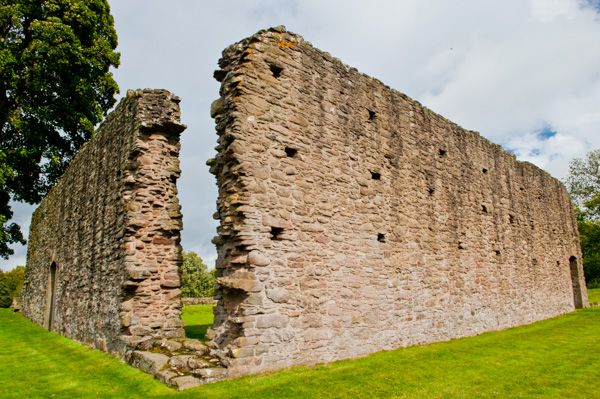
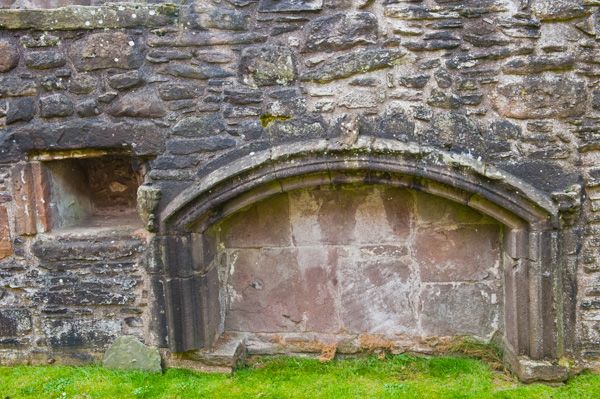
After that, it was used to hold cattle before finally passing into state care.Aside from the impressive tower already mentioned, and the choir, where you can see the presumed site of Prince John's burial, there are several interesting grave slabs, and the choir rises to an impressive height.
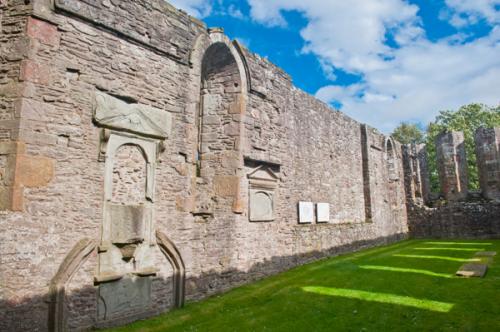
Though roofless, it has very nicely carved window openings. Historic Environment Scotland calls this a good example of 13th-century architecture and I'd have to agree.
Visiting
There is a parking area outside Angus Archives (a genealogical service for the Angus area). Restenneth is interesting as much for its historic associations with King Robert, and its ancient Pictish foundations, as for the interesting remains of the monastic buildings.
I quite enjoyed poking around the ruins, though I could have wished for a bit more in the way of information plaques to describe the site a bit better. The priory ruins stand in the middle of a field, which can be muddy in wet weather, so good footwear is advisable.
More Photos


About Restenneth Priory
Address: Forfar, Angus and Dundee, Scotland, DD8 2SZ
Attraction Type: Abbey
Location: On the B9113 just east of Forfar. Immediately behind the Angus Archives headquarters. Open access during daylight hours.
Website: Restenneth Priory
Historic Scotland
Location map
OS: NO482516
Photo Credit: David Ross and Britain Express
Opening Details: Open access site, usually accessible at any reasonable time
HERITAGE
 We've 'tagged' this attraction information to help you find related historic attractions
and learn more about major time periods mentioned.
We've 'tagged' this attraction information to help you find related historic attractions
and learn more about major time periods mentioned.
Historic Time Periods:
Find other attractions tagged with:
11th century (Time Period) - 13th century (Time Period) - Augustinian (Historical Reference) - Celtic (Architecture) - chapter house (Architecture) - grave slab (Architecture) - Jacobite (Historical Reference) - Medieval (Time Period) - Pictish (Architecture) - Reformation (Historical Reference)
NEARBY HISTORIC ATTRACTIONS
Heritage Rated from 1- 5 (low to exceptional) on historic interest
Finavon Doocot - 3.4 miles (Historic Building) 
Aberlemno Sculptured Stones - 3.5 miles (Prehistoric Site)
St Orland's Stone - 5.2 miles (Prehistoric Site)
Pitmuies Gardens - 5.4 miles (Garden)
JM Barrie's Birthplace - 6.1 miles (Museum)
Angus Folk Museum - 6.7 miles (Museum)
Glamis Castle - 6.8 miles (Historic House) 
Eassie Old Church - 8.4 miles (Historic Church)
Nearest Holiday Cottages to Restenneth Priory: