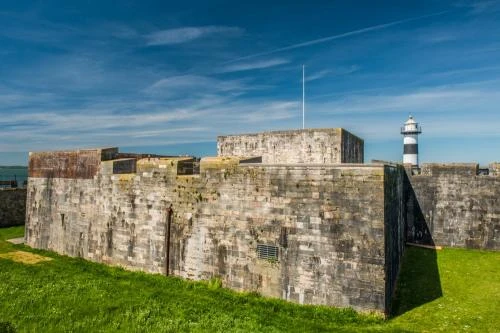
Southsea Castle was built in 1544 by Henry VIII to protect the Solent and Portsea Island from invasion by the French. It was from here that Henry watched the Mary Rose capsize and sink during the Battle of the Solent in 1545.
History
Throughout Henry's reign, invasion by the French remained a constant possibility. To counter the French threat, Henry built a series of coastal defences, including castles at Deal, Walmer, and Sandown.
As tensions with France increased, Henry added a second series of fortifications. Among these was Southsea Castle, built to control access to Portsmouth harbour, one of the most important maritime ports in southern England.
Not only did Henry VIII order the castle to be built, he is said to have designed the defences himself, using the latest concepts in castle building from across Europe.
A New Style of Castle
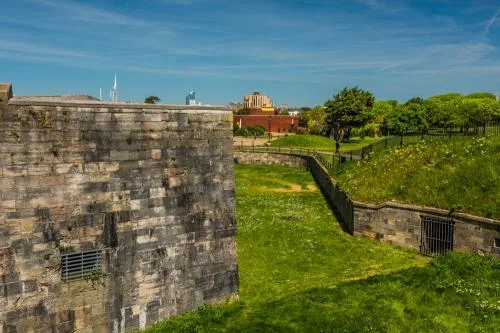
Southsea Castle represents a new way of thinking about military fortifications, one that took into account the widespread use of gunpowder-driven artillery.
Before Henry's coastal forts were designed, castles were made with high stone walls where archers rained down a deadly fire of arrows on attackers. Increasing use of gunpowder and advances in cannon technology meant that those high walls were easy targets for artillery bombardments.
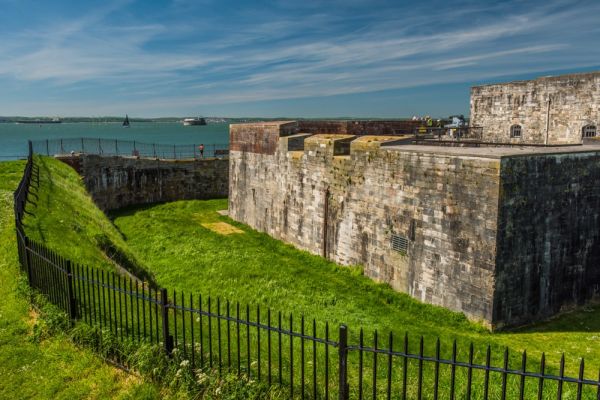
A new style of military fortification was needed, one that presented the lowest possible wall profile. Low walls were fronted by earthwork banks to protect them from artillery fire, while angled bastions avoided blind spots while still presenting a minimal wall area to attacking artillery fire.
The new castle at Southsea was designed with a curtain wall surrounding a square keep, with angled bastions on the seaward and landward side, with gun platforms to the east and west. The castle garrison lived in the keep, which was also used for storage.
Civil War Action
Southsea Castle saw its only direct action during the English Civil War, when troops loyal to Parliament stormed the castle. Only 12 soldiers defended the castle, and they faced more than 400 Parliamentary troops.
In an almost comical case of misjudgement, the garrison arranged all of their 14 cannons to face inland, where they expected the attack to come, but the Parliamentarians snuck around to the seaward side of the castle under cover of darkness and demanded that the garrison surrender.
The garrison commander was too drunk to consider the question and asked them to wait until morning. Not surprisingly, the Parliamentarians refused and climbed over the walls, forcing the garrison to surrender.
Portsmouth's town governor had his soldiers fire cannon at the castle, but caused no damage, and the town surrendered to Parliament within three days.
The Castle Enlarged
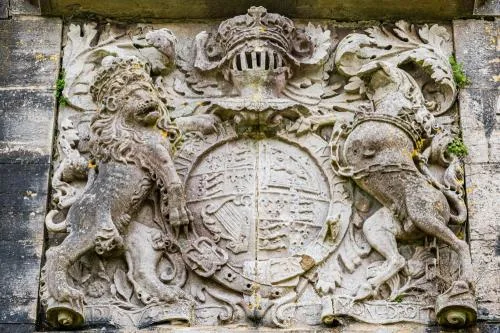
The Tudor castle was enlarged in in 1680s to counter the threat of a Dutch attack. King Charles II inserted a castle gate, accessed by a drawbridge. Look for the king's coat of arms over the gatehouse passage. King Charles also added four turrets to the outer defences.
The castle was redesigned again in 1814 to form part of England's coastal defences during the Napoleonic Wars. It briefly served as a military prison, then was enlarged again with the addition of further gun batteries to the east and west.
The castle saw service in both world wars, and was finally decommissioned and sold to Portsmouth City Council in 1960. The council restored it to the way it looked before 1850 and opened it to the public.
Highlights
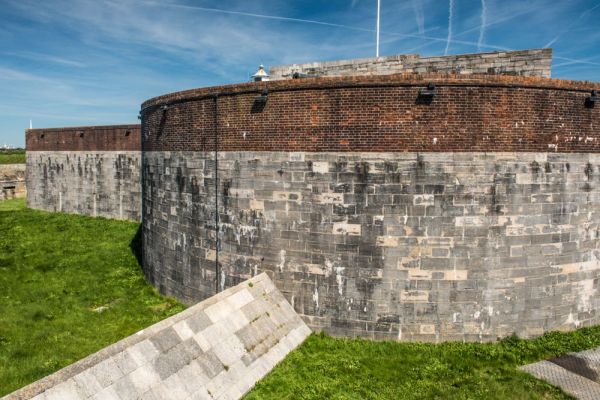
The original seaward curtain wall survives, but the northern (landward) curtain wall was rebuilt in 1814 when the castle was enlarged to provide quarters for up to 200 men. Outside the curtain wall is a wide moat, with a counterscarp gallery running around the moat. This brick-lined tunnel has firing holes so that soldiers could fire on any enemy that gained access to the moat.
A caponier, or underground tunnel, leads under the moat on the seaward side, connecting the castle with the counterscarp gallery.
Outside the moat is a sloping earthwork known as a 'glacis', running from the top of the moat down to ground level.
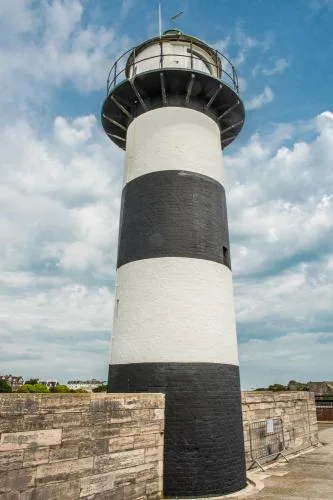
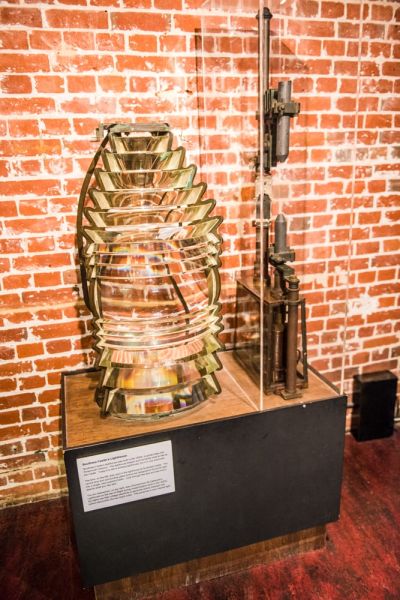
Built into the western defences is Southsea Castle's most recognisable feature, a black-and-white strips lighthouse added as a navigation aid in the 1820s.
Within the curtain wall is an ancient bell that hung in Portsmouth's Town Hall from the 17th century. The bell was later used at Quarter Sessions, in the Penny Street gaol, and later given a home in Victoria Park. Nearby is a reconstructed well, modelled after the original Tudor well, which stood against the inside of the curtain wall.
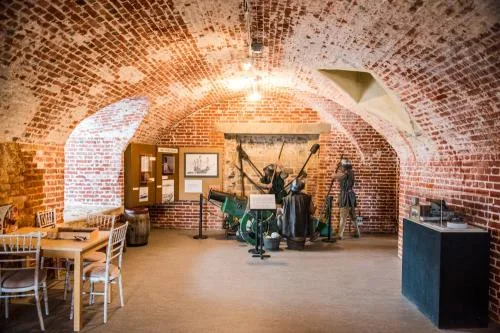
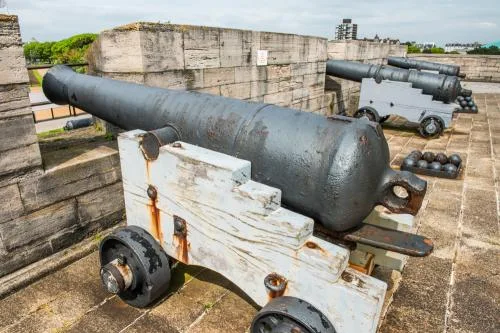
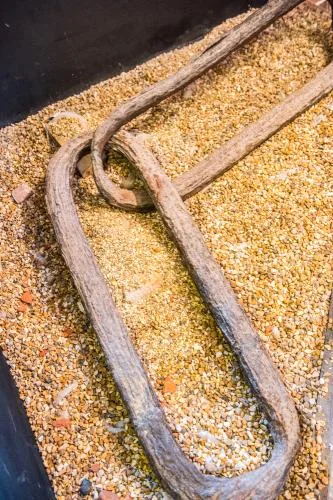
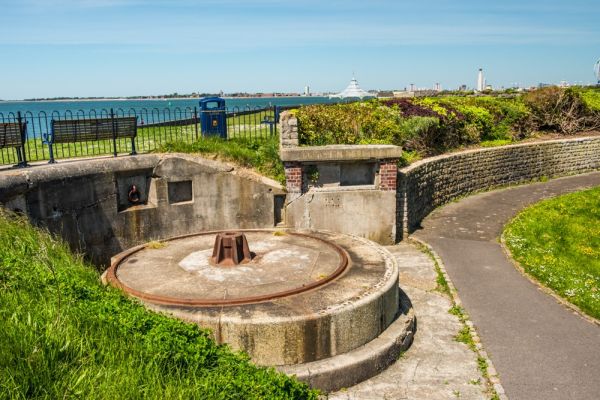
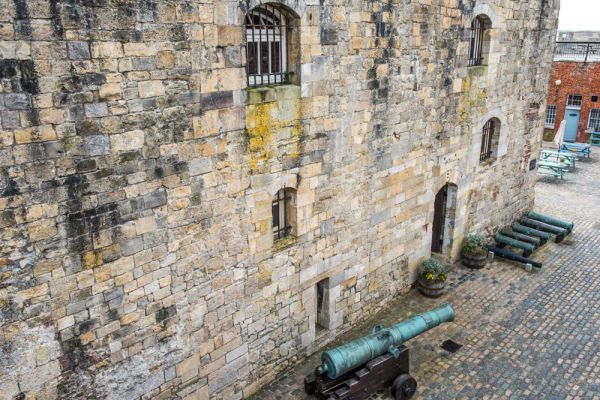
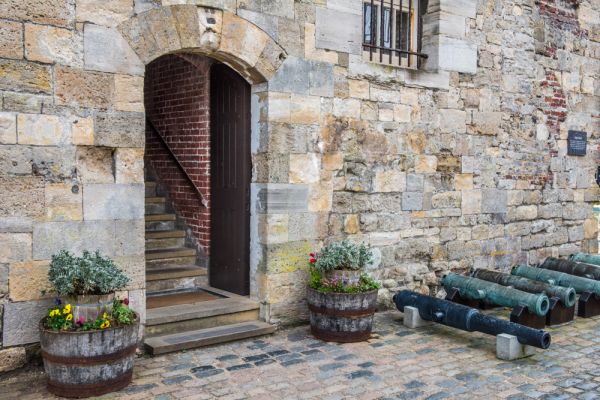
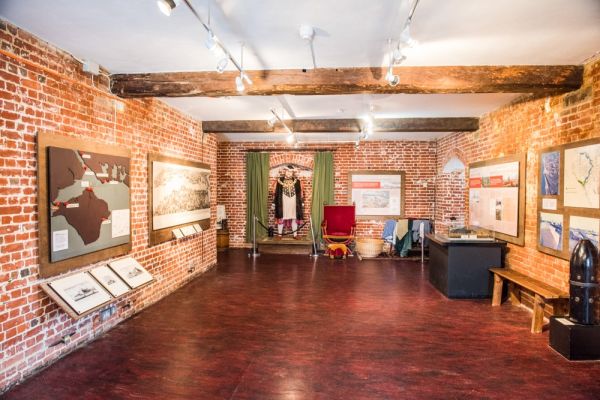
Inside the castle keep is a fascinating exhibition of historical artefacts, including objects recovered from the wreck of the Mary Rose and pieces from the chain boom that protected Portsmouth harbour. You can climb a spiral stair to the roof of the keep and see the gun emplacements and also explore the east and west firing platforms, complete with period cannons.
Southsea Castle spans over 400 years of British history and offers a compelling glimpse of Tudor life. It is well worth a visit to explore.
Visiting
Southsea Castle lies just south of Clarence Esplanade in Southsea, immediately south of the D-Day Story Museum. There is parking along the Esplanade.
More Photos
About Southsea Castle
Address: Clarence Esplanade, Portsmouth, Hampshire, England, PO5 3PA
Attraction Type: Castle
Location: South of Clarence Esplanade in Southsea. Parking along the Esplanade.
Website: Southsea Castle
Location map
OS: SZ643980
Photo Credit: David Ross and Britain Express
HERITAGE
 We've 'tagged' this attraction information to help you find related historic attractions
and learn more about major time periods mentioned.
We've 'tagged' this attraction information to help you find related historic attractions
and learn more about major time periods mentioned.
Historic Time Periods:
Find other attractions tagged with:
16th century (Time Period) - 17th century (Time Period) - 19th century (Time Period) - Charles II (Person) - Henry VIII (Person) - Tudor (Time Period)
NEARBY HISTORIC ATTRACTIONS
Heritage Rated from 1- 5 (low to exceptional) on historic interest
Portsmouth Trafalgar Memorial - 0.4 miles (Historic Building) 
Royal Naval War Memorial - 0.4 miles (Historic Building) 
Portsmouth Museum - 1 miles (Museum)
Royal Garrison Church - 1.1 miles (Historic Church)
Portsmouth Cathedral - 1.1 miles (Cathedral)
Landport Gate - 1.2 miles (Historic Building)
King James Gate - 1.3 miles (Historic Building)
The Mary Rose - 1.9 miles (Museum) 
Nearest Holiday Cottages to Southsea Castle: