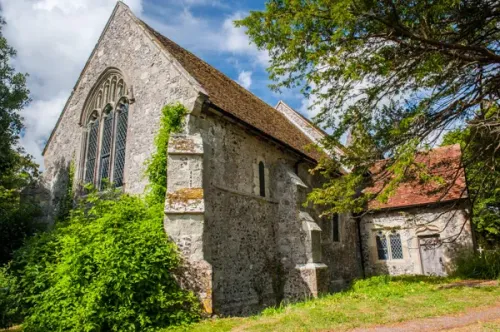
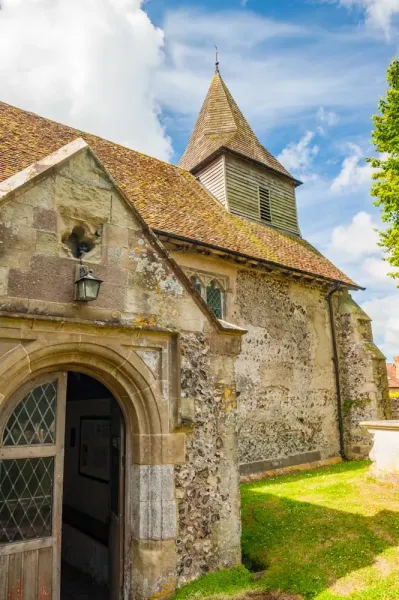
The small country church St Mary & St Peter has served the East Sussex village of Wilmington since the 12th century and once served as the church of a Benedictine priory. It is known for the ancient yew in its churchyard, said to be 1,600 years old.
History
We can trace the history of the church to at least the 12th century, though it may stand on the site of an earlier Saxon building. The church stands on a rise of ground above the main road through the village, and there is speculation that the site may have been sacred since pagan times.
After the Norman Conquest of 1066, the Wilmington estate passed to the Benedictine abbey of Grestain, in Normandy. The abbey founded a priory at Wilmington in the early years of the 12th century to manage the estate.
Rather than erect a church for so small a number, the abbey instead built a parish church to serve both the priory and the residents of Wilmington. The monks reserved the chancel for their own use, while the parishioners used the nave. A covered walkway linked the church to the neighbouring priory. You can still see what remains of the original priory buildings immediately outside the churchyard.
Remnants of that early 12th-century building include low stone ledges in the chancel. These ledges were used as seats by the monks. They appear uncomfortably close to the floor because the chancel floor has been raised since the church was built.
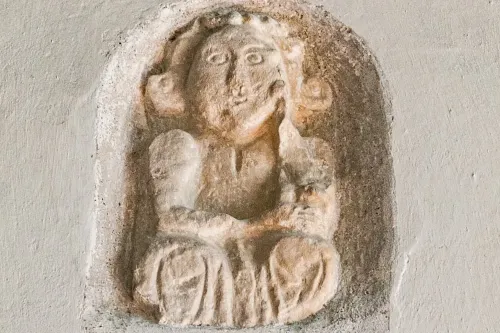
The Wilmington Madonna
Set into the north wall of the chancel is a stone figure, thought to depict the Madonna (though the architectural historian Nikolaus Pevsner thought the figure was male). This carved figure may date to the 12th century, though some historians suggest an earlier, pagan origin.
The north chapel was added to the church in the 14th century. The door is original, with beautifully worked iron straps and hinges on its exterior face.
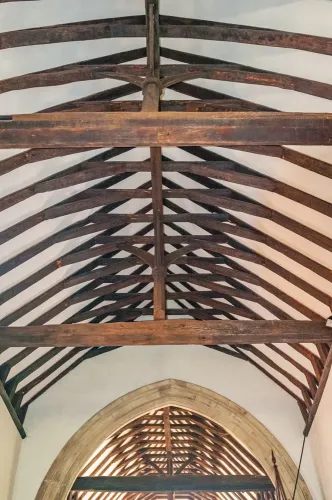
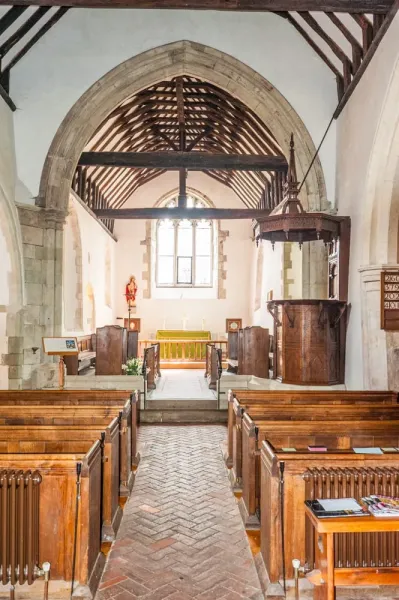
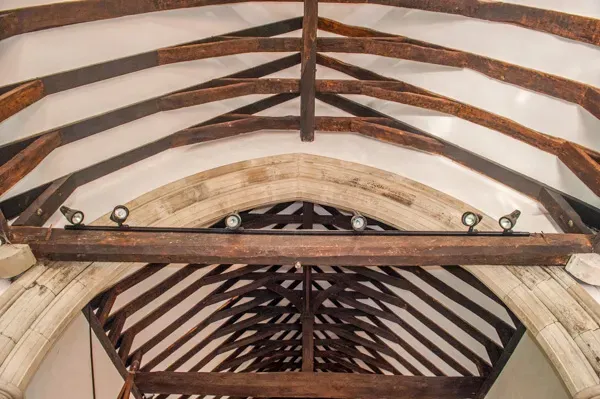
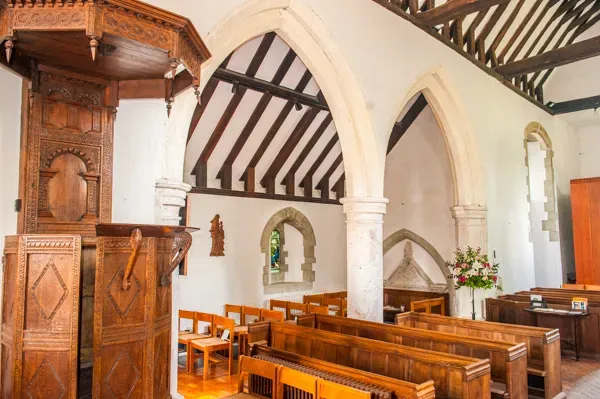
The nave was rebuilt in its current form in the 14th century, with a king-post roof. also from this period are two single-light lancet windows in the north wall and a larger three-light window in the south chancel wall. The weatherboarded belfry and broach spirelet probably date from the 14th century.
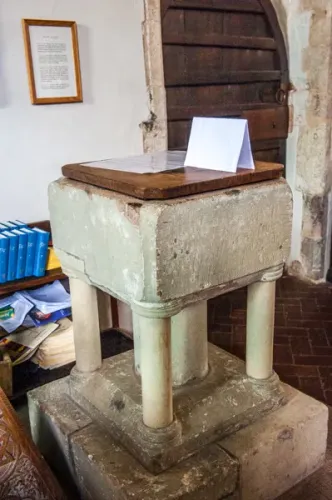
The square font was also installed in the 14th century, as was the north door, but the porch dates to the following century. Set into the east wall are a pair of medieval aumbries, stone niches built to hold the sacrament and holy oils.
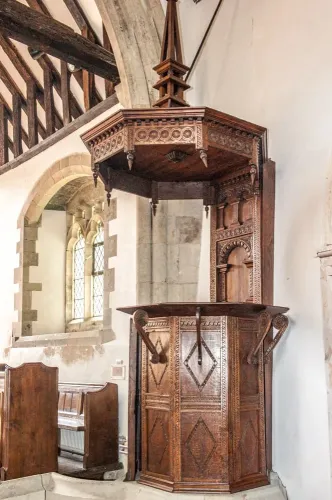
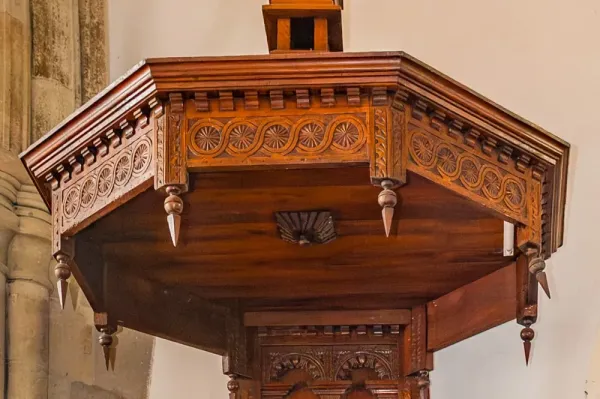
The oak pulpit and its sounding board date to around 1610.
On the south wall of the nave is a royal coat of arms dating from the reign of Queen Victoria. More modern is the west window, installed to mark the Millennium.
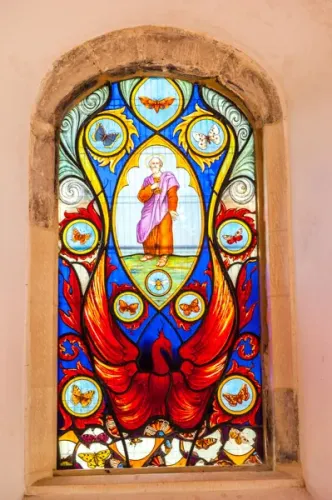
The church was badly damaged by fire in 2002, with the flames destroying the 'Bee and Butterfly' window in the north chapel. The window we see today is a modern replacement, crafted by Paul San Casciani in 2004. It depicts bees and butterflies surrounding a figure of St Peter.
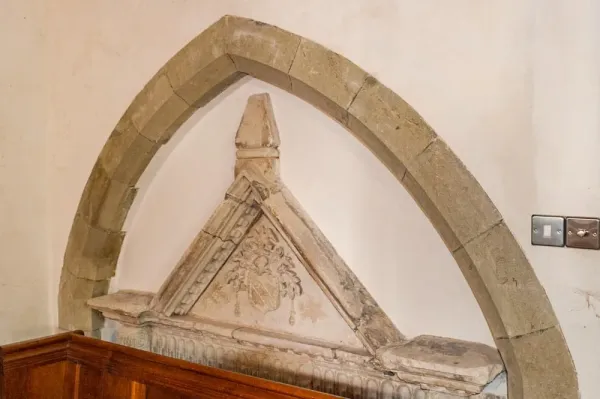
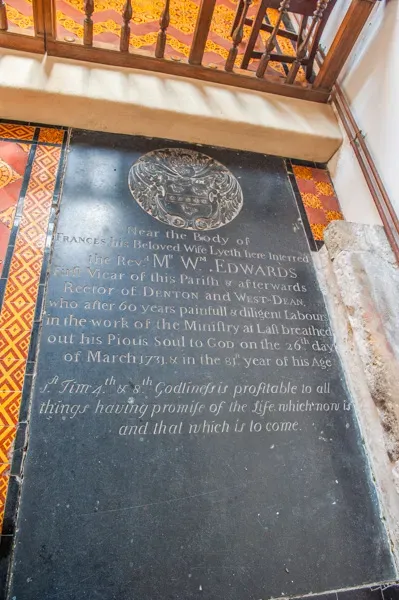
In the south aisle are the partial remains of a 16th-century memorial, possibly to a member of the Culpeper family, while set into the chancel floor is a ledger slab commemorating Reverend William Edwards, a former vicar of Wilmington, who died in 1731.
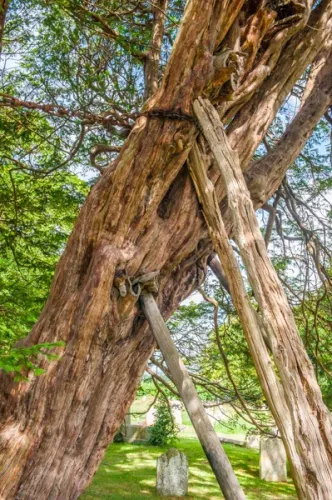
The Wilmington Yew
An ancient yew tree stands in the churchyard, supported by timber braces and chains. The yew measures some 23 feet in circumference. At the tree's base is a carved stone thought to be Roman. It marks the grave of a well-digger who is said to have discovered it at the bottom of the vicarage well shaft.
The commonly accepted age of the yew is 1,600 years, though it may be as much as 2,000 years old, which strongly suggests that this site was sacred long before the arrival of Christianity to Britain. Whatever the exact date, the Wilmington Yew is among the oldest in Sussex.
Visiting
St Mary & St Peter's Church stands on the western side of The Street, the main road running through Wilmington. The road is very narrow at this point, but widens further south with space to park carefully. There is also easy parking at the edge of the village, signposted for visitors to the Long Man of Wilmington hill figure and Wilmington Priory. The church is normally open to visitors and was open when we visited.
More Photos
About Wilmington, St Mary & St Peter
Address: The Street, Wilmington, East Sussex, England, BN26 5SL
Attraction Type: Historic Church
Location: On The Street, at the southern end of Wilmington. Parking further south along The Street or in the Long Man car park.
Website: Wilmington, St Mary & St Peter
Location map
OS: TQ544042
Photo Credit: David Ross and Britain Express
HERITAGE
 We've 'tagged' this attraction information to help you find related historic attractions
and learn more about major time periods mentioned.
We've 'tagged' this attraction information to help you find related historic attractions
and learn more about major time periods mentioned.
Find other attractions tagged with:
11th century (Time Period) - 12th century (Time Period) - 14th century (Time Period) - 17th century (Time Period)
NEARBY HISTORIC ATTRACTIONS
Heritage Rated from 1- 5 (low to exceptional) on historic interest
Long Man of Wilmington - 0.5 miles (Prehistoric Site) 
Alfriston, St Andrew's Church - 1.6 miles (Historic Church) 
Alfriston Clergy House - 1.7 miles (Historic Building)
Long Burgh Barrow - 2.2 miles (Prehistoric Site)
Polegate Windmill - 2.3 miles (Historic Building)
Westdean, All Saints Church - 3.1 miles (Historic Church)
Michelham Priory - 3.3 miles (Abbey)
Charleston - 3.4 miles (Historic Building) 
Nearest Holiday Cottages to Wilmington, St Mary & St Peter:
Stone Cross, East Sussex
Sleeps: 4
Stay from:£440 - £2,121