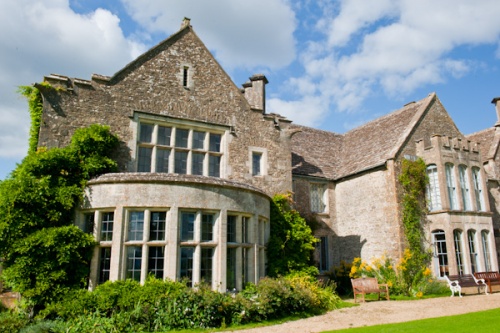
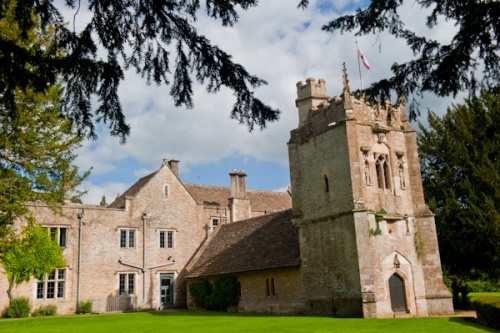
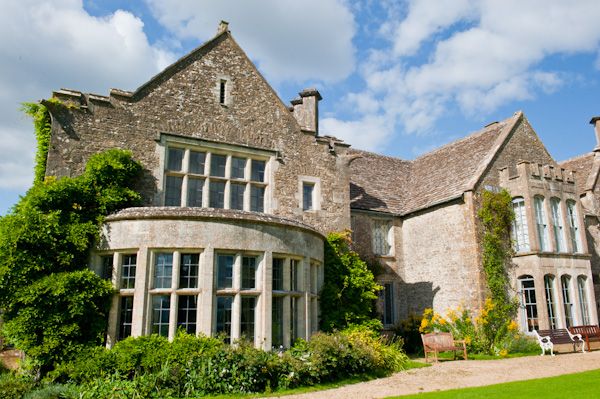
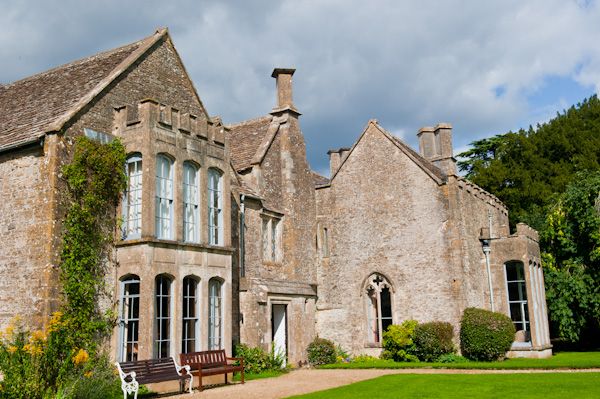
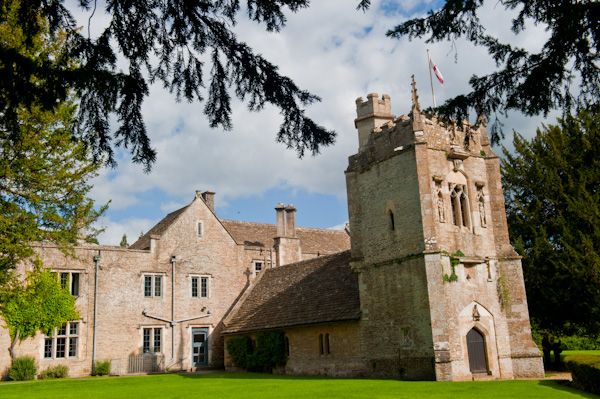
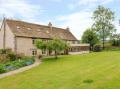
Chavenage House is a sprawling Elizabethan country house of grey Cotswold stone. See the chamber where Oliver Cromwell slept when he visited here with General Ireton in 1648. The interior rooms feature historic tapestries, Cromwellian relics, and fine period furnishings.
The house was extended in the early 20th century and boasts a lovely Edwardian ballroom.
Chavenage has featured in so many feature films and television dramas over the years that to list them all here would take ages. A few popular films in which Chavenage was used include Lark Rise to Candleford, Cider with Rosie, The House of Eliot, and the Agatha Christie mystery The Mysterious Affair at Styles.
History
Chavenage is mentioned as early as the 9th century when a Hundred Court met here. The first known holder of the estate was Goda, the sister of King Edward the Confessor and wife of Earl Godwin of Mercia.
There was a monastic presence at Chavenage in the 14th century, under the control of Bruton Abbey, Somerset, and parts of the current Chavenage House probably formed part of the monastic buildings. At the same time as the monastic buildings were erected, a large barn was built nearby. This barn now houses a squash court.
When the abbey of Bruton was dissolved under Henry VIII, the Chavenage estate was granted to Thomas Seymour, who subsequently married Henry VIII's sixth and last wife, Katherine Parr. After Seymour was executed for treason in 1549, the house passed through several hands until it was purchased by Edward Stephens.
It was Stephens who transformed the medieval house and created a grand Elizabethan manor. Stephens used glass from nearby churches and dissolved monasteries, and timbers from ships broken up on the River Severn nearby.
Chavenage in the Civil War
Nathaniel Stephens of Chavenage was a Parliamentary commander in the Civil War. In 1644 Parliamentary troops used Chavenage as a base to besiege nearby Beverstone Castle.
Two attacks failed, and the Parliamentary commander was at a loss until they discovered that a young girl at Chavenage was romantically linked with the commander of the Beverstone Castle defenders. Apparently, the girl would place a lighted candle at a window to let her lover know the coast was clear and no attack was planned for that night.
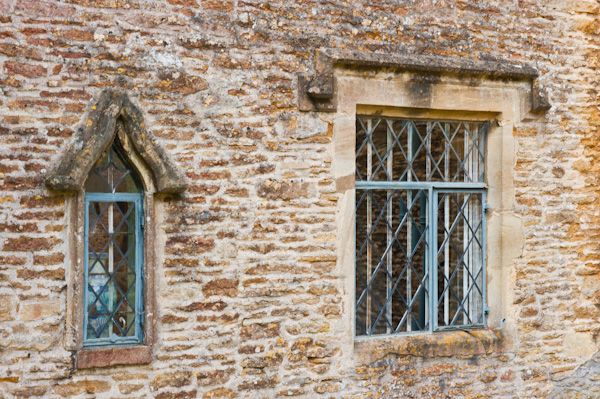
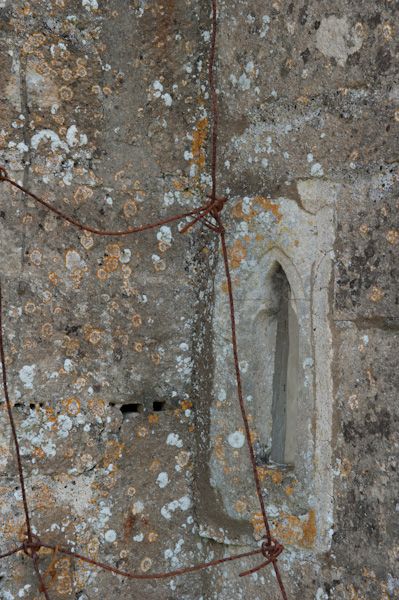
The window can still be seen, beside the garden door off the Library passage. The Parliamentary soldiers placed a candle in the window to lure the commander of Beverstone away, and attacked again, secure in the knowledge that the commander was otherwise occupied and not at his post.
The Chavenage Ghost
Nathaniel Stephens, as mentioned earlier, supported Parliament in the Civil War. He was less willing to embrace the idea that King Charles should be executed, however.
At Christmas, 1648, Cromwell despatched General Ireton to Chavenage to persuade Stephens to support the idea of regicide. After much persuasion, Stephens agreed.
When his daughter Abigail heard this, she flew into a rage and laid a curse on her own father. Shortly after, her father fell ill and died. When the household assembled for his funeral, a hearse drew up before the door, driven by a headless coachman.
Stephens's corpse rose from his coffin, bowed to the coachman, and entered the hearse. As he drove the hearse away, the coachman appeared to change into a likeness of the dead King Charles I. Thereafter, every time the head of the Stephens family died, the headless coachman was said to appear and take him away.
Civil War mementoes are on view in Cromwell and Ireton's room, including several swords, pikes, a leather hat protector, and horse furniture.
More Photos
About Chavenage House
Address: Tetbury, Gloucestershire, England, GL8 8XP
Attraction Type: Historic House
Location: 2 miles north-west of Tetbury on a minor road
Website: Chavenage House
Email: info@chavenage.com
Historic Houses Association
Location map
OS: ST871951
Photo Credit: David Ross and Britain Express
HERITAGE
 We've 'tagged' this attraction information to help you find related historic attractions
and learn more about major time periods mentioned.
We've 'tagged' this attraction information to help you find related historic attractions
and learn more about major time periods mentioned.
Historic Time Periods:
Find other attractions tagged with:
14th century (Time Period) - 20th century (Time Period) - 9th century (Time Period) - castle (Architecture) - Charles I (Person) - Civil War (Architecture) - Cromwell (Person) - Edward the Confessor (Person) - Edwardian (Historical Reference) - Elizabethan (Architecture) - Henry VIII (Person) - Medieval (Time Period) - Oliver Cromwell (Person) - Parliamentary (Historical Reference)
NEARBY HISTORIC ATTRACTIONS
Heritage Rated from 1- 5 (low to exceptional) on historic interest
Tetbury, St Saviour's Church - 1.5 miles (Historic Church) 
Tetbury, St Mary the Virgin - 1.8 miles (Historic Church) 
Westonbirt House - 3.5 miles (Historic House)
Westonbirt Arboretum - 3.6 miles (Garden) 
Windmill Tump - 4 miles (Prehistoric Site)
Rodmarton Manor - 4.7 miles (Historic House)
Owlpen Manor - 4.8 miles (Historic House)
Ozleworth, St Nicholas Church - 5.1 miles (Historic Church)
Nearest Holiday Cottages to Chavenage House:
Nailsworth, Gloucestershire
Sleeps: 10
Stay from:£2,802 - £10,162