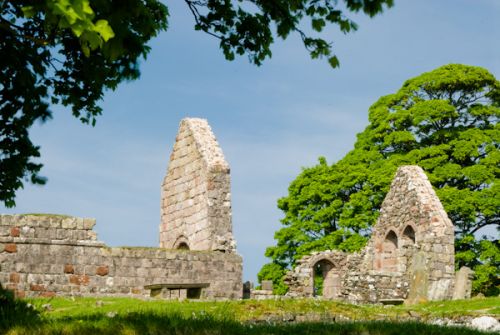
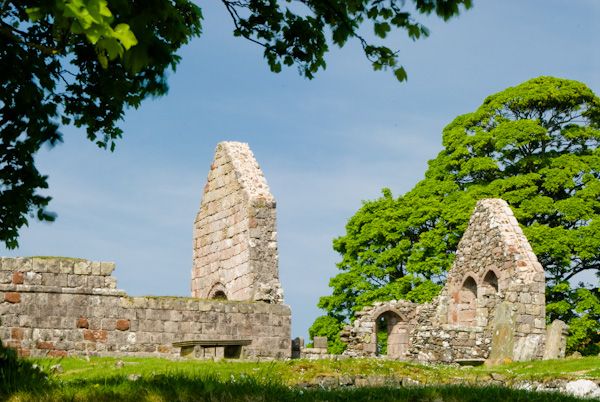
An intriguing site at the southern end of the Isle of Bute, St Blane's Church consists of a 12th-century Romanesque chapel built inside the remains of a 6th-century Celtic monastery supposedly founded by St Blane, who was born on Bute.
St Blane's monastery existed until at least the late 8th century, and the site was an important burial site until the 12th century when a small church was built within the monastery to serve as a parish church for the southern end of Bute.
History
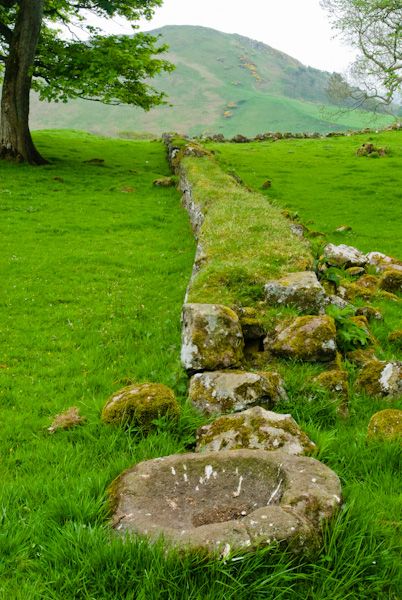
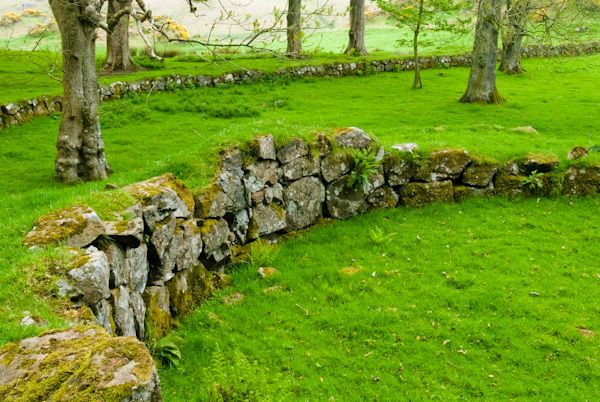
St Blane established his monastery only a mile from the hill-fort at Dunagoil, on a site backing onto wooded cliffs and defended on two sides by low stone walls (still very much in evidence). Walls enclose two oval spaces, the larger measuring 200 metres by 120 metres wide, and the smaller extending a further 190 metres.
Inside the main area is a large circular enclosure, 10 metres across, within massive walls up to 2.5 metres thick.
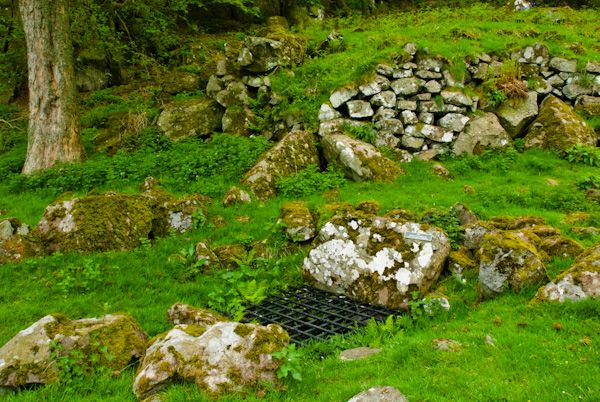
This enclosure is known as The Cauldron, and may actually be the remains of a dwelling that was here before St Blane arrived. At the foot of the cliff nearby is St Blane's Well, which served the monastery and was later a place of some reverence for pilgrims.
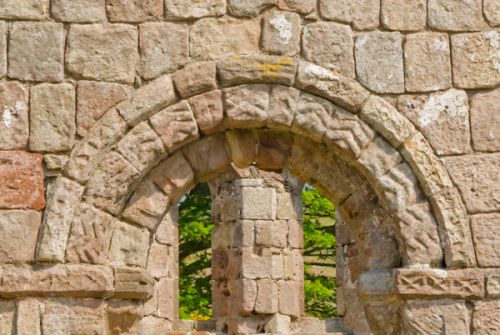
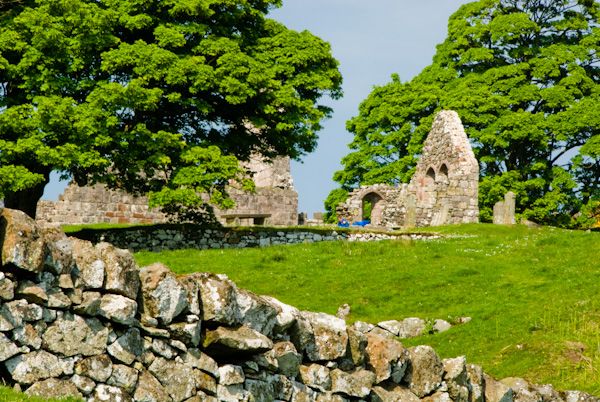
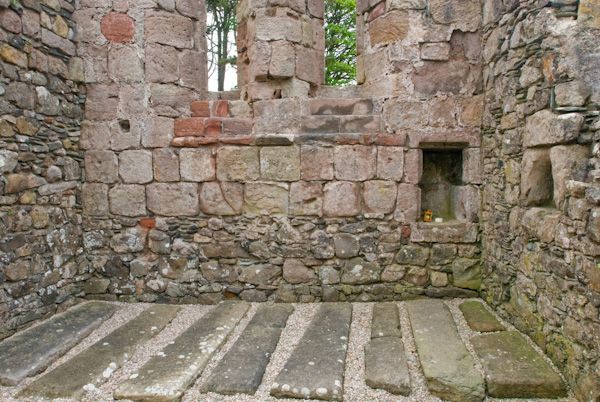
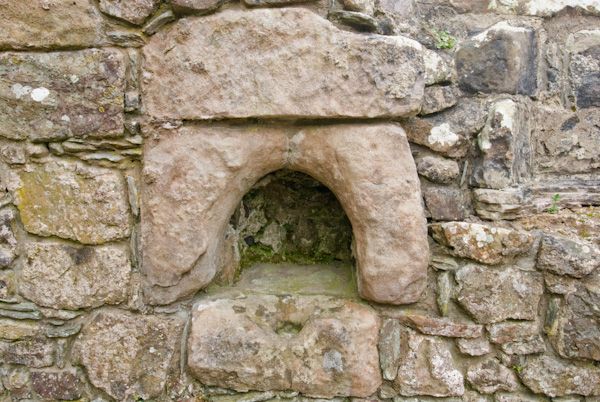
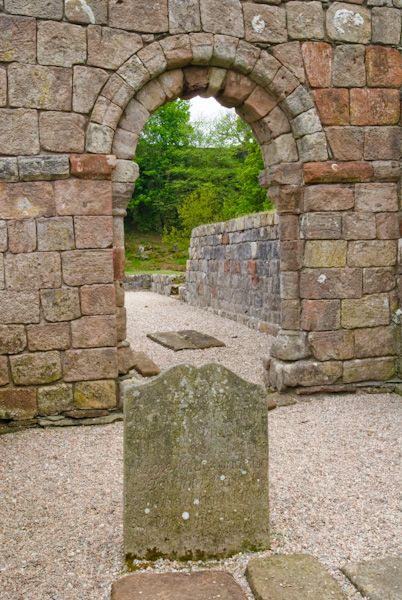
On a rise of ground at the centre of the main enclosure is the roofless 12th-century church, a simple structure with a nave and chancel, but boasting some wonderful Romanesque carvings around the door and window openings.
The Burial Ground
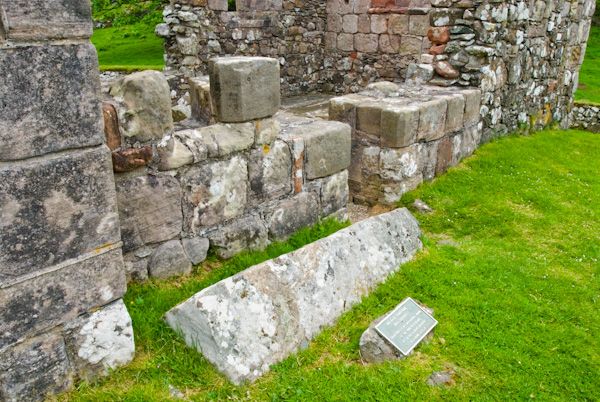
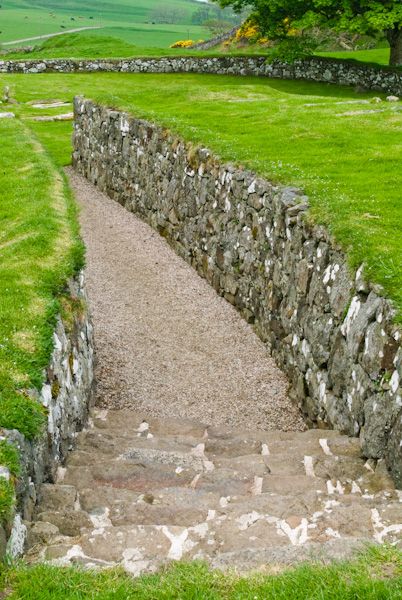
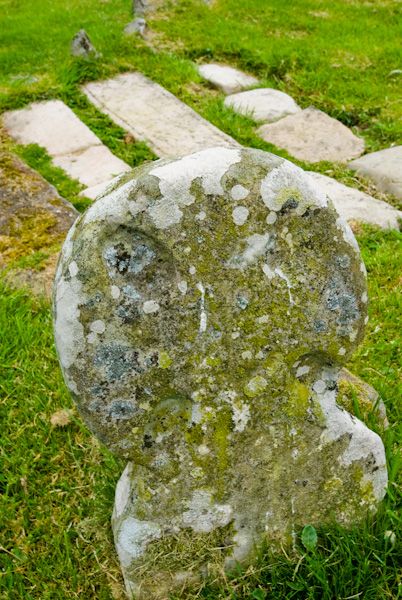
Next to the church is an oval burial ground. This is linked by steps to a lower churchyard, which may have been reserved for women. There are numerous early medieval gravestones within the churchyard, and beside the church is a lovely old hogback tomb in traditional Viking style.
In 1863 a hoard of 12th-century gold coins was found about 350 metres from the church. With the coins were several gold ornaments of the same period.
St Blane's is a special place; the sense of age and history permeates the air, and it is hard to visit and come away unmoved.
We've mentioned the hill-fort at nearby Dunagoil, but also on the road to St Blane's are several groups of standing stones at Blackpark and St Ninian's.
More Photos

About St Blane's Church
Address: Kingarth, Bute, Argyll and Bute, Scotland
Attraction Type: Historic Church
Location: At the south end of the Isle of Bute, on the minor road south of Kingarth
Website: St Blane's Church
Historic Scotland
Location map
OS: NS094535
Photo Credit: David Ross and Britain Express
Opening Details: Open access site, usually accessible at any reasonable time
HERITAGE
 We've 'tagged' this attraction information to help you find related historic attractions
and learn more about major time periods mentioned.
We've 'tagged' this attraction information to help you find related historic attractions
and learn more about major time periods mentioned.
Historic Time Periods:
Find other attractions tagged with:
12th century (Time Period) - 6th century (Time Period) - 8th century (Time Period) - Celtic (Architecture) - hill fort (Historical Reference) - Medieval (Time Period) - St Ninian (Person) - Viking (Historical Reference)
NEARBY HISTORIC ATTRACTIONS
Heritage Rated from 1- 5 (low to exceptional) on historic interest
Dunagoil Hill Fort - 0.6 miles (Prehistoric Site) 
Kelspoke Castle - 0.8 miles (Castle) 
Glencallum Bay Lighthouse - 1.3 miles (Historic Building)
Stravanan Bay Stone Row - 1.3 miles (Prehistoric Site)
Blackpark Standing Stones - 1.6 miles (Prehistoric Site)
Scalpsie Bay and Seals - 3.8 miles (Countryside) 
Mount Stuart - 3.8 miles (Historic House) 
Portencross Castle - 5.7 miles (Castle)
Nearest Holiday Cottages to St Blane's Church:
Nearby accommodation is calculated 'as the crow flies' from St Blane's Church. 'Nearest' may involve a long drive up and down glens or, if you are near the coast, may include a ferry ride! Please check the property map to make sure the location is right for you.