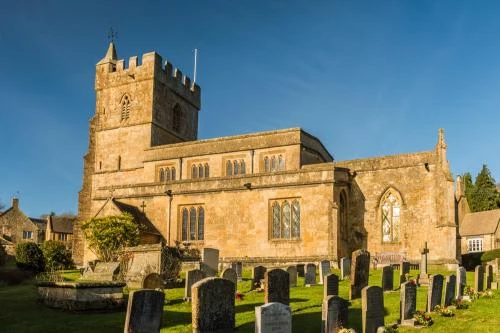
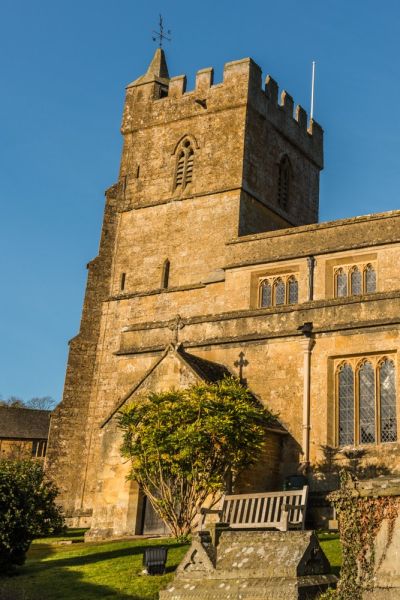
The attractive 12th-century church of St Lawrence, Bourton-on-the-Hill, stands on the south side of the A44 in the centre of this attractive Cotswold village.
History
The church we see today was begun in 1157 AD, when the manor was controlled by Westminster Abbey, though the church seems to have been a chapel of nearby Blockley for many years. The first record of a priest comes from 1206, when the Bishop of Worcester claimed, unsuccessfully, that the parson at Blockley should also be considered the parson of Bourton-on-the-Hill.
From 1297 the chaplain of Bourton was paid by Westminster Abbey, but from the 14th century Bourton was served by a rector. By the Tudor period the rectors did not live in Bourton and a curate was paid for by the patron of the living.
George Nash, rector from at least 1551, was a controversial figure. He was ordered to 'refrain from superstition', and three years later he was removed from office for being married. Nash was eventually re-instated, but finally excommunicated in 1576.
The first church in Bourton-on-the-Hill was dedicated to St Mary, but the dedication was later changed to St Lawrence.
Church Exterior
The church is laid out in a traditional manner, with a nave of three bays, north and south aisles, porches on both sides, a chancel, a west tower, and a 15th-century clerestory over the nave. The roof is of Cotswold stone. The oldest of the three bells in the tower dates to 1677.
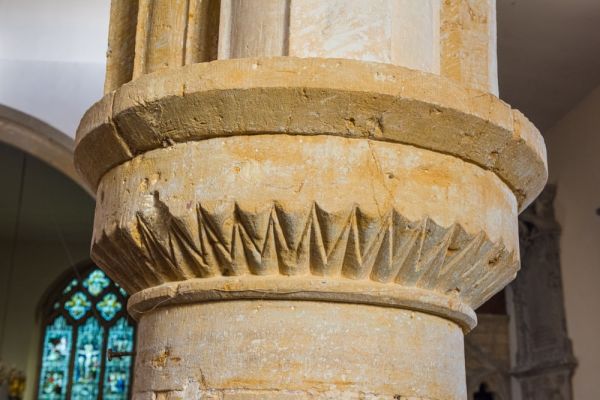
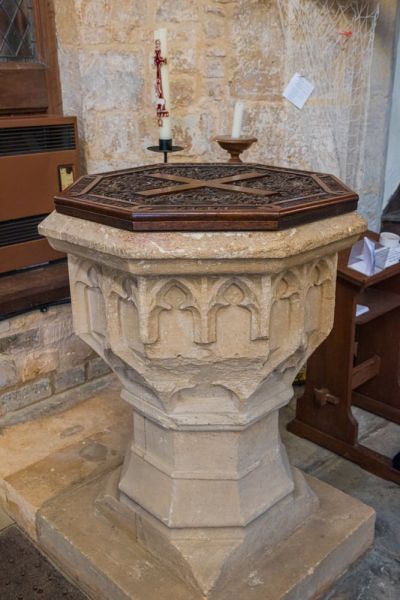
Only the pillars on the south side of the church remain from the original 12th-century building. The southern end of the nave dates from the 13th century. The tower and north nave were added in the 14th century, when the east window was installed and the chancel rebuilt. The north and south porches are late medieval, as is the font.
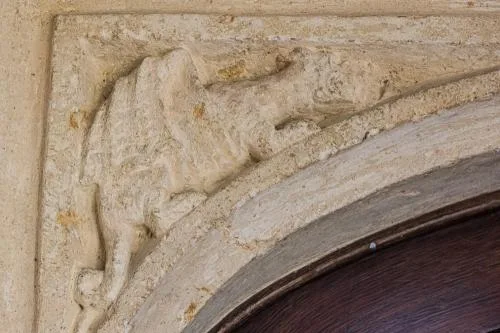
In the spandrels of the south doorway are a pair of dragons, and a carved head appears on the eastern pillar. Around the exterior of the church you can see a series of grotesque gargoyles. On the south wall you can make out two ancient scratch dials.
Interior Highlights
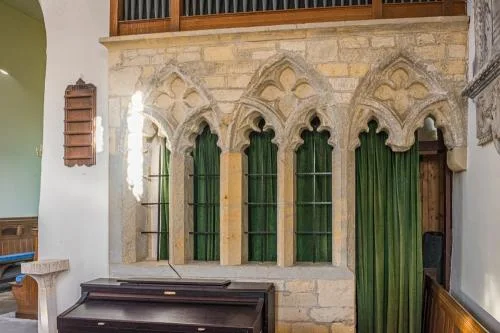
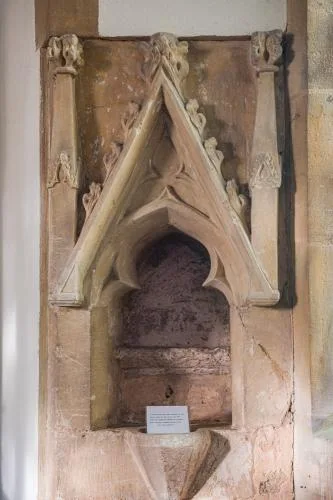
One of the most intriguing historical features is an ornately-carved 15th-century stone screen at the eastern end of the south aisle. This is not original to the church; it was found in a builder's yard and is thought to have come originally from Moreton-in-Marsh, a mile and a half away.
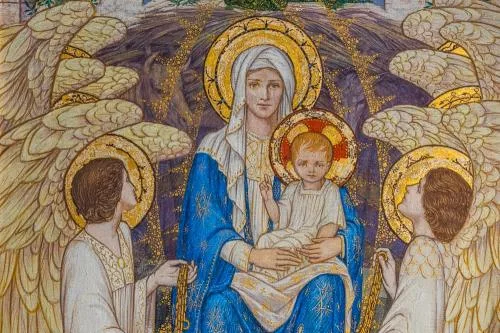
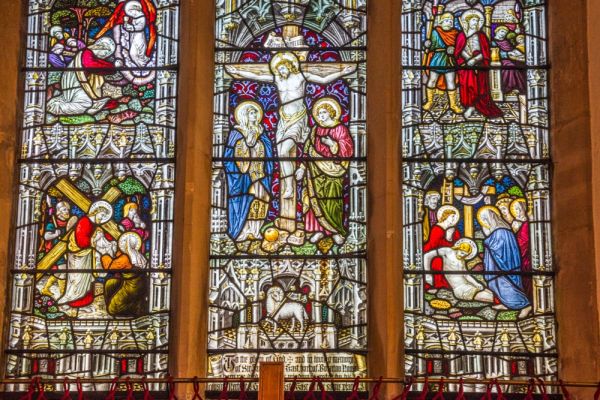
The interior woodwork is in Arts and Crafts style, fashioned in the early 20th century. From the same period is the richly-coloured east window, installed in 1911 as a memorial to Sir James Buller East of Bourton House.
Medieval Glass
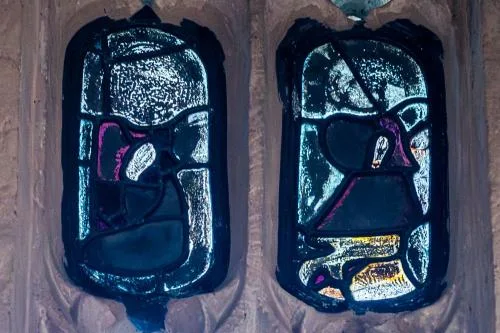
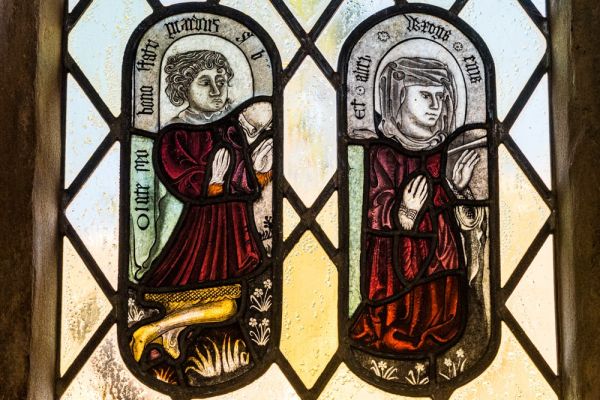
The easternmost window in the north aisle retains fragments of 15th-century glass. There are three tracery lights, one depicting the Virgin Mary and the others depicting a man in a crimson doublet and yellow hose and a woman in a red gown.
The man and the woman are thought to have been important church donors, though their identities are unknown. Replicas of the figures have been recreated in a nearby window at a height that makes them easier to see. Also in the north aisle is a painted triptych dating to 1928.
Memorials
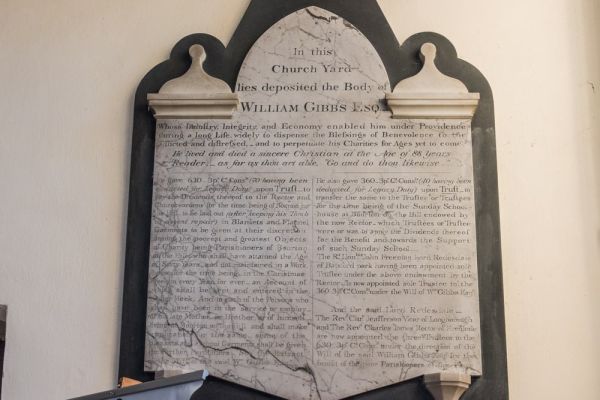
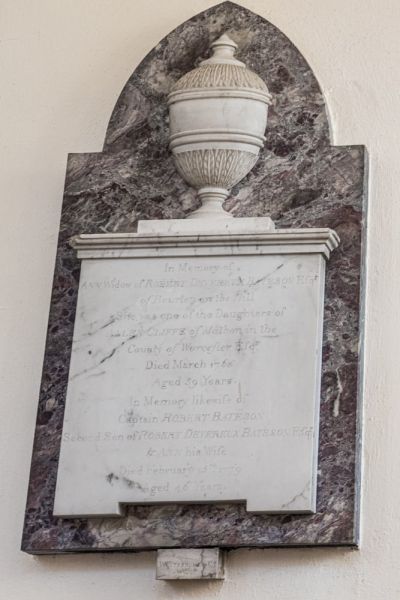
The church holds a wealth of 18th and 19th century memorials, though the oldest is a 1688 ledger slab in the south porch, in memory of the wife of Alexander Popham of Bourton House. Over the south door is a marble tablet to William Bateson (d. 1819).
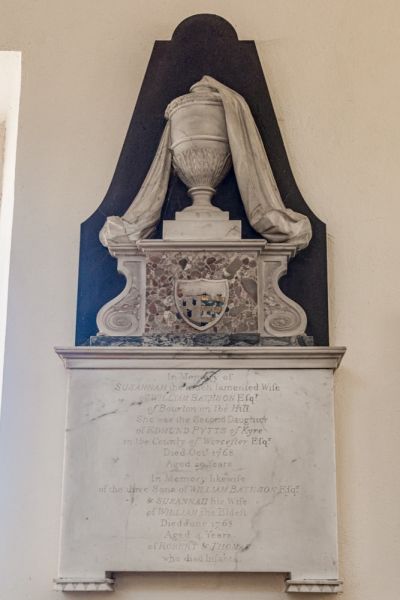
More members of the Batesons are remembered, with notable tablets to Robert Bateson (d. 1763) and Susannah Bateson (d. 1768). Perhaps the finest is a grey marble tablet with decorated with a heraldic shield and cupids in memory of Robert Bateson (d. 1736).
On a ledge in the north aisle is a broken ledger stone to Elizabeth Poole, who died in 1730. During her short life (she died at the age of 29) Elizabeth saw four monarchs on the British throne.
Visiting
St Lawrence Church is open daily to visitors and was open when we visited. There is a car park beside the Old School (the village hall) which can be used when there are no events on at the hall. Alternatively, we have always found it easy to find parking along the lane behind the church.
Note: do not confuse St Lawrence Church in Bourton-on-the-Hill (this church) with the church of the same name in Bourton-on-the-Water, six miles to the south.
More Photos
About Bourton-on-the-Hill, St Lawrence Church
Address: A44, Borton-on-the-Hill, Cotswolds, Gloucestershire, England, GL56 9AH
Attraction Type: Historic Church
Location: On the A44 in the centre of the village. Parking on the lane behind the church or in the Old School car park when there are no events at the village hall.
Website: Bourton-on-the-Hill, St Lawrence Church
Location map
OS: SP175325
Photo Credit: David Ross and Britain Express
NEARBY HISTORIC ATTRACTIONS
Heritage Rated from 1- 5 (low to exceptional) on historic interest
Bourton House Garden - 0 miles (Garden) 
Sezincote - 0.8 miles (Historic House) 
Batsford Arboretum - 1.1 miles (Garden)
Batsford, St Mary's Church - 1.1 miles (Historic Church) 
Blockley, St Peter and St Paul Church - 1.6 miles (Historic Church)
Longborough, St James - 1.7 miles (Historic Church)
Moreton-in-Marsh, St David's Church - 1.9 miles (Historic Church)
Lower Lemington, St Leonard's Church - 2.9 miles (Historic Church)
Nearest Holiday Cottages to Bourton-on-the-Hill, St Lawrence Church:

Moreton-in-Marsh, Gloucestershire
Sleeps: 6
Stay from:£686 - £2,805
More self catering near Bourton-on-the-Hill, St Lawrence Church