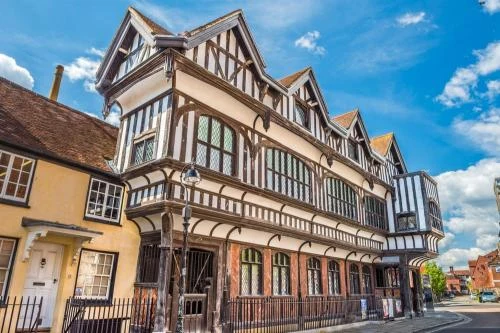
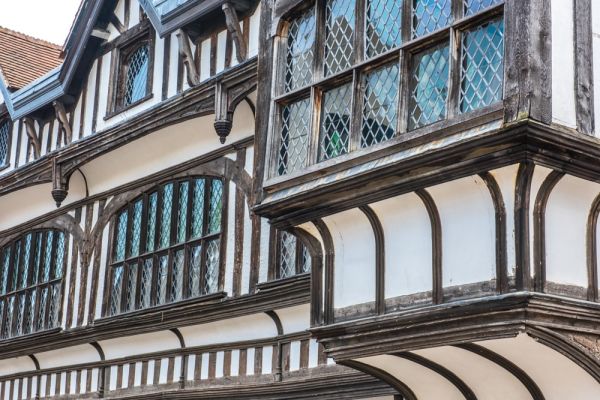
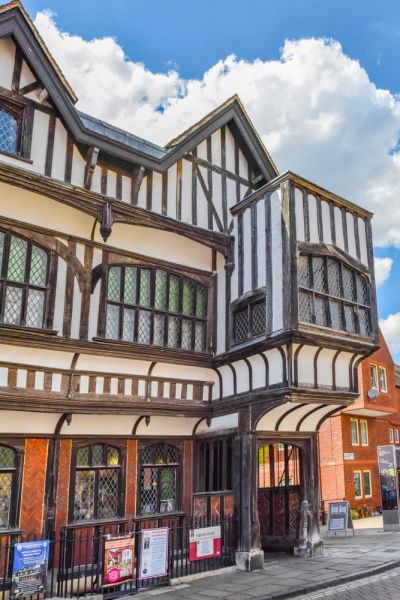
Tudor House is a superb example of an early Tudor timber-framed building in the historic Old Town area of Southampton. Behind the Tudor building is an earlier Norman merchant's house known as King John's Palace.
Together, these historical buildings span over 800 years of Southampton's history and provide a window into the rich history of Southampton through the centuries. In fact, Southampton City Council has called the Tudor House the most important historic building in the city.
History
Sometime around 1491, Sir John Dawtrey combined three cottages facing onto St Michael's Square into one building. When Dawtrey died in 1518, the house passed to Sir Richard Lyster, whose immense wealth helped transform the building into an opulent residence.
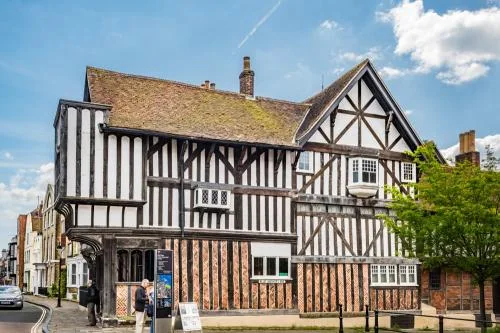
The house was extended in the 18th century when the Rogers family turned it into a fashionable Georgian house, but by the early Victorian period the building had been subdivided into smaller flats and shops.
By the middle of the 19th century the area around St Michael's square was little more than an overcrowded slum, rife with disease, described by contemporaries as unfit for human habitation.
The slums were cleared and many of the surrounding buildings were slated for demolition, but a philanthropist named William Spranger stepped in to purchase the Tudor House in 1886, saving it from destruction. Spranger restored the house at a cost of £7,000, an enormous sum for the time.
Unfortunately, Spranger did not simply restore the house; he added his own romantic fantasy touches, including a minstrel gallery that had no place in the original building.
Southampton City Council bought the house in 1912 and transformed it into the Tudor House Museum.
What to See
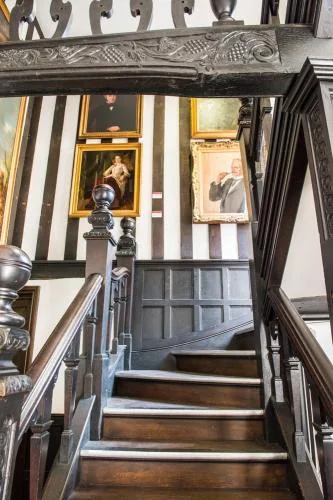
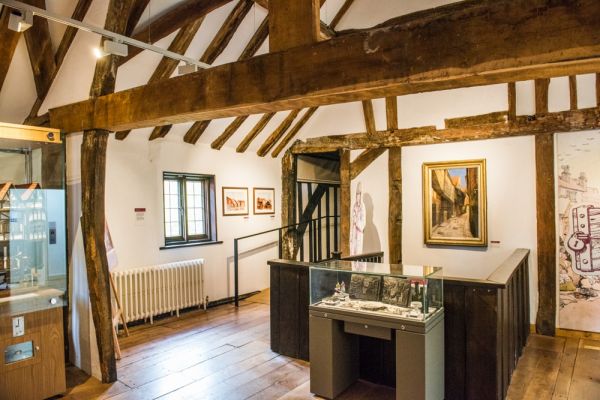
The heart of Tudor House is the banqueting hall, richly panelled in oak. This chamber served as the dining hall of the 16th-century house and later was adapted by the architect Josiah Poole as his office.
By contrast to the Tudor hall is the Georgian Room, illuminated by high sash windows in typical 18th-century style. The chamber was likely used by the artist George Rogers as his studio.
The Rich Room once served as the master bedroom and from it you can see into the attic, used by the household servants.
The Workroom is presented as it would have looked in the Victorian period, when George Pope operated a cleaning and dyeing shop here.
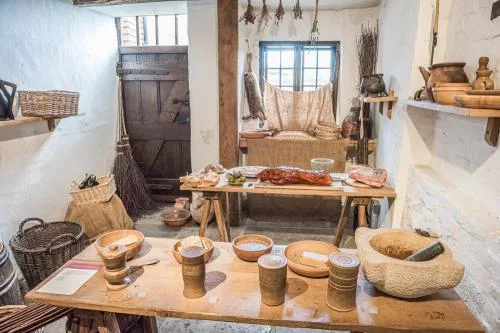
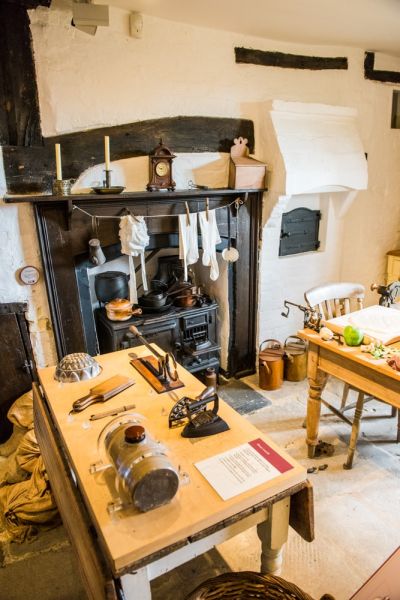
The kitchen area is presented in two parts; one Tudor and the other Victorian, giving visitors an idea how much life changed over time for the Tudor House residents.
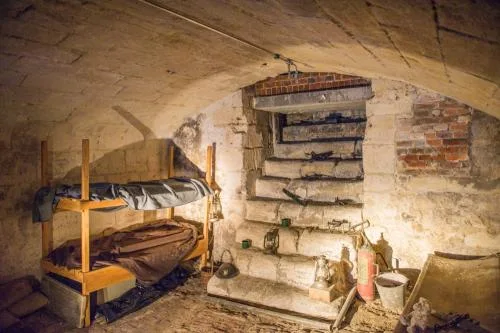
Air Raid Shelter
One unusual feature is an air raid shelter, a reminder of the dark days of WWII, when Southampton was heavily bombed.
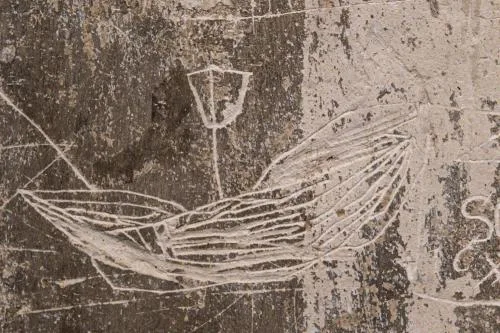
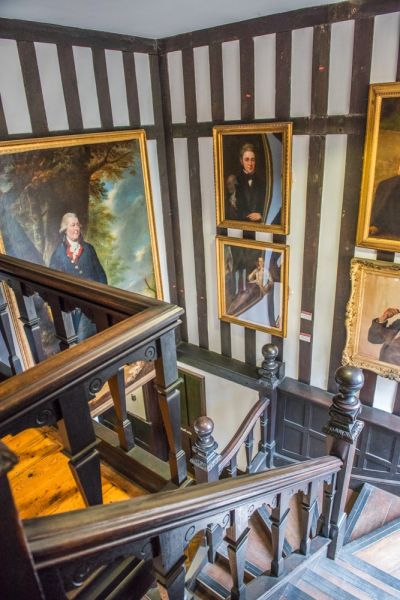
Other areas of the house are devoted to exhibits on Southampton's maritime heritage, and here you can see ancient graffiti of ships scratched onto the walls. Portraits depict former owners of Tudor House, while cellar rooms hold artefacts from WWII.
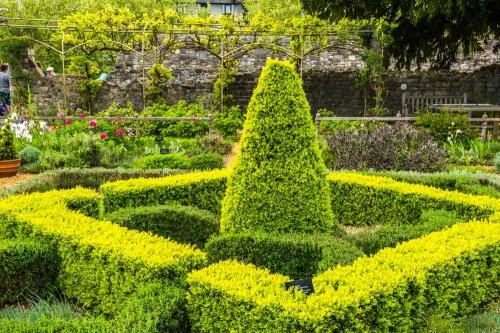
Tudor Knot Garden
Behind Tudor House is an authentic Tudor knot garden. The garden was recreated from documentary evidence to the way it might have looked in the early Tudor period, when Sir John Dawtrey owned the property, with low box hedges in the form of a knot, interlaced with formal pathways and planted with over 100 species of plants. In a corner of the garden is a model of Old Town.
One museum highlight is an interactive display showcasing the Southampton Book of Hours, a beautifully-illustrated 15th-century prayer book.
King John's Palace
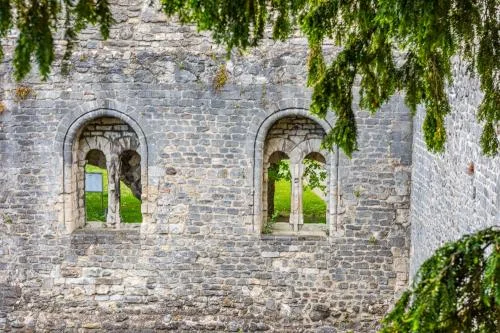
At the rear of the museum grounds stands a 12th-century merchant's house, one of the finest examples of a Norman town house in England. Known as King John's Palace for the erroneous belief that King John stayed there in the early 13th century, the 'palace' was in fact owned by a prosperous merchant, with storage for goods at ground level and living quarters above.
The house was later incorporated into the medieval city walls, with some of the earliest gun ports in the country punched through the walls facing the quay. One of the highlights is a Norman chimney, dated to 1200 and thought to the oldest intact chimney in the country.
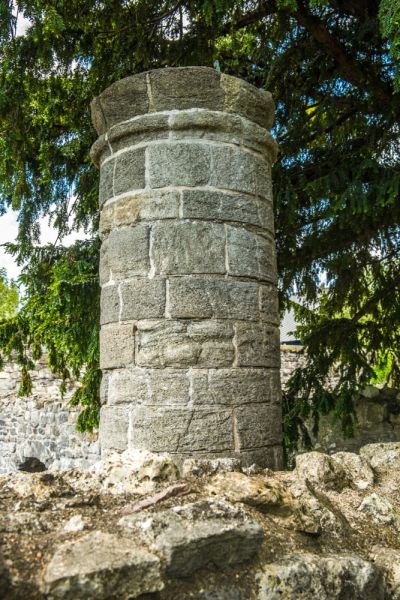
Also in the museum grounds is a reconstructed medieval archway salvaged from the remains of St Denys Priory, Southampton. The priory was founded by King Henry I in 1124 and was suppressed by Henry VIII in 1536.
Visiting
Tudor House offers something for the whole family, with interactive activities and displays to capture the imagination of all ages. There are parking options at parking at West Quay, Mayflower Park, and Grosvenor Square, all within a short walk of the museum.
Our family had a wonderful time exploring the Tudor House Museum. We especially enjoyed the wall walk that let us look down into King John's Palace.
More Photos
About Tudor House Museum
Address: Bugle Street, Southampton, Hampshire, England, SO14 2AD
Attraction Type: Museum
Location: On Bugle Street, opposite St Michael's Square. There are several paid parking areas within an easy walk.
Website: Tudor House Museum
Location map
OS: SU419112
Photo Credit: David Ross and Britain Express
POPULAR POSTS
HERITAGE
 We've 'tagged' this attraction information to help you find related historic attractions
and learn more about major time periods mentioned.
We've 'tagged' this attraction information to help you find related historic attractions
and learn more about major time periods mentioned.
Historic Time Periods:
Find other attractions tagged with:
12th century (Time Period) - 14th century (Time Period) - 15th century (Time Period) - 16th century (Time Period) - 18th century (Time Period) - 19th century (Time Period) - King John (Person) - Tudor (Time Period)
NEARBY HISTORIC ATTRACTIONS
Heritage Rated from 1- 5 (low to exceptional) on historic interest
King John's Palace - 0 miles (Historic Building) 
Medieval Merchant's House - 0.1 miles (Historic Building)
Pilgrim Fathers Memorial - 0.1 miles (Historic Building) 
Southampton, Holyrood Church - 0.1 miles (Historic Church) 
Netley Abbey - 2.6 miles (Abbey)
Eling Tide Mill Experience - 3.4 miles (Historic Building)
Beaulieu - 5.7 miles (Historic House) 
Broadlands - 6.9 miles (Historic House)
Nearest Holiday Cottages to Tudor House Museum: