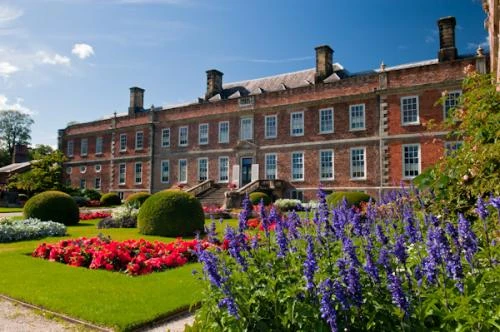
Erddig was built in the 1680's, then heavily remodelled in the early 18th century. The interiors showcase fine furniture, tapestries, and porcelain, plus a fascinating array of portraits of family servants with poems about their lives penned by the house owners.
History
Though the history of the house goes back much further, Erddig is primarily an early 18th century house. John Mellor, a successful London lawyer, bought the property in 1714 after its previous owner went bankrupt.
Mellor then enlarged the existing house, creating a long red brick facade by adding wings to either side of a central block. Each room led straight into the next, and the doors of each room lined up, so that if they were all opened you could look straight through the entire set of rooms from one end to the other.
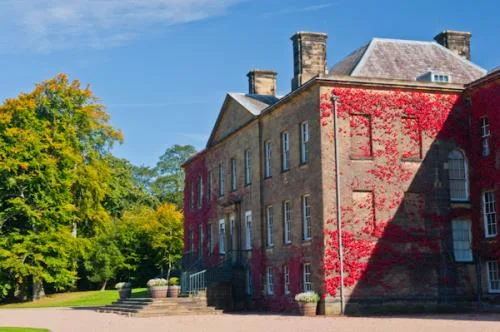
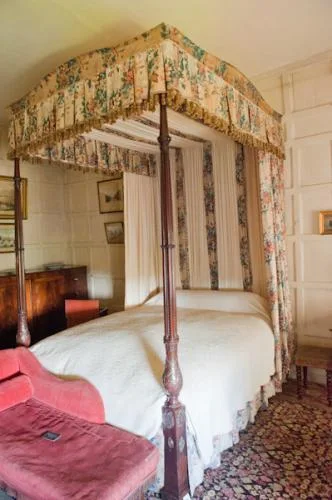
The interiors he kept fairly subdued, for his pride was a collection of fine furniture, tapestry, and porcelain. It is this collection that fills the state rooms today, for almost all of Mellor's original interiors are intact. If he walked through the front doors of Erddig today, he would feel right at home!
Mellor was followed by his nephew, Simon Yorke, and for the next 240 years Erddig was owned by Yorkes named Simon or Philip.
Philip Yorke remodelled the main house frontage around 1770, with input from James Wyatt. In 1826 Simon Yorke installed the elegant dining room in neo-classical style.
Marriage Troubles
A later Philip Yorke suffered through a celebrated split from his wife. She left him after only a few months of marriage.
When she eventually died, Philip, now aged over 50, made a habit of inviting suitable ladies to Erddig, and when they left, giving them a small package tied with a ribbon. Inside the package was a proposal of marriage. He made a better show of his ultimately successful proposal, choosing Valentine's Day to offer marriage a clergyman's daughter, who accepted him.

Servant Portraits
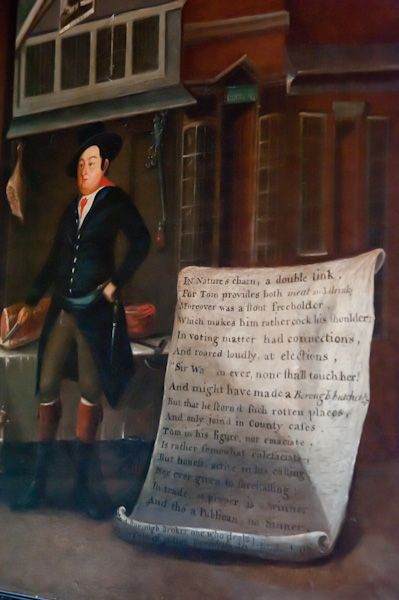
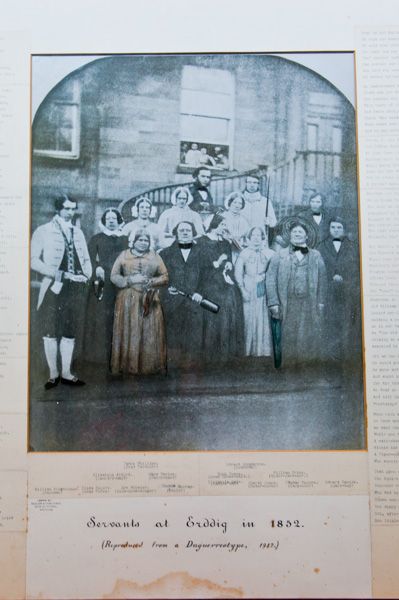
It is not the staterooms and their fine furnishings that are the real treasure at Erddig, for the family did something remarkable; they created a record of the domestic servants who worked and lived in the great house and on the estate.
Through paintings, printed documents, even poems, they created an unmatched record of domestic life in a stately home. So we can see, not nameless servants, but the individual people who served at Erdigg, who they were, and how they lived.

The family started a tradition of having portraits painted of all the principal servants. Each portrait is painted with a verse about the subject, composed by the master of the house at the time. After the advent of photography the Yorke owners replaced painted portraits with photographs of their servants, and composed verses separately to accompany the photos.
Ten of the portraits hang in the Servant's Hall. Seven are by artist Jon Walters of Denbigh, painted between 1791 and 1793 for Philip Yorke I. Among the servants represented are a game-keeper, blacksmith, and housemaid. A new series of 3 portraits were commissioned by Simon Yorke II in 1830 and painted by William Jones. These include likenesses and verses about a gardener, carpenter, and woodman.
Among the most famous records of servants at Erddig is a painting of a young black servant, thought to be a coachboy to John Mellor, which would have made the portrait early 18th century. This painting is now thought to be much later, probably from the late 18th century.
Gardens
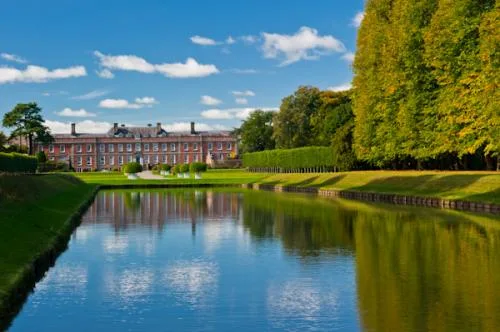
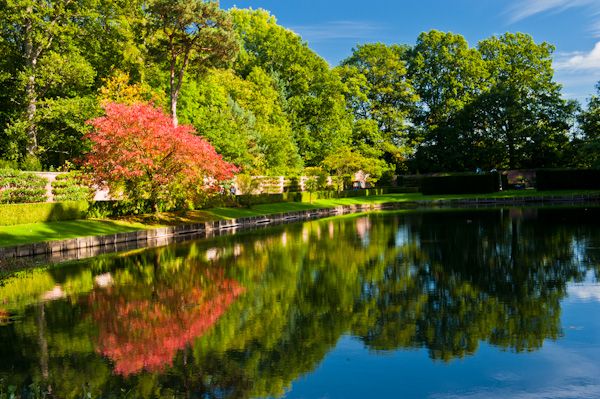
The formal gardens at Erddig are a delight. There are lovely topiary hedges near the house, and a long canal leading your eye out across the estate.
The first gardens were designed by Joshua Edisbury (1685-1709), who created a terraced walk with a banqueting house at one end and a summer house at the other. John Mellor added a canal and pond, and walks through a pleasure ground.
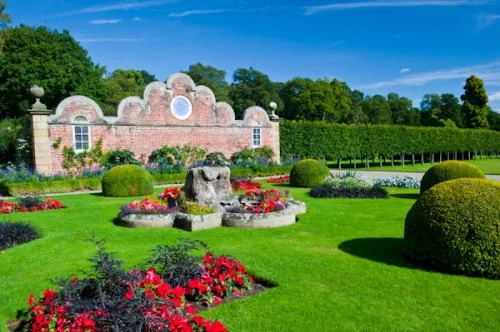
Mellor's heirs further developed the pleasure ground, adding features like a dairy house, ice-house, and cascade. In the 19th century, fountains and flower beds were added in the formal gardens, and large numbers of conifers planted in the woodland.
The result is a wonderful mix of formal and informal garden areas, stretching out over a very large estate. The showpiece is probably the canal and the parterre near the house, which serve to set off the elegant neo-classical facade of the main house.
Visiting
I was so impressed with Erddig. The interiors are simply stunning, with wonderful staterooms, Chinese wallpaper and tapestries.
Then there are the servant's quarters, full of fascinating personal histories of the people who lived and worked here. You really do get a feeling for the close bond between the Yorke family and the servants they employed.
The gardens were an absolute delight as well, with a lovely walk beside the canal and wonderful vistas across the surrounding parkland. Erddig is a delight to visit.
More Photos

About Erddig House
Address: Wrexham, Clwyd, Wales, LL13 0YT
Attraction Type: Historic House
Location: 2 miles south of Wrexham on the A525/A5152
Website: Erddig House
Email: erddig@nationaltrust.org.uk
National Trust
Location
map
OS: SJ326 482
Photo Credit: David Ross and Britain Express
HERITAGE
 We've 'tagged' this attraction information to help you find related historic attractions and learn more about major time periods mentioned.
Find other attractions tagged with:
18th century (Time Period) - 19th century (Time Period) - James Wyatt (Person) - neo-classical (Architecture)
NEARBY HISTORIC ATTRACTIONS
Heritage Rated from 1- 5 (low to exceptional) on historic interest
Wrexham, St Giles Church - 1.4 miles (Historic Church) 
Gresford, All Saints Church - 4.2 miles (Historic Church)
Pontcysyllte Aqueduct - 5.1 miles (Historic Building)
Caergwrle Castle - 5.7 miles (Castle) 
Holt, St Chad's Church - 6.5 miles (Historic Church)
Brynkinalt - 6.6 miles (Historic House)
Farndon, St Chad's Church - 6.6 miles (Historic Church)
Chirk Castle - 6.6 miles (Castle)
Nearest Holiday Cottages to Erddig House:
Cefn Park Estate, Clwyd
Sleeps: 2
Stay from: £345 - £1,184
Cefn Park Estate, Clwyd
Sleeps: 2
Stay from: £345 - £1,180
More self catering near Erddig House