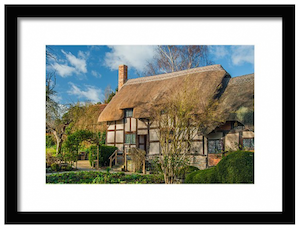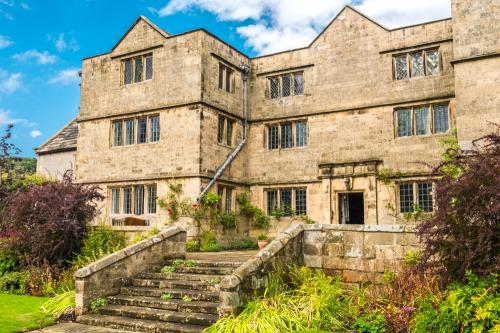
A lovely 17th-century manor, Eyam Hall was the home of the Wright family from 1671 until 2013 but is now leased by the National Trust. There are some excellent Jacobean furnishings within the house and a popular craft centre in the farmyard.
History
Eyam is best remembered for its role in the deadly Bubonic plague epidemic of 1665. The plague broke out in London and was carried to Eyam in a parcel of cloth the following year.
As soon as the local rector realised that his parishioners were infected, he called upon them to perform a quite extraordinary act of bravery; to voluntarily shut their village off from the outside world until the plague had run its course, stopping it from spreading to neighbouring villages.
The story of Eyam and the plague is brought to life in the Eyam Museum on Hawkhill Road.
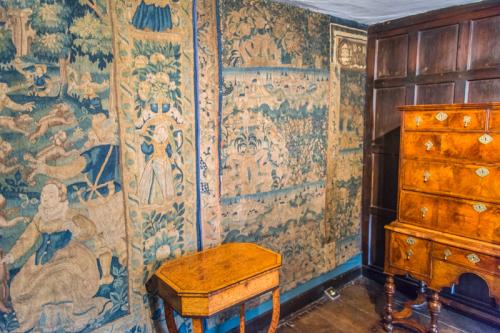
The beautiful manor house of Eyam Hall was only built six years after the outbreak of the plague, but the Wright family who built it would have known people who died in the outbreak - and those who lived through it. The builder was Thomas Wright, who had the Hall built for his second son John to celebrate his wedding.
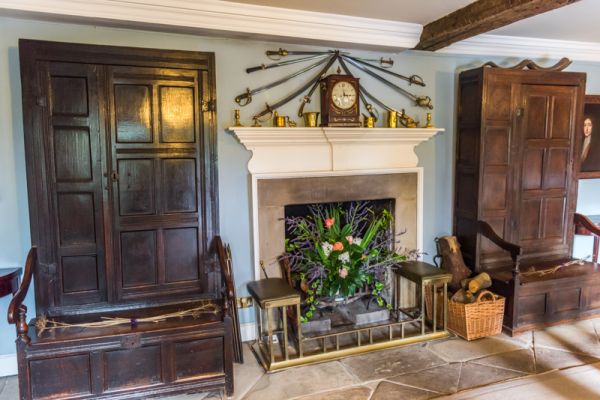
The house is filled with beautiful period furnishings brought here by 11 generations of the family. One of the objects is a carved cedar coffer chest, probably brought to Eyam by Elizabeth Wright, John's new wife, to hold her dowry.
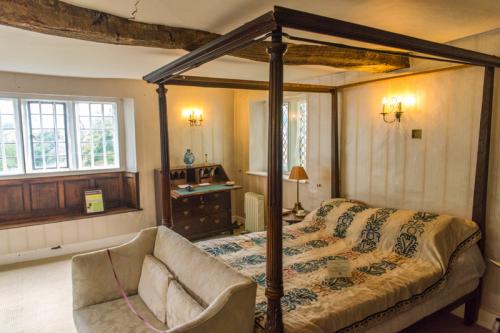
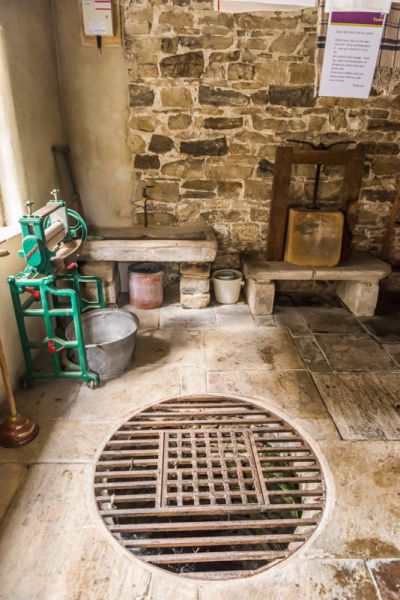
Part of that dowry was hand-embroidered crewel bedding, on view in the Oak Bedroom. In the entrance parlour are a fascinating pair of high-backed seats fitted with compartments for curing bacon. Behind the house, accessed through the kitchen, is a newly -opened laundry room, with a covered well-shaft set into the floor.
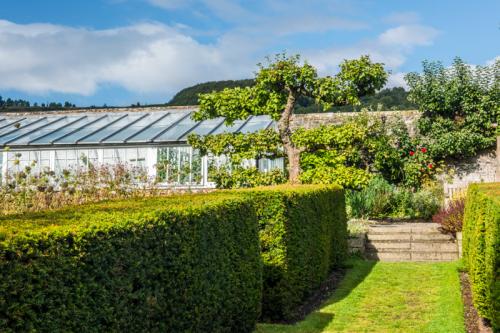
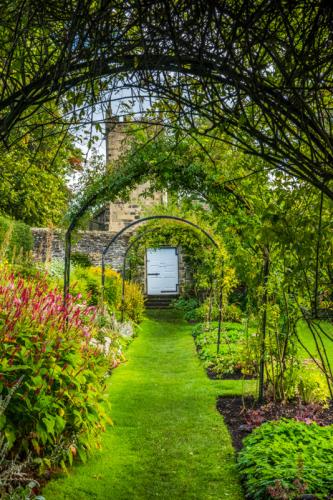
Surrounding the Hall is a beautiful walled garden, with an avenue of apple trees, a knot garden, bowling green, nuttery, kitchen garden, and resident bees which make honey for sale in the shop. In the old stable yard of Eyam Hall is a popular crafts centre with goods by local artisans.
Visiting
Eyam Hall was a delight to visit. We came on a dreary morning in mid-September, but even then the house was quite busy, with a large number of visitors. As with most National Trust houses, there were enthusiastic volunteer stewards in many rooms, and they really did an excellent job of answering questions and pointing out historic features of the house.
At Eyam much of the focus is not on the house or its furnishings but on the people who lived here for generations. You really do get a sense of how the Wright family made the Hall their own, how it changed to meet changing needs over time, and how the family lived and worked here over the centuries.
The gardens are a bit like Dr Who's Tardis; they seem bigger once you start exploring them than they look from the outside!
The National Trust has created a series of walks starting from Eyam Hall, exploring the remarkable stories of the people of Eyam who made the ultimate sacrifice at the height of the plague scare.
Almost immediately outside the Hall are the 'Plague Cottages', a preserved row of cottages where several families of plague victims lived, and just beyond the cottages is the beautiful medieval parish church, with a Celtic cross in the churchyard and a memorial window telling the story of Eyam and its people during the plague.
Eyam Hall is a wonderful example of a 17th-century manor house, very little altered over time, and set in a pretty village, full of history.
More Photos


About Eyam Hall
Address: Main Street, Eyam, Derbyshire, England, S32 5QW
Attraction Type: Historic Building
Location: Across from the market hall in the centre of Eyam
Website: Eyam Hall
Email: eyam@nationaltrust.org.uk
Historic Houses Association
Location map
OS: SK234 769
Photo Credit: David Ross and Britain Express
HERITAGE
 We've 'tagged' this attraction information to help you find related historic attractions
and learn more about major time periods mentioned.
We've 'tagged' this attraction information to help you find related historic attractions
and learn more about major time periods mentioned.
Historic Time Periods:
Find other attractions tagged with:
Celtic (Architecture) - Elizabethan (Architecture) - Iona (Place) - Jacobean () - London () - Medieval (Time Period)
NEARBY HISTORIC ATTRACTIONS
Heritage Rated from 1- 5 (low to exceptional) on historic interest
Eyam Museum - 0 miles (Museum) 
Eyam, St Lawrence Church - 1 miles (Historic Church) 
Padley Chapel and Manor Gatehouse - 1.6 miles (Historic Building)
Thornbridge Hall Gardens - 4.3 miles (Garden)
Edensor, St Peter's Church - 4.4 miles (Historic Church)
Chatsworth - 4.5 miles (Historic House) 
Peveril Castle - 4.9 miles (Castle)
Blue John Cavern - 4.9 miles (Family Attraction) 
Nearest Holiday Cottages to Eyam Hall:
Stoney Middleton, Derbyshire
Sleeps: 4
Stay from:£373 - £1,151