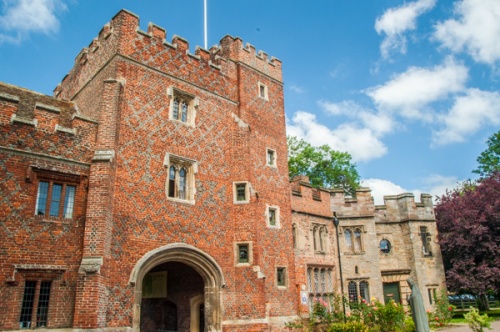
Buckden Towers, originally known as Buckden Palace, was an important residence belonging to the powerful Bishops of Lincoln. The first residence at Buckden would have been built of wood, but around 1225 Bishop Hugh de Wells built a new house of stone.
This house was extended by the influential bishop, Robert Grosseteste, who added a great hall. A devastating fire in 1291 destroyed most of the 13th-century buildings, of which only the foundations remain.
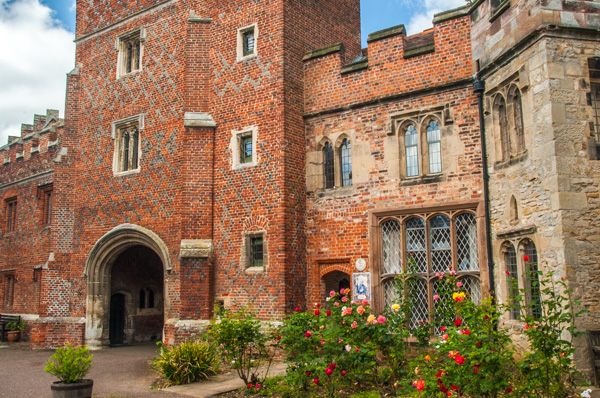
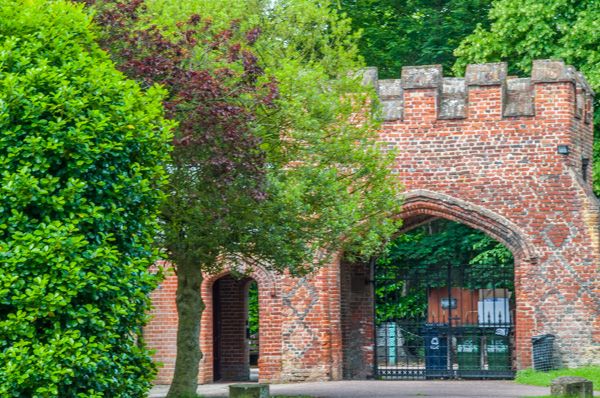
The final stage of construction took place under the direction of Bishop John Russell (1480-1494). Bishop Russell's coat of arms can be seen on the Inner Gatehouse. To this was added a new chapel by Bishop William Smith (1495-1514) one of the founders of Brasenose College, Oxford.
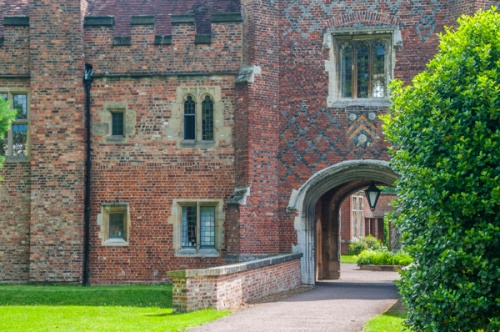
The palace fell into disrepair in the 17th century, especially after Bishop John Williams (1625-1642) was imprisoned by Charles I. The palace was seized by Parliament during the Civil War and sold to Sir Christopher Pecke, former Lord Mayor of London. After the Restoration of the monarchy in 1660, the palace was returned to the See of Lincoln.
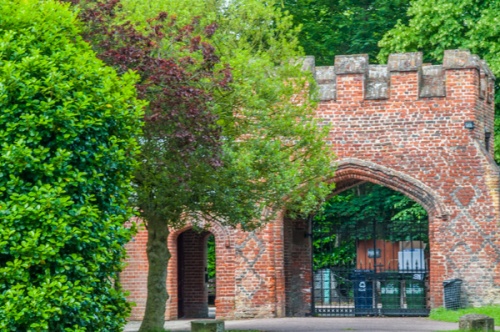
Indeed, a subsequent bishop, Bishop Barlow, spent so much time at Buckden that he was widely known as the Bishop of Buckden! He died here and was buried in the parish church of St Mary, located just behind the wall of the Towers.
In 1838 a good part of the palace was pulled down and the stone sold as building material. In 1872 the then owner, Arthur Wellington Marshall, built Victorian House, later called Buckden Towers, on the north side of the inner courtyard. The new structure was designed by Robert Edis, who was the architect for the original Sandringham House.
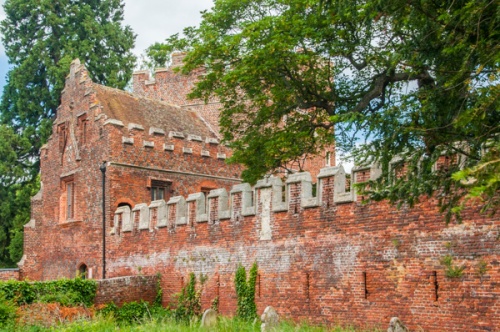
Abortive attempts to rebuild the palace were made during the 20th century, and it was used as a residence, convalescent home, and a hostel for farm workers. Eventually, in 1956, the palace passed to the Claretian missionaries, who gradually restored many of the original buildings and built a new chapel.
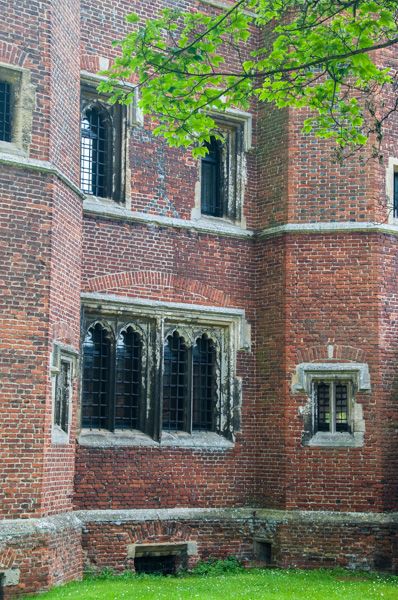
Buckden Towers is now used by the Claretian order as a retreat centre and residential study facility. At present Buckden Towers is open for visitors to stroll the grounds during daylight hours, but there is not normally any access to the interior of the buildings. This is a truly lovely Elizabethan complex of buildings and makes a wonderful sight next to the parish church next door.
More Photos
About Buckden Towers
Address: Claret Centre, High Street, Buckden, Cambridgeshire, England, PE19 5TA
Attraction Type: Historic Building
Location: On High Street, just off the A1. Parking along village streets.
Website: Buckden Towers
Email: claret_centre@claret.org.uk
Location map
OS: TL193676
Photo Credit: David Ross and Britain Express
HERITAGE
 We've 'tagged' this attraction information to help you find related historic attractions
and learn more about major time periods mentioned.
We've 'tagged' this attraction information to help you find related historic attractions
and learn more about major time periods mentioned.
Historic Time Periods:
Find other attractions tagged with:
13th century (Time Period) - 17th century (Time Period) - 20th century (Time Period) - 7th century (Time Period) - Charles I (Person) - Civil War (Architecture) - Elizabethan (Architecture) - Iona (Place) - London () - Restoration (Historical Reference) - Victorian (Time Period)
NEARBY HISTORIC ATTRACTIONS
Heritage Rated from 1- 5 (low to exceptional) on historic interest
Buckden, St Mary's Church - 0 miles (Historic Church) 
Offord Darcy, St Peter's Church - 1.7 miles (Historic Church) 
Huntingdon, All Saints Church - 3.8 miles (Historic Church)
Huntingdon Castle - 3.8 miles (Castle)
St Neots Museum - 4.6 miles (Museum) 
Alconbury, St Peter & St Paul - 5.3 miles (Historic Church)
Kimbolton Castle - 5.7 miles (Castle)
Kimbolton, St Andrew's Church - 5.8 miles (Historic Church)
Nearest Holiday Cottages to Buckden Towers:
Biggleswade, Bedfordshire
Sleeps: 4
Stay from:£425 - £1,622